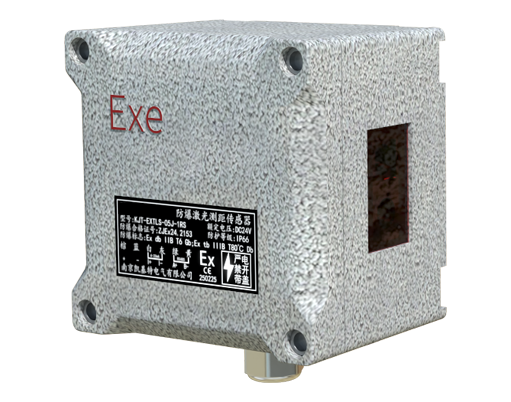
Laser sorting sensors represent a critical advancement in industrial automation, enabling high-speed, non-contact material separation based on physical or chemical properties. At their core, these systems operate by emitting a focused laser beam onto target objects, typically on a moving conveyor belt. As the laser interacts with the material, several phenomena occur: reflection, absorption, transmission, and scattering. The sensor's detectors, often photodiodes or spectrometers, capture the resulting light signals. By analyzing characteristics such as intensity, wavelength shift, or spectral signature, the system can identify and classify materials with remarkable precision.
The fundamental principle relies on the unique optical response of each substance. For instance, metals reflect most laser light, while organic materials may absorb specific wavelengths. Advanced sensors employ techniques like laser-induced breakdown spectroscopy (LIBS) or Raman scattering to detect elemental composition. In LIBS, a high-energy laser pulse vaporizes a micro-sample, generating a plasma whose emitted spectrum reveals atomic constituents. Raman sensors, conversely, measure inelastic scattering of photons to identify molecular bonds. These methods allow sorting not just by color or shape, but by intrinsic material properties—separating copper from aluminum in e-waste or removing contaminants from food grains.
Key components include a laser source (commonly diode lasers for cost-efficiency or fiber lasers for high power), optical lenses for beam shaping, high-speed cameras or spectral analyzers, and real-time processing units. Modern systems integrate machine learning algorithms to improve accuracy, adapting to material variations without manual recalibration. Applications span mining (ore grading), recycling (plastic polymer separation), agriculture (removing defective seeds), and pharmaceuticals (purity verification). For example, in mining, sensors analyze ore reflectance to distinguish valuable minerals from gangue, boosting yield and reducing energy consumption in downstream processing.
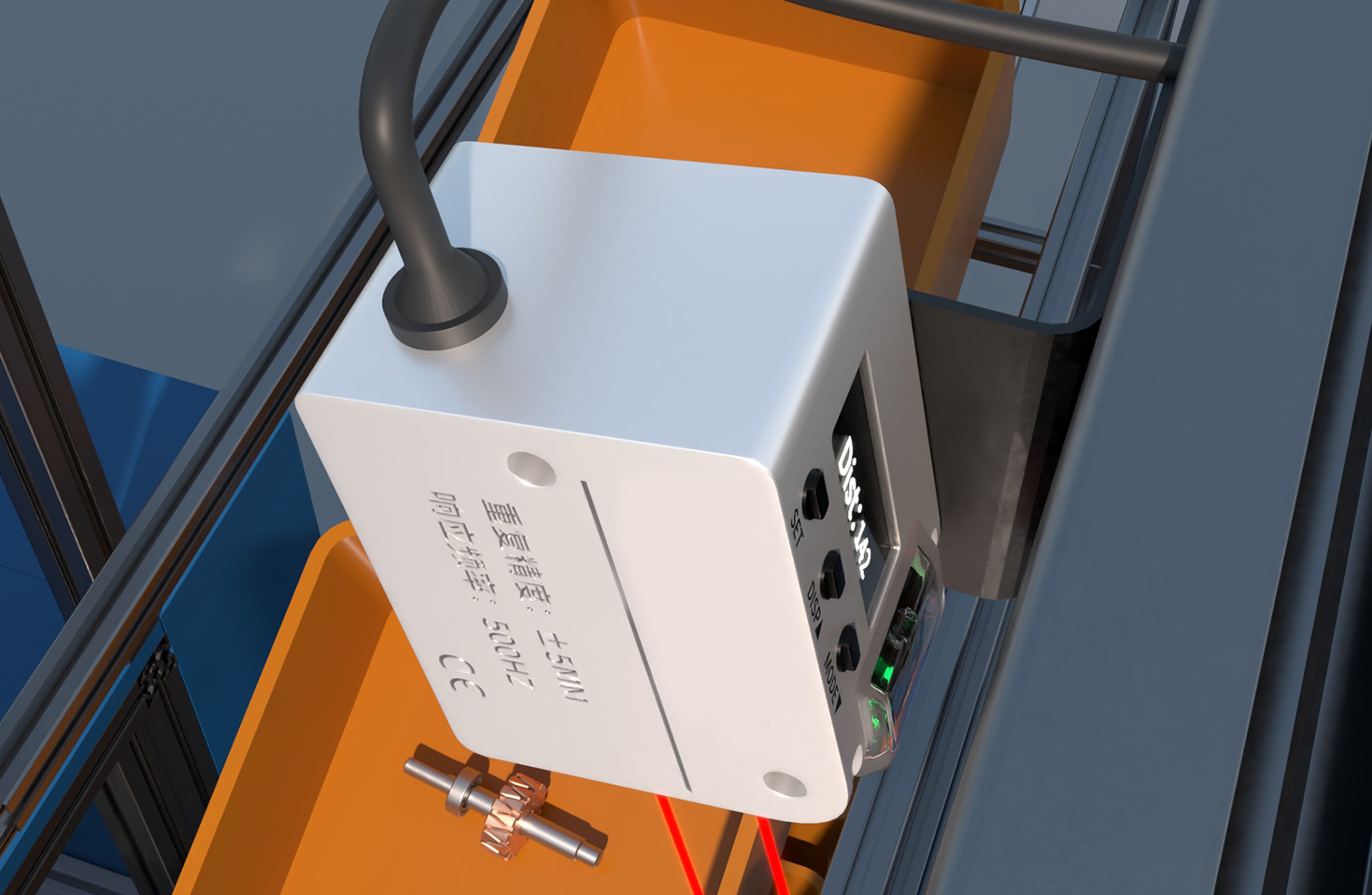
Performance depends on factors like laser wavelength, pulse duration, and detection sensitivity. Near-infrared lasers suit organic materials, while UV lasers enhance fluorescence detection. Engineers must balance throughput (objects per second) with resolution; faster belts require quicker laser pulses and rapid data processing. Challenges include ambient light interference, material surface variability, and maintenance in dusty environments. However, innovations like multi-sensor fusion (combining laser with X-ray or camera vision) and compact modular designs are expanding reliability.
Ultimately, laser sorting sensors drive sustainability by optimizing resource recovery and minimizing waste. As industries pursue Industry 4.0 goals, these systems will evolve with smarter analytics and broader spectral ranges, transforming how we handle materials in a circular economy.