Capacitive proximity sensors are indispensable components in modern industrial automation, offering non-contact detection of a wide range of materials. As a leading global provider of factory automation components, MISUMI delivers a comprehensive portfolio of capacitive sensors engineered for exceptional performance, durability, and ease of integration. These sensors operate on a fundamental principle: they generate an electrostatic field. When a target object enters this field, it causes a detectable change in the sensor's capacitance, triggering an output signal. This mechanism allows them to sense not only metals but also non-metallic substances such as plastics, glass, wood, liquids, and granular materials, making them incredibly versatile.
The core advantage of MISUMI's capacitive proximity sensors lies in their robust design and adaptability to challenging environments. Housed in sturdy, often shielded or non-shielded metal or polymer bodies, they are built to withstand industrial rigors including dust, moisture, and temperature variations. Many models feature IP67 or higher ingress protection ratings, ensuring reliable operation in washdown areas or outdoor applications. A key technical feature is the adjustable sensitivity potentiometer. This allows engineers to fine-tune the sensing distance and optimize performance for specific materials, preventing false triggers from background objects like conveyor belts or container walls. This adjustability is crucial for applications involving material level detection, where the sensor must reliably detect the presence or absence of powder in a silo or liquid in a tank.
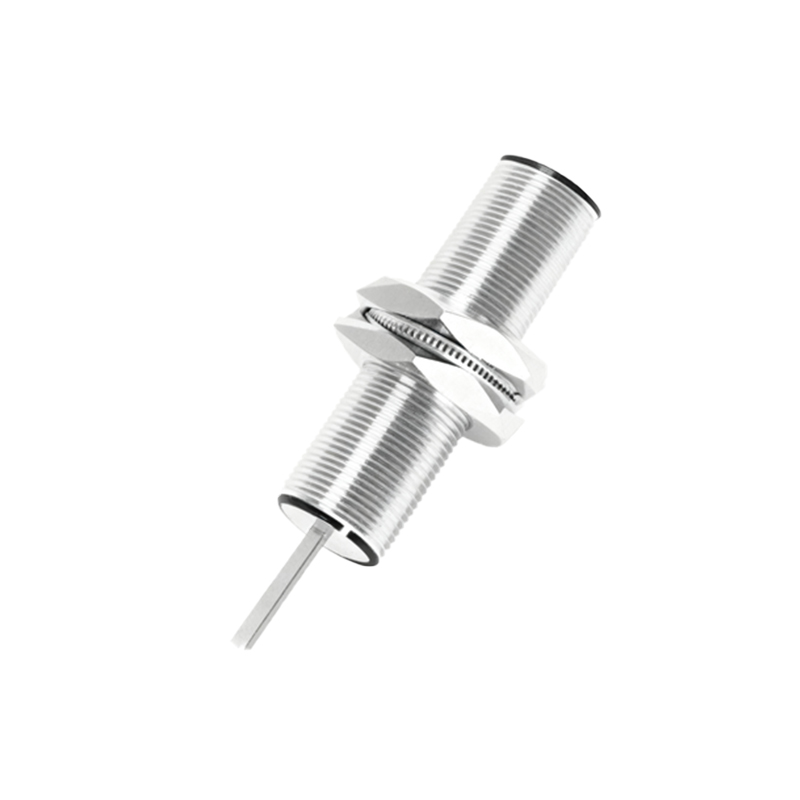
MISUMI's product range addresses diverse application needs with variations in sensing distance, output type (NPN/PNP, NO/NC), connection methods (pre-wired cables or quick-disconnect connectors), and form factors (cylindrical, rectangular, or ring-shaped). For instance, compact cylindrical sensors are ideal for space-constrained mounting, while large-diameter models offer extended sensing ranges for bulk material monitoring. The availability of both shielded (flush-mountable) and non-shielded types provides flexibility in installation. Shielded sensors can be embedded in metal without affecting their field, whereas non-shielded types offer a longer sensing range but require clearance from surrounding metal.
In practical industrial settings, these sensors perform critical functions. A primary application is liquid and solid level control in tanks, hoppers, and silos. A capacitive sensor mounted on the exterior of a non-metallic container can detect the material level inside without direct contact, preventing overfills or runouts. In packaging and material handling, they verify the presence of items on a conveyor, count products, or detect labels on bottles—even through thin packaging materials. They are also effectively used in woodworking and plastics processing to monitor the presence of boards or detect adhesive beads.
Selecting the right capacitive sensor from MISUMI's catalog requires careful consideration of several parameters. The nominal sensing distance (Sn), typically ranging from a few millimeters to several centimeters, must be suitable for the application. The influence of the target material's dielectric constant is paramount; materials with higher constants (like water) are detected more easily than those with lower constants (like certain plastics). Environmental factors such as ambient temperature, humidity, and the presence of conductive dust must also be evaluated against the sensor's specifications. Fortunately, MISUMI provides detailed technical data sheets, CAD models, and configurable options, streamlining the selection and design-in process.
Installation and wiring are straightforward, adhering to global standards. Engineers must ensure adequate clearance around the sensor's active face as per manufacturer guidelines, especially for non-shielded types. Proper grounding and the use of surge protection devices in circuits with inductive loads are recommended best practices to enhance longevity and noise immunity. Regular maintenance involves simply cleaning the sensing face from accumulated debris, which could otherwise alter the dielectric environment and cause sensing drift.
In conclusion, MISUMI's capacitive proximity sensors represent a synergy of precise sensing technology and practical industrial design. Their ability to detect diverse materials through non-metallic barriers, coupled with adjustable sensitivity and robust construction, makes them a go-to solution for complex detection tasks across industries from food and beverage to automotive and pharmaceuticals. By offering reliability, flexibility, and extensive technical support, MISUMI empowers engineers to build more efficient, intelligent, and fault-resistant automated systems, driving productivity and quality in manufacturing operations worldwide.