In the realm of industrial automation and machine control, proximity sensors are indispensable components for non-contact detection. Among the diverse types available, the Square Proximity Switch Sensor with an NPN output and a sensing range of 0-30mm represents a highly versatile and widely adopted solution. This article delves into the technical specifications, operational principles, wiring configurations, and typical applications of this sensor, providing a comprehensive guide for engineers and technicians.
The defining physical characteristic of this sensor is its square or rectangular housing. This form factor offers distinct advantages in mounting and integration, particularly in applications where space constraints or specific mounting surfaces are a concern. The robust construction, typically from materials like nickel-plated brass or stainless steel, ensures reliable performance in harsh industrial environments, offering resistance to oils, coolants, and mechanical impacts.
The core specification "NPN 0-30" encapsulates two critical parameters: the output transistor type and the sensing distance. "NPN" refers to the type of transistor used in the sensor's switching output circuit. In an NPN configuration, the output acts as a switching element to ground (0V or negative rail). When the sensor detects a target within its range, the NPN transistor saturates, connecting the output signal line (usually the black wire) to the common negative (blue wire). This is known as a sinking output. It is crucial to match this with a PLC (Programmable Logic Controller) or controller input card designed to accept a sinking signal, typically where the input module provides a positive voltage (e.g., +24VDC) to the sensor's load.
The "0-30" denotes the nominal sensing range, which is 30 millimeters. This is the maximum distance at which the sensor can reliably detect a standard target (usually a square of mild steel defined by the sensor's face size). It is important to note that the actual sensing distance can be influenced by factors such as target material, size, shape, and temperature. For non-ferrous metals like aluminum or copper, the effective sensing range is reduced, often requiring a correction factor provided in the sensor's datasheet.
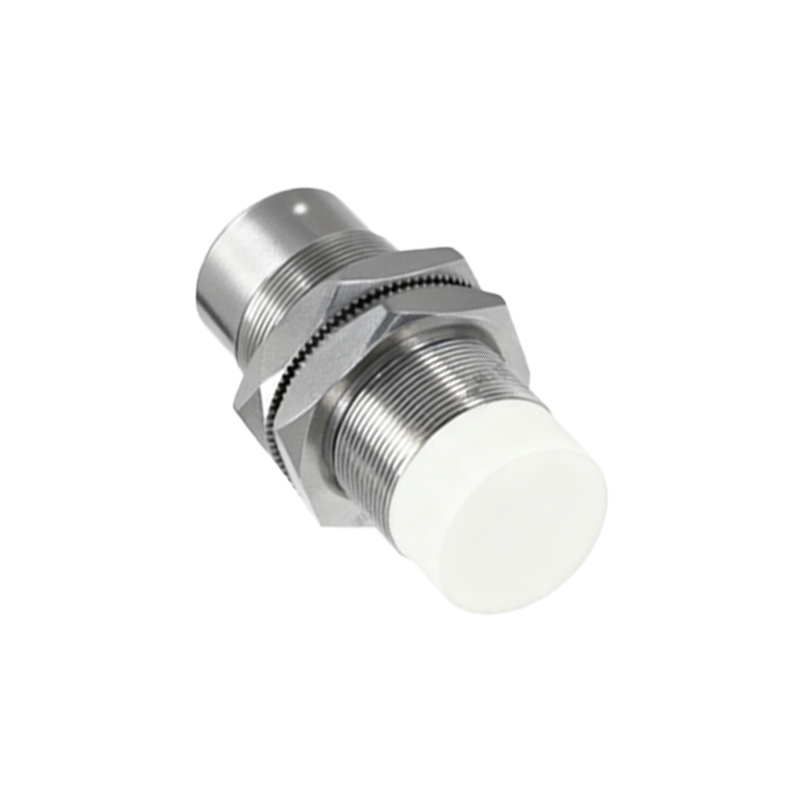
These sensors predominantly operate on the inductive sensing principle. An internal oscillator generates a high-frequency electromagnetic field emanating from the active face of the sensor. When a conductive metal target enters this field, eddy currents are induced on the target's surface. This causes a change in the oscillation amplitude within the sensor's coil. A subsequent evaluation circuit detects this change and triggers the switching of the output transistor (NPN in this case). This principle makes them ideal for detecting metallic objects without physical contact, thereby eliminating wear and tear.
Wiring a Square NPN Proximity Sensor is straightforward, typically involving three wires: Brown, Blue, and Black. The brown wire is connected to the positive supply voltage (commonly +10 to +30 VDC). The blue wire is connected to the common negative or 0V of the power supply. The black wire is the switched NPN output signal. A load (such as a PLC input, relay coil, or indicator lamp) is connected between the black wire and the positive supply voltage. When activated, the sensor sinks the current from the load to ground, completing the circuit and signaling detection.
Key selection criteria beyond the basic NPN and 30mm range include: Supply Voltage (e.g., 10-30 VDC), Output Current rating (the maximum current the NPN transistor can sink, often 200mA), Switching Frequency (how many on/off cycles per second it can handle), Protection Class (like IP67 for dust and temporary immersion protection), and Housing Material. Many models also feature a built-in LED status indicator for visual confirmation of operation and target detection.
Application areas for the Square NPN 0-30mm proximity sensor are extensive across manufacturing and processing industries. Common uses include: Position sensing of machine parts (e.g., end-of-travel detection on linear actuators), Object counting on conveyor lines (counting metal parts or containers), Presence verification in assembly stations (ensuring a component is in place before a process step), Speed monitoring by detecting passing gear teeth, and as a safety interlock to confirm a guard door is closed. Their square shape is particularly beneficial for flush mounting into metal brackets or panels, allowing for a clean and protected installation.
In summary, the Square Proximity Switch Sensor NPN 0-30mm is a fundamental building block in modern industrial control systems. Its robust square design, reliable inductive sensing technology, and sinking (NPN) output make it a preferred choice for countless detection tasks involving metallic objects. A clear understanding of its NPN wiring logic and operational parameters is essential for correct integration, ensuring optimal performance, system reliability, and enhanced machine automation efficiency.