In the realm of industrial automation, NPN sensors and proximity switches play a pivotal role in enabling precise, reliable, and efficient control of machinery and processes. These devices are fundamental components in sensing applications, providing critical data for automation systems without physical contact. This article delves into the working principles, configurations, applications, and selection criteria for NPN sensors and proximity switches, offering insights for engineers and technicians in the electrical and automation fields.
NPN sensors are a type of transistor-based sensor that operates using negative-positive-negative semiconductor junctions. In an NPN configuration, the sensor acts as a sinking device, meaning it connects the load to ground when activated. This is in contrast to PNP sensors, which source current to the load. NPN sensors are widely used in proximity switches, which detect the presence or absence of objects within a specified range without direct contact. Proximity switches can be inductive, capacitive, or photoelectric, with inductive types being common for metal detection and capacitive for non-metallic materials.
The operation of an NPN proximity switch involves an oscillator circuit that generates an electromagnetic field. When a target object enters this field, it causes a change in oscillation amplitude or frequency, triggering the sensor's output. The NPN transistor then switches on, allowing current to flow from the load to ground, thereby signaling the detection to a controller like a PLC (Programmable Logic Controller). This sinking output is compatible with many industrial control systems, especially in regions like Europe and Asia, where NPN configurations are prevalent due to historical wiring conventions and safety standards.
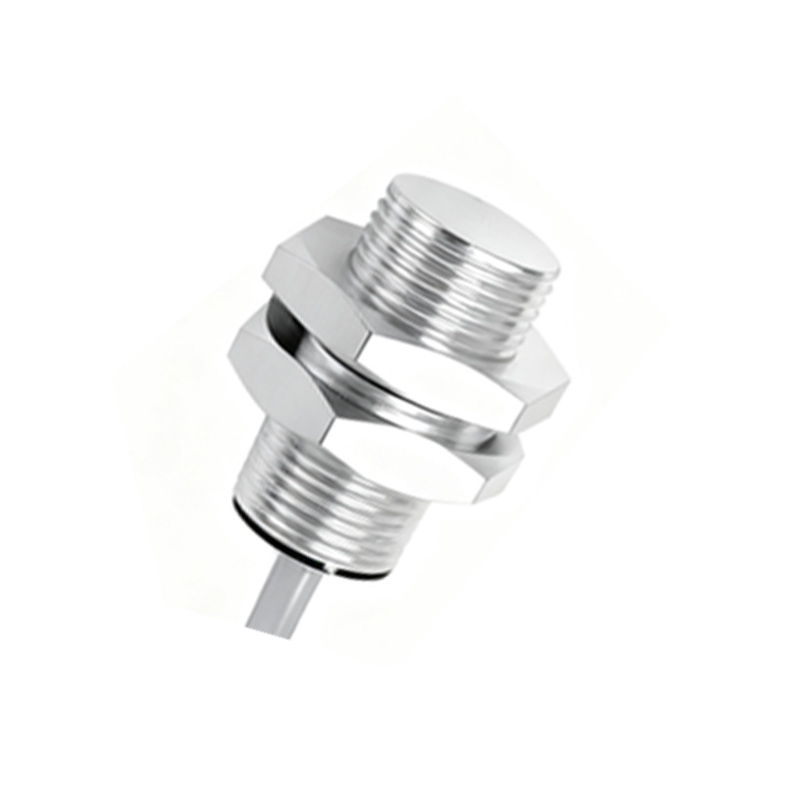
Key advantages of NPN sensors include their simplicity, cost-effectiveness, and robustness in harsh environments. They are less prone to electrical noise in certain setups and can be easily integrated into DC circuits. However, engineers must consider the wiring implications: NPN sensors require the load to be connected to the positive voltage supply, which can affect system design if mixed with PNP devices. Proper installation involves ensuring correct polarity, voltage ratings (typically 10-30V DC), and environmental protection (e.g., IP ratings for dust and moisture resistance).
Applications of NPN proximity switches span various industries, from manufacturing and packaging to automotive and robotics. For instance, in conveyor systems, they detect product positions for sorting or counting; in machine tools, they monitor part presence to prevent collisions; and in safety systems, they act as limit switches to halt operations when hazards are detected. The choice between NPN and PNP often depends on regional preferences, control system requirements, and circuit design. In North America, PNP sensors are more common, but globalized equipment has led to increased use of both types.
When selecting an NPN sensor or proximity switch, factors such as sensing distance, response time, material compatibility, and output type (e.g., normally open or closed) must be evaluated. Inductive sensors are ideal for metals with short ranges (up to 60 mm), while capacitive sensors handle diverse materials over similar distances. Photoelectric sensors offer longer ranges but may be sensitive to ambient light. Engineers should also assess environmental conditions like temperature extremes, vibration, and chemical exposure to ensure durability.
In summary, NPN sensors and proximity switches are indispensable in modern automation, offering non-contact sensing with high reliability. Understanding their operation and integration helps optimize system performance and safety. As technology advances, smart sensors with IO-Link or digital outputs are emerging, enhancing diagnostics and connectivity. For professionals in the electrical industry, mastering these components is key to designing efficient and resilient automation solutions. Always refer to manufacturer datasheets and industry standards, such as IEC 60947-5-2, for guidance on implementation and safety.