In the realm of industrial automation and control systems, proximity switches are indispensable components for non-contact detection of metallic or, in some cases, non-metallic objects. Among the various configurations available, the 4-wire proximity switch stands out for its versatility and functionality, offering a blend of features that cater to complex application requirements. This article delves into the operational principles, wiring configurations, advantages, and typical use cases of 4-wire proximity sensors, providing a detailed technical overview for engineers and technicians.
A proximity switch, fundamentally, is a sensor that detects the presence or absence of an object without physical contact. It operates by emitting an electromagnetic field or a beam of electromagnetic radiation (such as infrared light), and then monitoring for changes in the field or return signal. The 4-wire variant is specifically designed to provide two distinct, isolated circuits: one for the sensor's power supply and the other for its output switching function. This design is a key differentiator from 2-wire or 3-wire sensors.
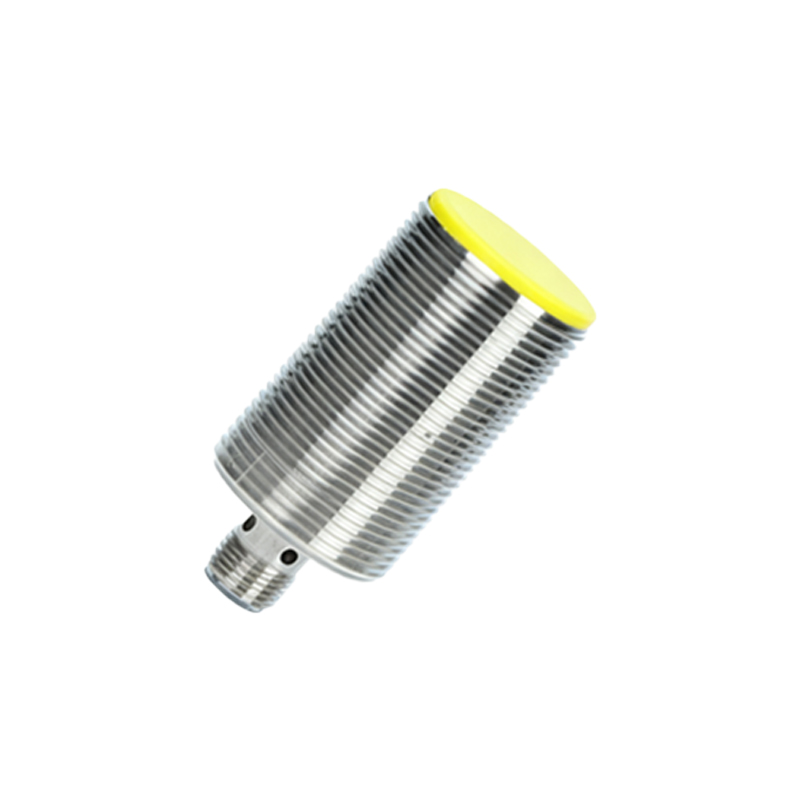
The core of a 4-wire proximity switch typically involves an oscillator circuit, a detection coil, and a solid-state output stage. When a target object enters the sensor's sensing range, it causes eddy currents to be generated in the metallic object (for inductive types) or reflects/absorbs the emitted beam (for capacitive or photoelectric types). This interaction dampens or alters the oscillator's amplitude. The subsequent signal conditioning circuitry detects this change and triggers the output switching element.
The wiring configuration is where the "4-wire" designation becomes clear. The four wires are usually color-coded according to international standards (commonly brown, blue, black, and white). The brown wire is connected to the positive DC supply voltage (typically 10-30 VDC), and the blue wire is connected to the DC common or ground (0V). These two wires power the internal electronics of the sensor. The remaining two wires, black and white, are the switched output lines. Crucially, these output wires are electrically isolated from the power supply circuit. This allows for significant flexibility. The output can be configured as either a normally open (NO) or normally closed (NC) contact by connecting the load (e.g., a PLC input, relay coil, or indicator lamp) between the black wire and either the positive supply or the common/ground, and using the white wire as the complementary signal or for a second output channel in some models. Often, the black wire serves as the NO output, and the white wire serves as the NC output, providing both signals simultaneously.
The primary advantage of the 4-wire design is this isolated output. It allows the sensor's output to switch a load that operates at a different voltage level than the sensor's own power supply, provided the output switching element (usually a transistor) is rated for that voltage and current. For instance, the sensor can be powered by 24 VDC, while its output can independently control a 5 VDC logic circuit or a 120 VAC load (if using a relay interface). This isolation also helps in reducing electrical noise interference and prevents ground loop issues, which is critical in electrically noisy industrial environments. Furthermore, having both NO and NC outputs available from a single sensor can simplify control logic and wiring in certain applications, eliminating the need for additional inverters or relays.
When selecting and applying a 4-wire proximity switch, several parameters must be considered. The sensing distance, which is nominal and depends on the target material and size, should be chosen with a safety margin. The output type is also vital; most 4-wire sensors feature solid-state NPN or PNP transistor outputs. The load current rating of the output transistor must not be exceeded. Environmental factors such as ambient temperature, presence of chemicals, and potential for physical impact (requiring a robust housing rating like IP67) are also critical for reliable operation.
Typical industrial applications for 4-wire proximity switches are extensive. They are commonly used in material handling systems for detecting the position of pallets or products on conveyor belts. In machine tools, they serve as limit switches to determine the end-of-travel position of moving parts. In automated assembly lines, they verify the presence or correct orientation of components. The isolated output feature makes them particularly useful in control panels where different voltage domains coexist, or in safety-related circuits where electrical separation is mandated.
Installation and maintenance are straightforward but require attention to detail. The sensor should be mounted securely, ensuring the sensing face is clear of obstructions and that metallic mounting brackets or surrounding metals do not interfere with its field (maintaining the recommended flush or non-flush mounting guidelines). Regular checks should include verifying the supply voltage, inspecting for physical damage, and testing the output response with a target.
In conclusion, the 4