In industrial automation, M12 proximity sensors are indispensable components for object detection, positioning, and counting. Among their critical specifications, sensing distance stands out as a paramount parameter influencing system reliability and performance. This article delves into the technical intricacies of M12 inductive and capacitive proximity sensor sensing ranges, exploring factors affecting detection capabilities and best practices for optimal deployment.
The nominal sensing distance (Sn) for a standard M12 inductive proximity sensor, typically designed for metal target detection, ranges from 2mm to 8mm, with 4mm being a common industry standard. This distance is defined under ideal conditions: a standard target (usually mild steel) of a specified size (often a 1mm thick square of side length equal to the sensor's diameter), at an ambient temperature of 23°C. It is crucial to understand that the effective operating distance (Sr) is often derated to 0.8Sn or less to account for variables like temperature fluctuations, supply voltage tolerance, and target material composition. For instance, the sensing distance for stainless steel might be reduced to approximately 0.7-0.9 times the value for mild steel, while for aluminum or copper, the reduction can be more significant, sometimes down to 0.3-0.5 times.
Several key factors directly modulate the achievable sensing range. First, the target material's properties—specifically its electrical conductivity and magnetic permeability—are primary determinants. Ferrous materials (like carbon steel) yield the longest range for inductive sensors. Second, target size and shape matter. A target smaller than the sensor's active face diameter will proportionally decrease the sensing distance. Third, installation conditions play a vital role. Flush-mountable sensors (shielded) have a reduced range compared to non-flush (unshielded) types, as the shielding contains the magnetic field, preventing lateral detection but allowing installation flush with metal mounting surfaces without false triggering. Fourth, environmental factors such as extreme temperatures, strong electromagnetic interference (EMI), or the presence of dust, oils, or coolants can attenuate performance. For capacitive M12 sensors, used for non-metallic material detection, factors like the target's dielectric constant, humidity, and contamination levels significantly influence the sensing distance, which is generally shorter than inductive counterparts for solid objects.
Calibration and real-world adjustment are non-negotiable for precision applications. Engineers should never design a system where the target operates at the absolute nominal sensing limit. A safety factor, often 20-50% of Sn, should be incorporated. For example, if a 4mm sensing distance is required, selecting a sensor with an Sn of 5mm or 6mm provides a necessary buffer. Alignment is also critical; the sensor's sensing axis must be perpendicular to the target approach direction for maximum range. Angular misalignment can cause substantial drop-off.
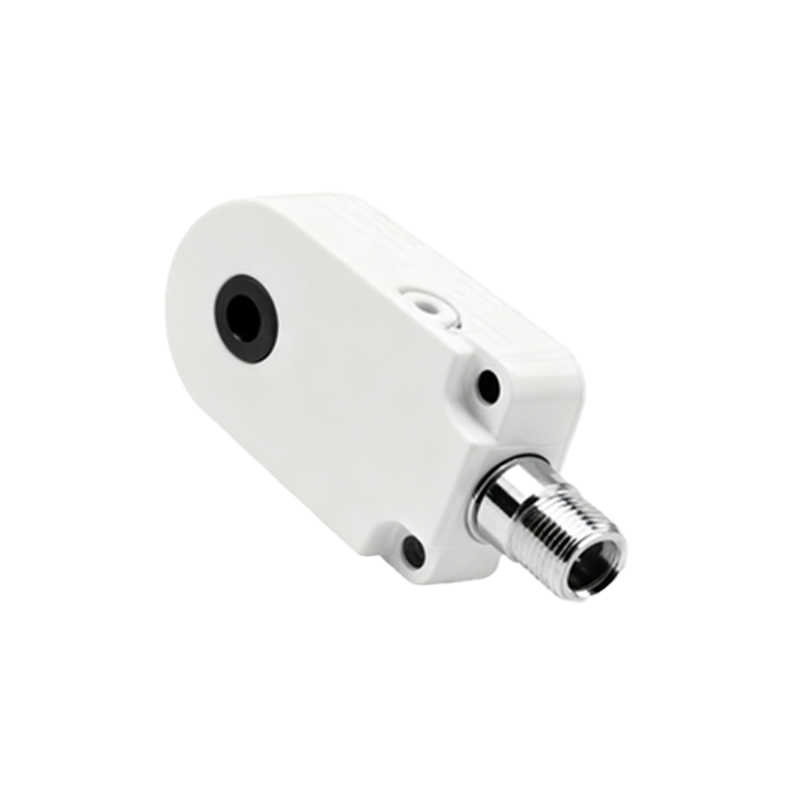
When selecting an M12 sensor for a specific sensing distance requirement, consult the manufacturer's datasheet meticulously. Key graphs to analyze include the sensing distance vs. target material curve, temperature derating curves, and hysteresis diagrams (the difference between the switch-on and switch-off points). Modern sensors feature teach-in functions or potentiometers for fine-tuning the switching threshold, allowing adaptation to unique application conditions.
In high-speed or precision assembly applications, even a 0.1mm variance in sensing point can be critical. Here, using sensors with high repeatability (often within 0.02% of Sn) and minimal temperature drift is essential. Furthermore, considering the sensor's response frequency is vital; a sensor with a 5kHz response can handle targets passing at much higher speeds than one with a 100Hz response, indirectly affecting how distance is managed in dynamic processes.
In conclusion, mastering M12 proximity sensor sensing distance is not merely about reading a datasheet number. It involves a holistic understanding of target properties, environmental context, installation mechanics, and electrical characteristics. By applying engineering principles—factoring in deratings, ensuring proper alignment, and incorporating safety margins—professionals can guarantee robust, fail-safe detection that upholds the integrity and efficiency of automated systems. Always prioritize real-world testing under actual operating conditions to validate the chosen sensor's performance against its theoretical sensing distance.