In the rapidly evolving landscape of industrial automation, the demand for compact, reliable, and high-performance sensing solutions has never been greater. Among the most critical components in modern manufacturing and machinery are proximity sensors, which detect the presence or absence of objects without physical contact. A standout innovation in this field is the ultra-small cylindrical proximity sensor, a device that packs advanced functionality into a remarkably diminutive form factor. This article delves into the technology, applications, and benefits of these miniature marvels, highlighting their transformative impact across various industries.
Ultra-small cylindrical proximity sensors typically feature diameters as narrow as 4mm to 8mm, with lengths often under 40mm. Despite their tiny size, they incorporate sophisticated sensing technologies, primarily inductive, capacitive, or magnetic principles. Inductive sensors, the most common variant, generate an electromagnetic field to detect metallic objects, making them ideal for harsh industrial environments where dust, oil, or moisture is prevalent. Capacitive sensors, on the other hand, can detect both metallic and non-metallic materials by measuring changes in capacitance, while magnetic sensors respond to permanent magnets, offering precise positioning in applications like cylinder piston detection.
The engineering behind these sensors involves meticulous design to ensure robustness and accuracy. Key components include a ferrite core coil, an oscillator circuit, a signal evaluator, and a solid-state output switch, all housed within a stainless steel, brass, or polymer barrel. Advanced models incorporate embedded microprocessors for programmable functions such as teach-in capabilities, output delay, and temperature compensation. The compact design necessitates innovative solutions for heat dissipation, electromagnetic compatibility (EMC), and resistance to mechanical stress, often achieved through high-grade encapsulation materials and surface-mount technology (SMT) on printed circuit boards (PCBs).
One of the primary advantages of ultra-small cylindrical proximity sensors is their ability to fit into extremely tight spaces where traditional sensors cannot be installed. This enables machine designers to optimize layout, reduce overall equipment size, and enhance modularity. For instance, in semiconductor manufacturing, these sensors are deployed within wafer handling robots to detect minute components with micron-level precision. In automotive assembly lines, they monitor the position of small gears, springs, or fasteners, ensuring flawless quality control. The medical device industry leverages them in compact diagnostic instruments and surgical robots, where hygiene and reliability are paramount.
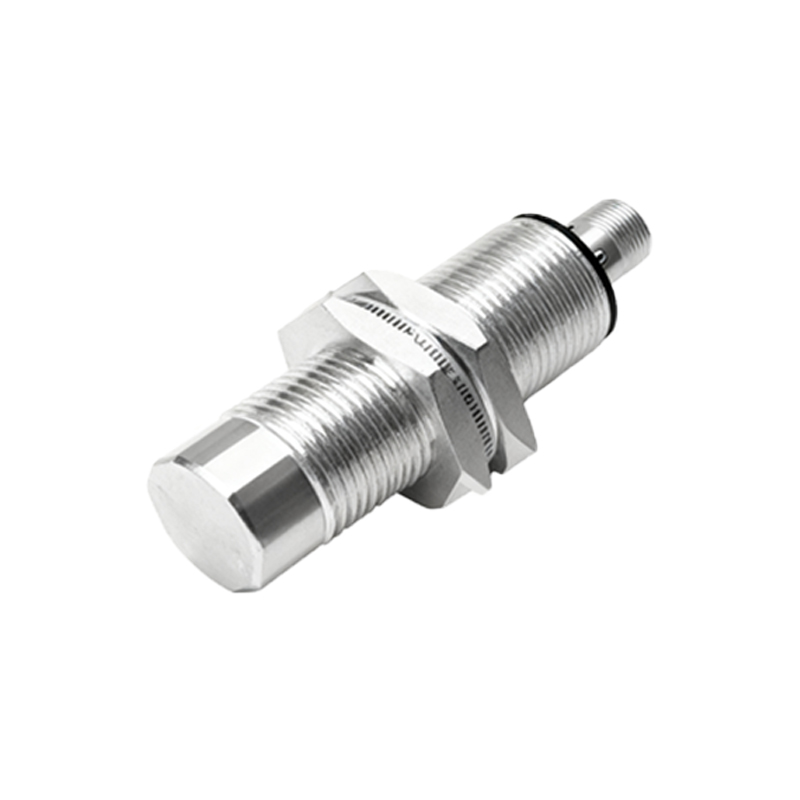
Furthermore, these sensors contribute significantly to energy efficiency and operational safety. Their low power consumption, often below 20mA, aligns with green manufacturing initiatives, while their non-contact nature eliminates wear and tear, extending service life and reducing maintenance costs. Many models feature short-circuit and overload protection, along with high ingress protection (IP) ratings such as IP67 or IP69K, allowing them to withstand washdowns, vibrations, and extreme temperatures from -25°C to 70°C. This durability ensures consistent performance in demanding settings like food processing, packaging, and outdoor machinery.
Integration with Industry 4.0 systems is another critical aspect. Ultra-small cylindrical proximity sensors often support IO-Link communication, a point-to-point serial protocol that enables digital data exchange beyond simple switching signals. Through IO-Link, users can access real-time parameters like sensor health, temperature readings, and detection counts, facilitating predictive maintenance and smart factory analytics. This connectivity transforms sensors from mere detection devices into intelligent nodes within the Internet of Things (IoT) ecosystem, enhancing overall system transparency and control.
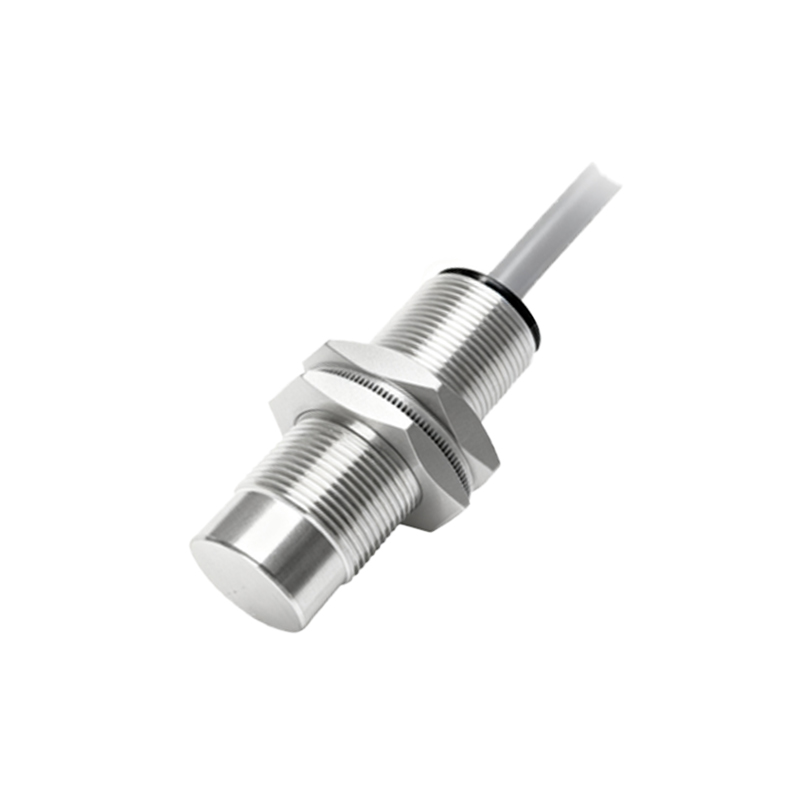
When selecting an ultra-small cylindrical proximity sensor, engineers must consider several factors: sensing range, which is typically shorter due to the reduced size (e.g., 1mm to 5mm for inductive types); output type (PNP/NPN, NO/NC); supply voltage (commonly 10-30V DC); and environmental conditions. It is also crucial to verify compatibility with the target material and installation requirements, such as flush or non-flush mounting. Leading manufacturers like Pepperl+Fuchs, Omron, and Balluff offer extensive product lines with customizable options to meet specific application needs.
In conclusion, ultra-small cylindrical proximity sensors represent a pinnacle of miniaturization and intelligence in sensor technology. By enabling precise, reliable detection in confined spaces, they drive innovation across automation, robotics, and beyond. As industries continue to prioritize efficiency and flexibility, these sensors will undoubtedly play an increasingly vital role in shaping the future of smart manufacturing. Engineers and system integrators are encouraged to explore their potential, leveraging their compact power to unlock new levels of performance and productivity.