In the realm of industrial automation and control systems, proximity sensors are indispensable components. They detect the presence or absence of an object within a specific range without any physical contact, enabling precise, reliable, and maintenance-free operation in harsh environments. Understanding the different types of proximity sensors is crucial for selecting the right technology for a given application. This article delves into the most common types, explaining their operating principles, typical applications, and key considerations.
The first major category is the Inductive Proximity Sensor. These sensors generate an electromagnetic field. When a metallic object (ferrous or non-ferrous) enters this field, it induces eddy currents within the object, causing a change in the sensor's oscillation amplitude. This change is detected and converted into a switching signal. Inductive sensors are highly robust, resistant to dirt, dust, and moisture, and offer high switching frequencies. They are ideal for detecting metal parts in applications like machine tools, conveyor systems, and automotive assembly lines. Their limitation is that they only detect conductive metals.
Next are Capacitive Proximity Sensors. These sensors function by generating an electrostatic field. Any object that enters this field, regardless of its material (metal, plastic, wood, liquid, or granules), alters the capacitance of the system. This alteration is measured, and when it reaches a preset threshold, the sensor triggers an output. Capacitive sensors can detect non-metallic materials, making them versatile for level detection of liquids, powders, or plastics, and for applications involving glass, wood, or cardboard. They are sensitive to environmental factors like humidity and require careful calibration to avoid false triggers from non-target materials.
Ultrasonic Proximity Sensors operate on a principle similar to sonar. They emit high-frequency sound waves (ultrasonic pulses) and measure the time it takes for the echo to return after bouncing off a target object. The time-of-flight data is used to calculate the distance to the object. These sensors can detect objects of virtually any material, shape, or color, and are effective over longer ranges compared to inductive or capacitive types. Common applications include distance measurement, object presence detection in packaging, liquid level control in tanks, and even in autonomous guided vehicles (AGVs). Performance can be affected by temperature variations, air turbulence, and the object's sound-absorbing properties.
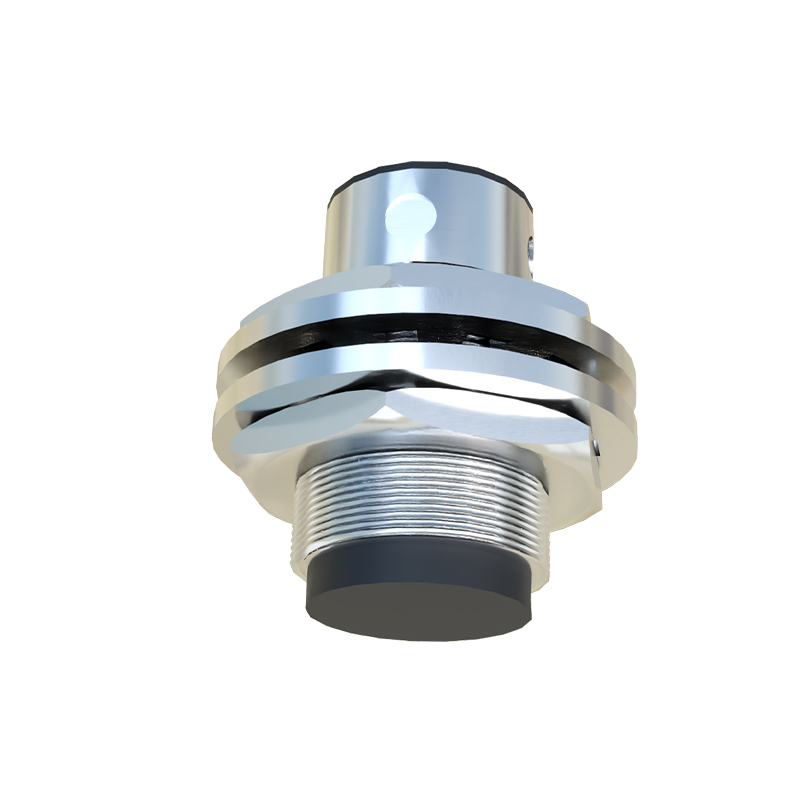
Photoelectric Sensors, while sometimes categorized separately, are a fundamental type of proximity sensor. They use a light emitter (usually LED or laser) and a receiver. The presence of an object is detected by either interrupting the light beam (through-beam), reflecting light back to the receiver (retro-reflective), or diffusing light from the object itself (diffuse reflective). Photoelectric sensors offer very long sensing ranges, high speed, and can detect tiny objects. They are excellent for detecting transparent materials, color marks, or objects on fast-moving production lines. Their performance can be compromised by ambient light, dust, fog, or the color and reflectivity of the target.
Magnetic Proximity Sensors (often Reed Switches or Hall Effect sensors) detect the presence of a magnetic field, typically from a permanent magnet attached to the moving target. Reed switches consist of two ferromagnetic reeds sealed in a glass tube; a magnetic field causes them to flex and make contact. Hall Effect sensors produce a voltage change in response to a magnetic field. These sensors are simple, cost-effective, and can be completely sealed, making them perfect for hazardous or wet environments. They are widely used for detecting door/window positions, cylinder piston position in pneumatic systems, and in low-speed rotational sensing.
Choosing the right proximity sensor depends on several factors: the target material (metal, plastic, liquid), the required sensing distance, the operating environment (temperature, presence of contaminants), the needed switching frequency (speed), and the output type (PNP/NPN, analog, IO-Link). For instance, an inductive sensor is the default choice for metal detection in oily conditions, while a capacitive sensor is necessary for monitoring plastic granule levels in a hopper. An ultrasonic sensor solves challenges with transparent bottle detection on a filler line where photoelectric sensors might struggle.
In conclusion, the diverse family of proximity sensors—inductive, capacitive, ultrasonic, photoelectric, and magnetic—provides engineers with a toolkit to solve nearly any non-contact detection challenge. A deep understanding of their distinct operating principles and application boundaries is the key to designing efficient, reliable, and cost-effective automated systems. As technology advances, sensors are becoming smarter with integrated diagnostics and networking capabilities, further enhancing their role as the fundamental sensory organs of modern industry.