In the intricate world of industrial automation, the seamless and reliable detection of objects is paramount. Among the myriad of sensing technologies available, switch-type proximity sensors stand out as fundamental, robust components. These non-contact devices are engineered to detect the presence or absence of a target object within their sensing range without any physical contact, thereby eliminating mechanical wear and enabling high-speed, maintenance-free operation. Their role is critical across diverse sectors, from automotive assembly lines and packaging machinery to material handling systems and robotic cells.
At its core, a switch-type proximity sensor operates by generating an electromagnetic field or a beam of light. When a target object enters this field, it causes a change in the sensor's oscillation amplitude or light reception. This change is processed by the sensor's internal circuitry, which subsequently triggers a solid-state electronic switch—hence the name "switch-type." This switch controls an output signal, typically a direct current (DC) voltage, that interfaces with programmable logic controllers (PLCs), motor starters, or other control systems to initiate a programmed action, such as stopping a conveyor, counting parts, or confirming a position.
The advantages of employing switch-type proximity sensors are numerous. Their non-contact nature ensures a long operational life, as there is no mechanical fatigue or physical degradation from repeated impacts. They are capable of detecting a wide variety of materials, including metals, plastics, and liquids, depending on the sensing principle—inductive, capacitive, or photoelectric. Inductive sensors, for instance, are ideal for detecting metallic objects, while capacitive sensors can sense non-metallic materials. This versatility makes them indispensable. Furthermore, they offer high switching frequencies, allowing for the detection of rapidly moving objects on high-speed production lines. Their construction is often rugged, featuring housings rated for IP67 or higher, making them resistant to dust, moisture, oils, and coolants commonly found in harsh industrial environments.
The integration of these sensors into a control system enhances both safety and efficiency. By providing precise, real-time feedback on machine and process states, they are essential for error-proofing, quality control, and sequential operation. For example, in a robotic welding station, a proximity sensor can verify the correct positioning of a metal component before the welding cycle begins, preventing costly errors and potential damage. In automated storage systems, they ensure precise positioning of retrieval units. Their simple two-wire or three-wire connection schemes facilitate easy installation and replacement, minimizing downtime.
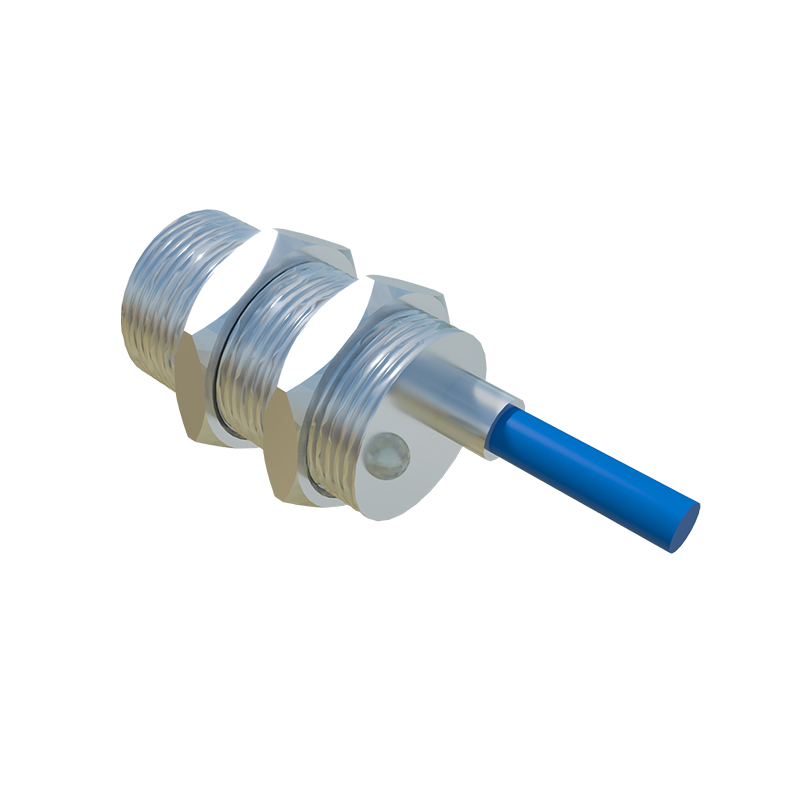
Looking forward, the evolution of switch-type proximity sensors continues alongside Industry 4.0 trends. Modern variants come with advanced diagnostics via IO-Link communication, providing data on sensor health, temperature, and switch cycles, enabling predictive maintenance. Their design is also becoming more compact, allowing installation in space-constrained applications without sacrificing sensing performance. In conclusion, the switch-type proximity sensor is far more than a simple on/off device; it is a vital sensory organ of the automated industrial landscape. Its reliability, durability, and adaptability form the bedrock upon which efficient, safe, and intelligent manufacturing processes are built, silently ensuring that machines see, understand, and react to their physical world with unwavering precision.