In the dynamic landscape of industrial automation, the demand for reliable, efficient, and self-sufficient sensing solutions is paramount. Among the most critical components in this domain are 24V DC proximity sensors, particularly those designed for self-operated or "self-contained" applications. These devices form the backbone of countless automated systems, providing non-contact detection of metallic and, in some cases, non-metallic objects. Their integration into machinery for positioning, counting, safety interlocking, and quality control is ubiquitous, making a deep understanding of their operation and selection criteria essential for any electrical engineer or system designer.
The term "24V self-operated" primarily refers to the sensor's power requirements and its operational autonomy. A standard 24V DC power supply is the lifeblood of industrial control panels, offering a safe, low-voltage option that is compatible with Programmable Logic Controllers (PLCs), relays, and other control circuitry. This voltage level strikes an optimal balance between safety (reduced risk of electric shock compared to higher voltages) and signal integrity (minimizing voltage drop over longer cable runs common in factory settings). The "self-operated" aspect underscores the sensor's ability to function as a complete, standalone switching unit. It contains all necessary electronics—oscillator, amplifier, output switching circuit—within a single, robust housing. When a target enters its sensing field, the sensor internally processes this change and activates its output signal without requiring external processing modules, making installation straightforward and cost-effective.
There are several core technologies underpinning 24V proximity sensors, each suited to specific applications. Inductive proximity sensors are the most common, detecting ferrous and non-ferrous metals. They generate an electromagnetic field; when a metallic object disrupts this field, the sensor triggers. Capacitive sensors, on the other hand, can detect both metallic and non-metallic materials (plastics, wood, liquids) by sensing changes in capacitance. For specialized needs, such as detecting transparent objects or requiring longer ranges, ultrasonic and photoelectric sensors are also available in 24V DC self-operated configurations. The output from these sensors is typically a solid-state switch, either as a PNP (sourcing) or NPN (sinking) transistor. The choice between PNP and NPN is crucial and depends on the input configuration of the controller (e.g., PLC). A PNP sensor switches the positive voltage to the load, while an NPN switches the negative or ground side.
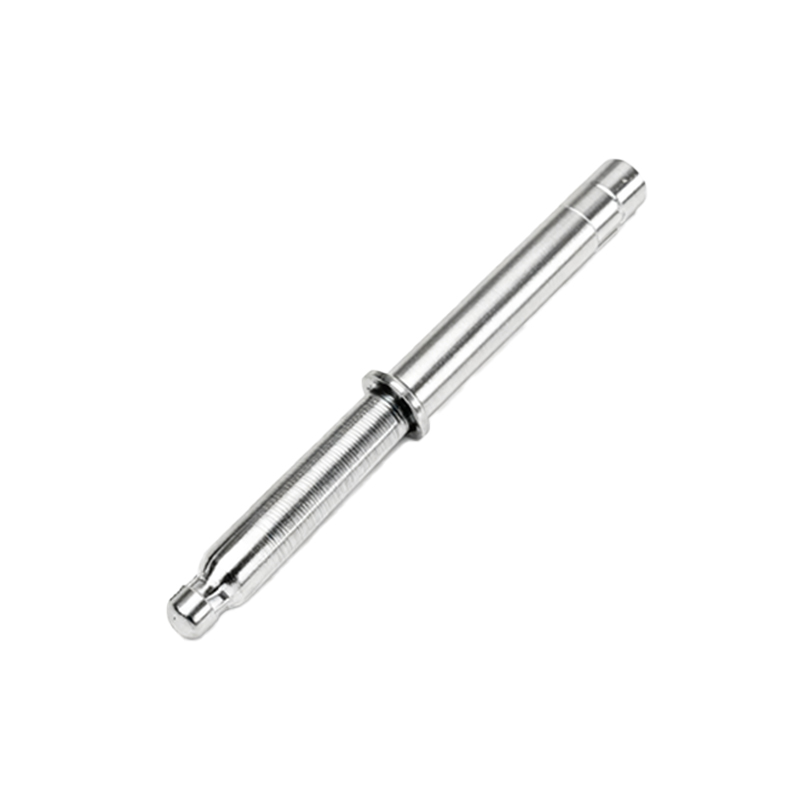
Selecting the right 24V self-operated proximity sensor involves a meticulous evaluation of several parameters. The sensing distance, or nominal range, must be carefully chosen with a safety margin, as environmental factors like temperature and target material can affect performance. The housing material is another critical consideration; sensors in harsh environments may require stainless steel or specialized plastic housings with high IP (Ingress Protection) ratings like IP67 or IP69K to withstand dust, washdowns, and chemical exposure. The electrical connection style—pre-wired cable, quick-disconnect (M8, M12 connectors), or terminal block—impacts maintenance and installation time. Furthermore, engineers must consider output function (normally open/closed), switching frequency for high-speed applications, and the presence of diagnostic LEDs for troubleshooting.
The advantages of implementing 24V self-operated proximity sensors are manifold. Their non-contact nature eliminates mechanical wear, ensuring exceptionally long service life and reducing maintenance costs. They offer high switching speeds and repeat accuracy, which are vital for precision automation tasks. Their rugged construction allows them to perform reliably in challenging industrial conditions where vibration, moisture, and temperature fluctuations are common. From a system design perspective, their plug-and-play simplicity accelerates commissioning and simplifies troubleshooting, as each sensor is an independent node on the control network.
In conclusion, 24V DC self-operated proximity sensors are indispensable tools in modern industrial automation. Their design elegantly combines operational reliability with practical simplicity, powered by the industry-standard 24V DC supply. For engineers, a thorough grasp of their technologies, specifications, and selection criteria is not merely academic—it is a practical necessity for designing robust, efficient, and future-proof automated systems. As Industry 4.0 and smart manufacturing evolve, these sensors will continue to be fundamental components, seamlessly integrating into more complex networks while retaining their core promise of dependable, autonomous sensing.