In industrial automation and machinery control, proximity sensors play a critical role in detecting the presence or absence of objects without physical contact. Among the various configurations, normally open (NO) proximity sensors are widely utilized for their specific operational characteristics. This article delves into the working principle, typical applications, advantages, and selection considerations for normally open proximity sensors.
A normally open proximity sensor is defined by its output state when no target is within its sensing range. In this condition, the output circuit remains open, meaning no electrical current flows through it. When a target enters the sensor's detection field, the internal switching mechanism activates, closing the circuit and allowing current to pass. This change in state—from open to closed—triggers a signal to a control system, such as a PLC (Programmable Logic Controller), indicating the presence of the object.
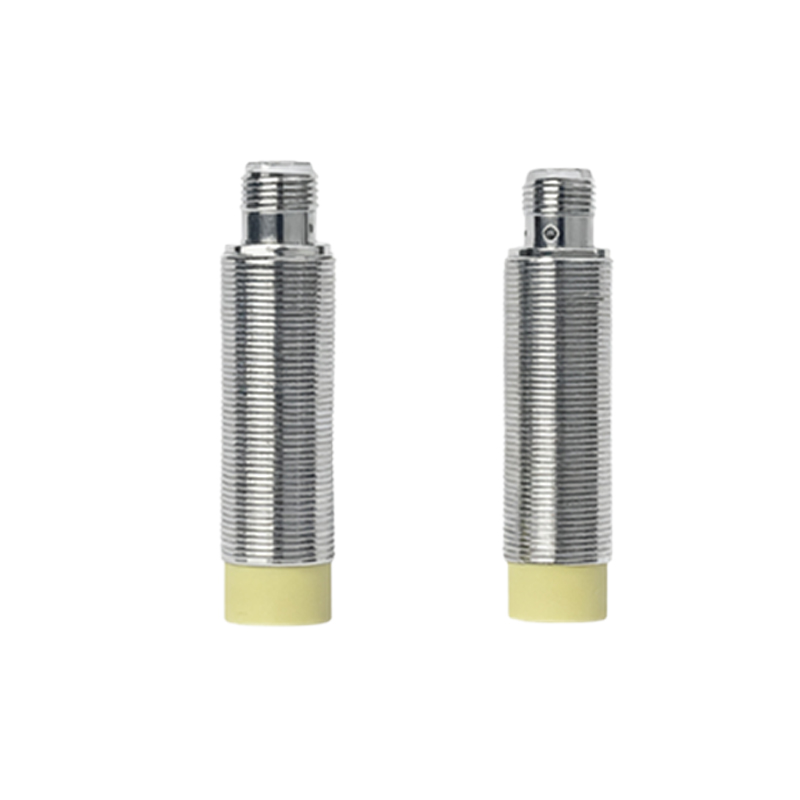
The underlying technology varies based on sensor type. Inductive proximity sensors, for instance, generate an electromagnetic field and detect metallic targets by changes in oscillation amplitude. Capacitive sensors respond to both metallic and non-metallic materials by sensing alterations in capacitance. Regardless of the technology, the normally open configuration ensures that the output is inactive until a target is detected, making it inherently "off" in the absence of a stimulus.
One of the primary advantages of normally open proximity sensors is safety and energy efficiency. In many safety-critical applications, such as emergency stop circuits or guard door monitoring, a "fail-safe" design is paramount. A normally open sensor will not complete the circuit if it fails or loses power, thereby signaling a fault condition and preventing unintended machine operation. This aligns with fail-safe principles where an open circuit indicates a safe state. Additionally, since the output is inactive when not sensing, power consumption can be lower in standby modes, contributing to energy savings in large-scale installations.
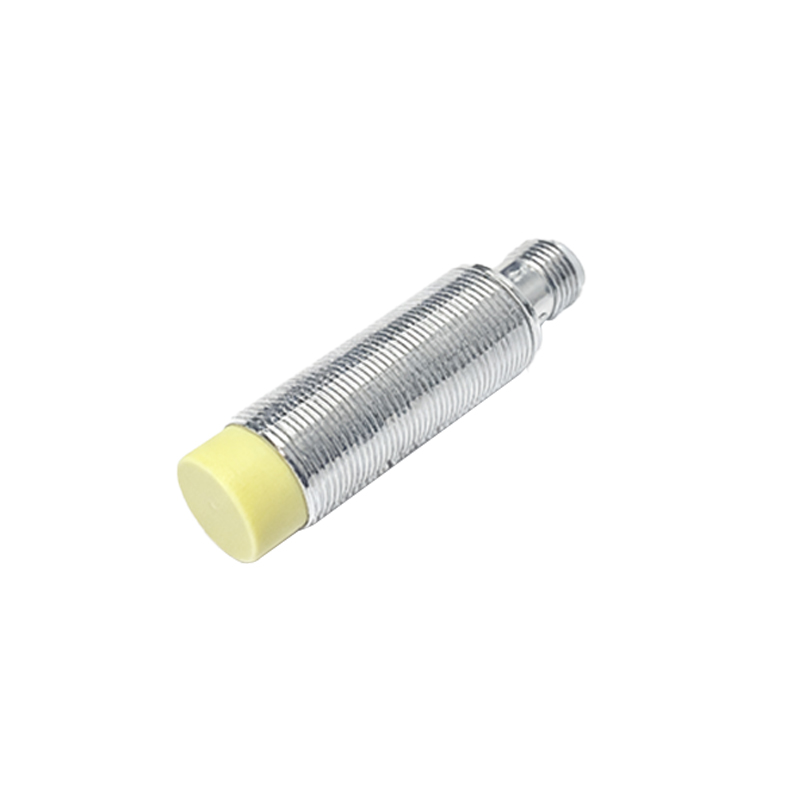
Normally open sensors find extensive use across industries. In automotive assembly lines, they verify the presence of components like pistons or bolts before a robotic arm proceeds. Packaging machinery employs them to confirm that bottles or boxes are correctly positioned for filling or sealing. In material handling, these sensors monitor conveyor belts, detecting items to count or sort them. Another common application is in position sensing, where they determine if a valve is fully open or a door is securely closed. The normally open setup is often preferred in scenarios where an alarm or action should only occur upon detection, reducing false triggers.
When selecting a normally open proximity sensor, several factors must be evaluated. Sensing range, which dictates how far the target can be detected, should match the application's spatial constraints. The sensor's housing material—typically nickel-plated brass, stainless steel, or PBT plastic—must withstand environmental conditions like moisture, chemicals, or temperature extremes. Output type (e.g., NPN or PNP) should be compatible with the control system's input module. Additionally, consider switching frequency, which defines how quickly the sensor can respond to moving targets, and protection ratings like IP67 for dust and water resistance.
Installation and wiring are straightforward. Most normally open sensors have three wires: brown for positive supply, blue for negative, and black for the output signal. In a typical setup, the output wire connects to the PLC input. When the sensor detects a target, it closes the circuit, sending voltage to the PLC, which then executes the programmed logic. Regular maintenance involves checking for physical damage, ensuring clean sensing faces, and verifying electrical connections to prevent malfunctions.
In comparison to normally closed (NC) sensors, which conduct current when idle and open upon detection, normally open versions offer distinct logic benefits. NO sensors are intuitive for "active-high" systems where detection corresponds to a positive signal. They simplify troubleshooting because a missing signal often indicates an issue, whereas NC sensors might mask failures. However, the choice between NO and NC depends on the control strategy; some designs use both for redundancy or complementary functions.
Technological advancements continue to enhance normally open proximity sensors. Modern versions integrate IO-Link for digital communication, enabling parameter adjustments and diagnostics remotely. Miniaturization allows installation in tight spaces, while enhanced shielding reduces interference from adjacent metal or electrical noise. These improvements expand their utility in smart factories and IoT-driven environments.
In summary, normally open proximity sensors are indispensable components in automation, offering reliable, contactless detection with inherent safety features. By understanding their operation and applications, engineers can optimize system design for efficiency and reliability. Whether in manufacturing, packaging, or safety systems, these sensors provide a fundamental building block for modern industrial control.