In the realm of industrial automation, precision measurement is a cornerstone of efficiency and quality control. Among the various technologies employed, laser distance sensing stands out for its accuracy, speed, and non-contact nature. A specific and highly versatile configuration within this field is the split-type or remote-head laser distance sensor. This article delves into the operational principles, key advantages, diverse applications, and critical selection factors for these sophisticated instruments.
At its core, a split-type laser distance sensor consists of two separate units: a remote sensor head and a controller or amplifier unit. The sensor head, which is typically compact and rugged, houses the laser diode, the optical system for focusing the beam, and the receiver that detects the reflected light. The controller unit contains the processing electronics, power supply, and output interfaces. These two components are connected via a cable, allowing the sensor head to be installed in tight, harsh, or hard-to-reach locations while the controller can be mounted in a more accessible and protected environment, such as a control cabinet.

The fundamental measurement principle is often based on the time-of-flight (ToF) method or triangulation. In the ToF method, the sensor calculates distance by measuring the time it takes for a laser pulse to travel to the target and back. Triangulation-based sensors, often used for shorter ranges with higher accuracy, project a laser spot onto the target; the position of the reflected spot on a receiving sensor (like a CCD or PSD) changes with the target's distance, allowing for precise calculation. The split-type design decouples the sensitive electronics from the measurement point, enhancing reliability in demanding conditions.
The advantages of this configuration are significant. Firstly, it offers exceptional installation flexibility. The small sensor head can be positioned in confined spaces, on moving machinery, or in areas with extreme temperatures, vibrations, or exposure to dust and moisture (often featuring high IP ratings). Secondly, it improves thermal management. By separating the heat-generating electronics (controller) from the measurement head, thermal drift and measurement inaccuracies are minimized. Thirdly, it simplifies maintenance and configuration. Technicians can access the controller for parameter adjustments, calibration, and diagnostics without disturbing the sensor head's position in the process. Finally, a single controller can sometimes interface with multiple remote sensor heads, optimizing system cost and footprint.
Applications for split-type laser distance sensors are vast and span numerous industries. In automotive manufacturing, they are used for precise gap and flush measurement between body panels. In the semiconductor and electronics industry, they ensure accurate wafer positioning and component height verification. Within logistics and warehousing, they facilitate pallet dimensioning, box height detection, and automated guided vehicle (AGV) navigation. In metal processing, they monitor sheet thickness, coil diameter, and roll gap control. Furthermore, they are indispensable in robotics for precise object localization and bin-picking operations, and in civil engineering for structural monitoring and alignment.
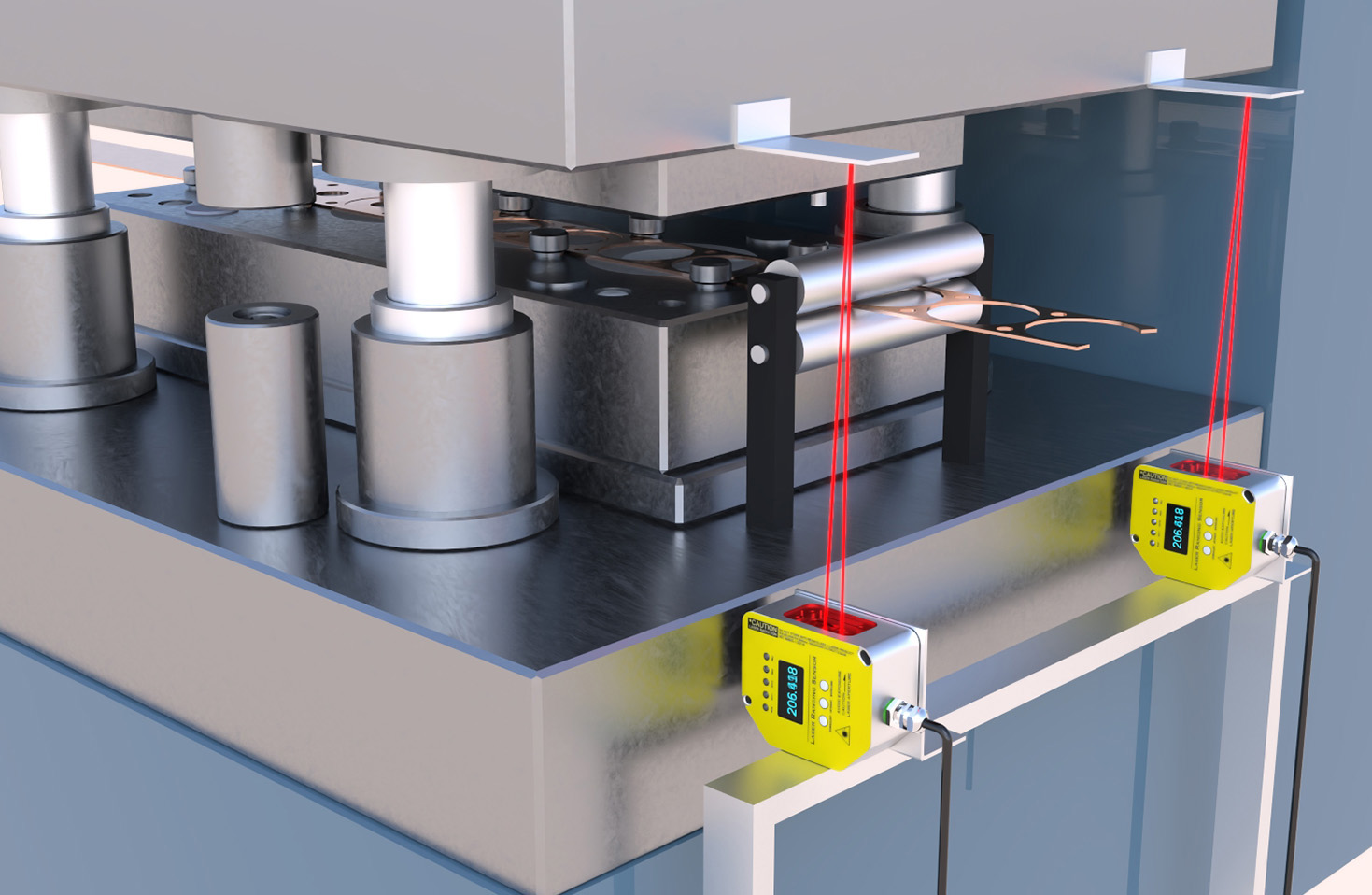
Selecting the appropriate split-type laser distance sensor requires careful consideration of several parameters. Key specifications include measuring range, which must suit the application's minimum and maximum distances. Accuracy and repeatability are paramount; sub-millimeter or even micron-level precision is available depending on the model and technology. The response time or measurement rate determines how quickly the sensor can update readings, crucial for high-speed production lines. Environmental robustness of the sensor head, indicated by its IP (Ingress Protection) and IK (Impact Protection) ratings, resistance to chemicals, and operating temperature range, must match the installation site conditions. The type of output from the controller (analog voltage/current, digital interfaces like RS-485, Ethernet/IP, PROFINET, or discrete switches) must be compatible with the existing PLC or data acquisition system. Finally, the laser class (typically Class 2 or Class 1 with higher power in enclosed systems) is a vital safety consideration, necessitating proper labeling and handling procedures to ensure eye safety.
In conclusion, split-type laser distance sensors represent a powerful solution for challenging measurement tasks where precision, reliability, and environmental adaptability are non-negotiable. By understanding their working principle, recognizing their distinct benefits, and meticulously evaluating technical specifications against application needs, engineers and system integrators can leverage this technology to enhance automation, improve product quality, and drive operational efficiency across a multitude of industrial sectors.
