The TCA305G is a highly integrated proximity sensor IC designed for precise non-contact detection in a wide range of industrial and consumer applications. As a cornerstone component in modern sensing technology, it offers a reliable solution for object presence detection, position sensing, and automated control systems. This article provides a detailed technical examination of the TCA305G, its operational principles, key specifications, and practical implementation considerations.
At its core, the TCA305G operates on the principle of electromagnetic induction. The IC typically drives an external LC tank circuit, generating a low-power oscillating electromagnetic field. When a conductive or metallic object enters this field, eddy currents are induced on the object's surface. These currents absorb energy from the oscillating circuit, causing a measurable change in the oscillation amplitude or frequency. The TCA305G's internal circuitry is precisely tuned to detect this minute change and convert it into a clear, digital output signal. This output can directly interface with microcontrollers, PLCs, or other logic circuits, triggering predefined actions such as stopping a motor, counting items, or activating a safety mechanism.
Key technical specifications of the TCA305G make it a versatile choice for engineers. It typically operates from a single power supply voltage ranging from 4.5V to 35V DC, offering significant flexibility for different system designs. Its output is often an open-collector NPN transistor, capable of sinking sufficient current to drive relays, optocouplers, or indicator LEDs directly. A critical parameter is its sensing distance, which is influenced by the size and composition of the target object and the design of the external sensing coil. While the IC itself does not have a fixed sensing range, proper coil design can achieve detection distances from a few millimeters to several centimeters. The device also features built-in hysteresis, which prevents output oscillation when a target is at the exact threshold distance, ensuring stable and chatter-free operation in dynamic environments. Furthermore, it includes protection against voltage transients and short-circuits, enhancing robustness in harsh industrial settings.
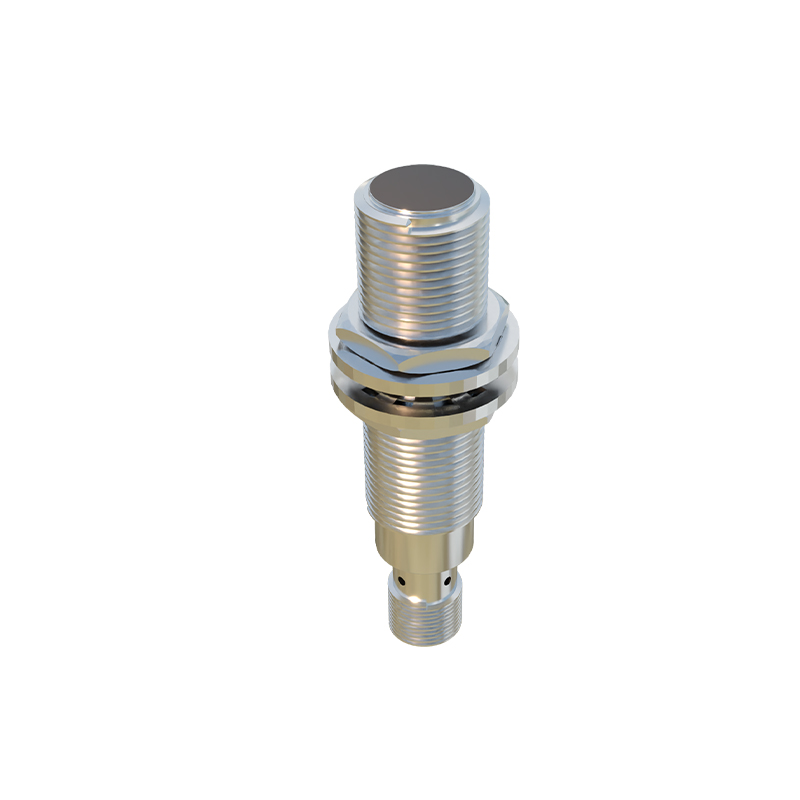
Designing with the TCA305G requires careful attention to several factors. The most crucial external component is the sensing coil. The coil's inductance, along with a resonant capacitor, forms the LC oscillator. The coil's physical geometry—its diameter, number of turns, and wire gauge—directly determines the shape and strength of the electromagnetic field and thus the effective sensing characteristics. A larger coil diameter generally increases the sensing range but may reduce sensitivity to small objects. Shielding the coil is often necessary to achieve directional sensing and to minimize interference from surrounding metal structures. Proper PCB layout is also essential; the connections between the IC and the coil should be as short as possible to reduce parasitic capacitance and inductance, which can destabilize the oscillation. Designers must also consider the environment; the presence of other oscillating sources or strong magnetic fields may require additional filtering or shielding.
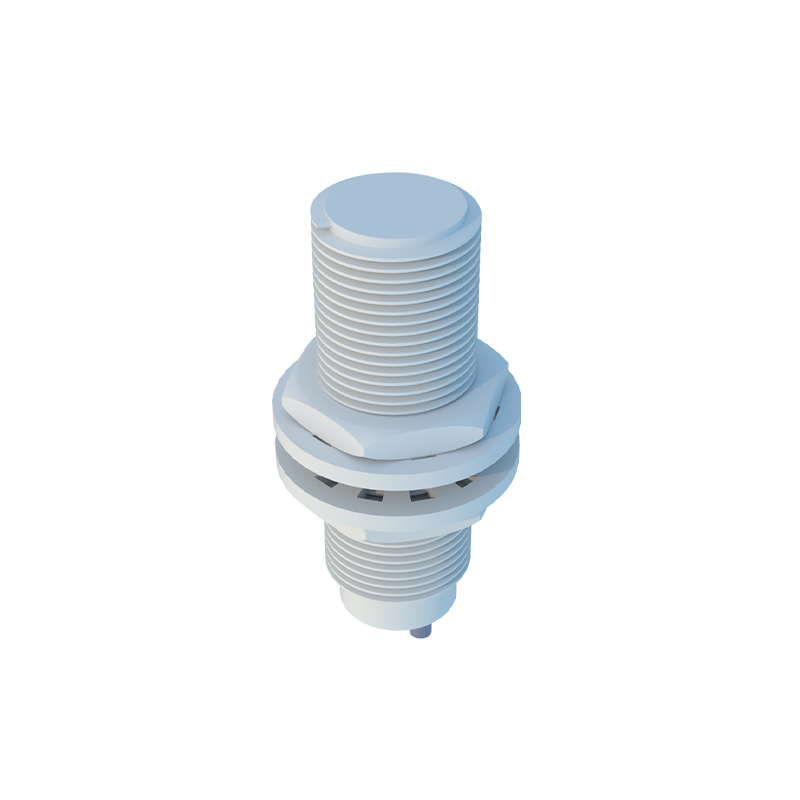
The applications for the TCA305G are extensive. In industrial automation, it is ubiquitously used for end-of-travel detection on linear actuators, rotary encoder indexing, and as a non-contact limit switch in machinery. In automotive systems, it can detect gear position or seat belt buckle status. Consumer applications include liquid level detection in appliances and cover closure detection in laptops or printers. Its reliability and solid-state nature make it superior to mechanical limit switches in applications involving high cycle counts, dirty environments, or where silent operation is required.
When integrating the TCA305G, engineers should follow a systematic approach. Begin by defining the target material (typically ferrous or non-ferrous metal), the required sensing distance, and the available space for the coil. Prototype the coil design and test with real targets under expected environmental conditions. Monitor the output stability with temperature variations, as the coil's inductance can drift. Utilize the IC's adjustable sensitivity, often via an external resistor, to fine-tune the detection threshold for the specific application. Finally, ensure the output is properly conditioned for the load it is driving, using flyback diodes for inductive loads like relays.
In conclusion, the TCA305G proximity sensor IC represents a mature and highly effective technology for non-contact detection. Its simplicity, robustness, and adaptability have cemented its place in the electrical engineer's toolkit. By understanding its operational theory and adhering to sound design practices for the sensing coil and circuit layout, developers can leverage this IC to create reliable, maintenance-free sensing solutions for countless automated systems.
SEO Keywords:TCA305G, proximity sensor IC, inductive sensing, industrial automation, sensor design
SEO Description:The TCA305G is a robust inductive proximity sensor integrated circuit. This technical overview covers its working principle, key specifications, design considerations for the sensing coil, and its diverse applications in automation and control systems.