Capacitive proximity sensors are versatile and essential components in modern industrial automation and control systems. Unlike their inductive counterparts which detect only metallic objects, capacitive sensors can detect a wide range of materials, including liquids, plastics, glass, wood, and granular substances. This unique capability makes them indispensable for diverse applications, from packaging and material handling to food processing and pharmaceutical manufacturing.
The fundamental operating principle of a capacitive proximity sensor is based on the concept of capacitance. The sensor essentially forms one plate of a capacitor, with the target object acting as the other plate. The sensor's internal oscillator generates an electrostatic field. When a target enters this detection field, it causes a change in the capacitance of the system. This change is measured by the sensor's circuitry. Once the change exceeds a predetermined threshold level, the sensor's output state switches, sending a signal to the connected controller, such as a PLC. This non-contact detection method ensures no physical wear on the sensor or the target, leading to high reliability and long service life.
Key components of a typical capacitive sensor include the sensing face (often made of a dielectric material like PTFE for harsh environments), the oscillator circuit, the signal evaluator, and the solid-state output switch (PNP, NPN, or analog). Many models feature a sensitivity adjustment potentiometer. This allows engineers to fine-tune the sensing distance or to compensate for environmental factors like humidity or material buildup on the sensor face, preventing false triggering. The rated sensing distance (Sn) is specified for a standard target, usually a grounded metal square. For non-metallic materials, the effective sensing distance is reduced and must be calculated using a reduction factor specific to the material's dielectric constant.
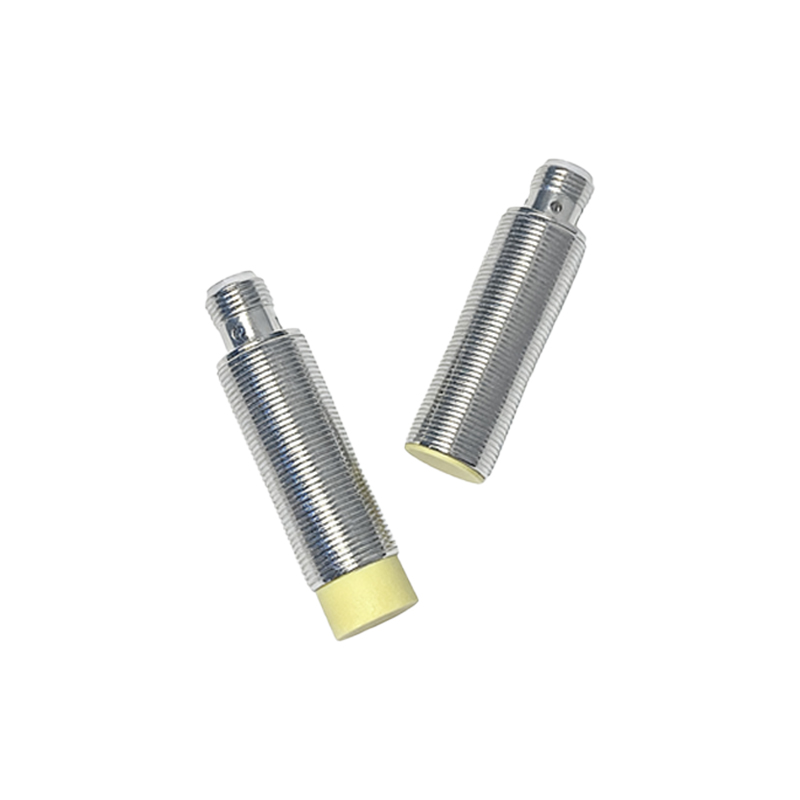
The advantages of capacitive sensors are numerous. Their ability to detect non-metallic objects through non-metallic containers (like detecting liquid level through a plastic tank wall) is a primary benefit. They are highly effective for end-of-line product detection, fill level control for powders or liquids, and presence verification of labels or adhesive tapes. Modern designs are robust, often featuring IP67 or IP69K ratings for resistance to water, dust, and aggressive cleaning chemicals. However, they also have limitations. They can be influenced by environmental conditions such as extreme humidity, temperature fluctuations, or conductive dust. Their sensing range is generally shorter than that of ultrasonic sensors, and they may detect unwanted objects if not properly adjusted, making correct installation and shielding crucial.
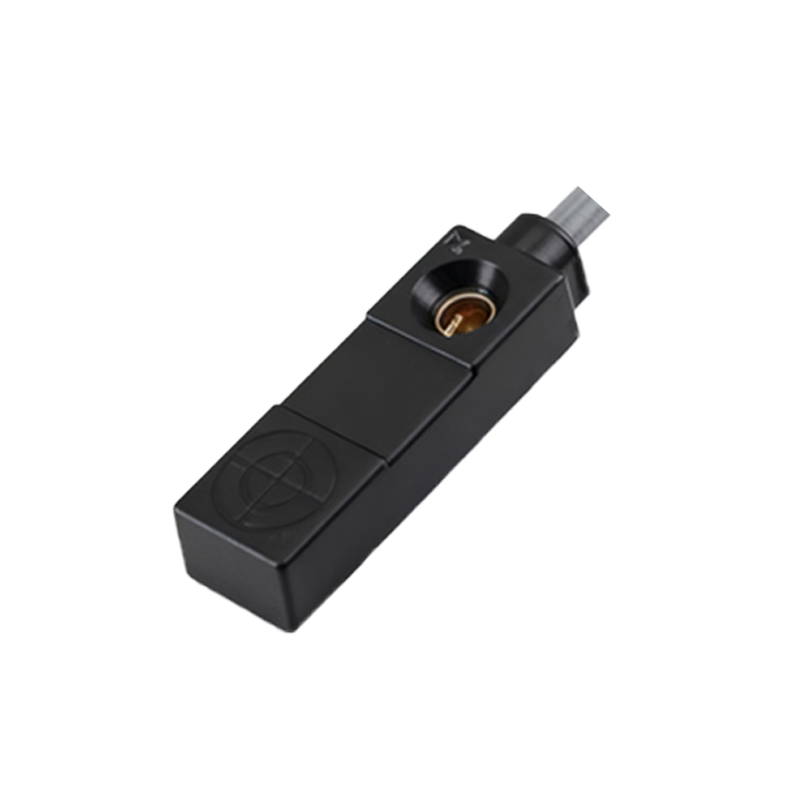
Selecting the right capacitive sensor requires careful consideration of several application parameters. First, identify the target material and its dielectric constant. Second, determine the required sensing distance, adding a safety factor. Third, choose the appropriate housing style (cylindrical, rectangular, or ring-shaped), size, and mounting method. Fourth, specify the electrical requirements: operating voltage (typically 10-30V DC or 20-250V AC), output type (NO/NC, 3-wire, 4-wire, or analog 0-10V/4-20mA), and current rating. For food-grade or washdown environments, sensors with stainless steel housings and FDA-compliant seals are mandatory. Communication capabilities, such as IO-Link, are becoming increasingly valuable for predictive maintenance and parameter setting via the control network.
In practice, capacitive sensors solve complex detection tasks. In bottling plants, they verify the presence of liquid inside opaque bottles before capping. In woodworking, they detect the passage of boards regardless of wood type or moisture content. In semiconductor fabrication, they monitor wafer presence in carriers. A critical installation tip is to ensure a stable mounting with minimal vibration. The sensor should be positioned so that the target approaches the sensing face directly, and adjacent conductive objects should be kept at a distance of at least twice the sensor diameter to avoid interference. Regular maintenance involves checking for coating buildup on the sensing face and verifying the output signal under operational conditions.
As Industry 4.0 evolves, capacitive sensors are integrating more intelligence. Smart sensors with IO-Link provide diagnostic data like operating hours, temperature warnings, and signal strength, enabling condition-based monitoring. Furthermore, advancements in miniaturization and embedded processing are expanding their use into consumer electronics and IoT devices. Understanding their principles, carefully matching them to the application, and following best practices for installation will ensure optimal performance, enhancing system efficiency, product quality, and operational safety across countless industries.