In the realm of industrial automation and object detection, proximity infrared (IR) reflective sensors stand as a cornerstone technology. This experimental analysis delves into the operational principles, key performance parameters, and practical considerations for deploying these sensors in demanding environments. The core mechanism involves an IR emitter, typically an LED, and a phototransistor or photodiode receiver mounted adjacently. The emitter projects a beam of infrared light. When an object enters the detection zone, this light reflects off the surface and is captured by the receiver. The sensor's internal circuitry then processes this signal to trigger an output, indicating the object's presence.
The experiment was conducted using a standard modulated IR reflective sensor module to mitigate ambient light interference. A test rig was constructed with variable parameters: target material (white acrylic, matte black plastic, aluminum), target distance (2mm to 15mm), and environmental lighting conditions (dark room vs. under fluorescent light). A microcontroller was employed to record the analog output voltage corresponding to the reflected IR intensity.
Key findings from the experimental data are as follows. Firstly, detection reliability is highly dependent on the target's surface reflectivity and color. The white acrylic surface provided a strong, consistent signal with a clear detection threshold up to 12mm. In contrast, the matte black plastic required a significantly closer range (under 5mm) to achieve a reliable trigger due to its low reflectivity. The polished aluminum surface presented a unique challenge; its high but specular reflectivity caused signal strength to vary dramatically with minor changes in the sensor's angle relative to the target, leading to potential instability.
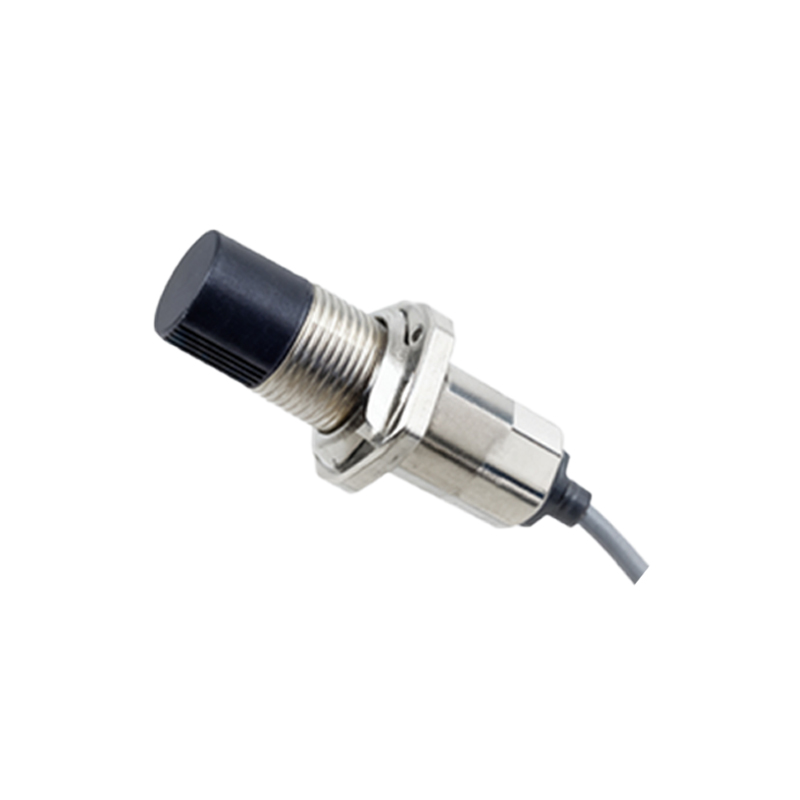
Secondly, the relationship between distance and output signal is non-linear. As the target approaches the sensor, the received signal strength increases exponentially, not linearly. This characteristic defines the sensor's effective range, which is a critical specification for application design. The experiment confirmed that operating the sensor within the middle of its specified range provides the most stable performance and margin for error.
Thirdly, while modulation helps, intense ambient IR sources (such as direct sunlight or incandescent lamps) can still saturate the receiver and cause false negatives. The sensor performed flawlessly in controlled darkness and adequately under standard indoor lighting. However, a brief exposure to a handheld IR remote control pointed directly at the receiver demonstrated how a competing modulated signal could disrupt operation. This underscores the necessity for proper shielding and installation away from strong IR noise in the field.
Another practical consideration is the sensor's response time and output configuration. These sensors can switch states in microseconds, making them suitable for high-speed counting applications on production lines. The choice between digital (on/off) and analog output modules is application-dependent. Digital outputs with adjustable potentiometers are simpler for presence detection, while analog outputs are necessary for tasks requiring distance approximation or grayscale differentiation.
For engineers integrating these sensors, several best practices emerge from this experimentation. Calibration must be performed with the actual target material under real operating conditions. The mounting is crucial; sensors must be secured to prevent vibration-induced alignment shifts, especially when detecting shiny objects. A routine maintenance schedule to clean the lens from dust and oil buildup is essential for long-term reliability, as contaminants can severely attenuate the IR beam.
In conclusion, proximity IR reflective sensors offer a cost-effective and robust solution for non-contact detection. Their performance, however, is not universal. A successful implementation hinges on a thorough understanding of the target's optical properties, the environmental context, and the sensor's own nonlinear characteristics. This experiment validates that with careful selection, calibration, and installation, these sensors can achieve highly reliable performance in diverse industrial automation tasks, from bottle cap detection on fill lines to paper presence sensing in printers.