Proximity sensors are indispensable components in modern industrial automation, providing non-contact detection of objects within a specific range without physical touch. Their ability to operate reliably in harsh environments, offer high switching speeds, and ensure long operational life makes them superior to mechanical limit switches. Understanding the various types of proximity sensors is crucial for selecting the right technology for a given application. This article details the primary categories, their operating principles, and typical use cases.
The most fundamental categorization is based on the detection method. The four main types are Inductive, Capacitive, Ultrasonic, and Photoelectric (Optical) sensors. Each type interacts with the target object differently.
Inductive Proximity Sensors are the workhorses of metal detection in factories. They generate an electromagnetic field from a coil in the sensor's face. When a metallic object (the target) enters this field, eddy currents are induced in the metal, causing a change in the oscillation amplitude within the sensor. This change is detected by the sensor's circuitry, triggering a solid-state output switch. These sensors are ideal for detecting ferrous metals like steel and iron, and some specialized versions can detect non-ferrous metals like aluminum, copper, and brass, though typically at a reduced sensing range. Key advantages include high precision, resistance to environmental contaminants like dust, oil, and coolant, and robustness. Common applications include position sensing of machine parts (e.g., cylinder piston position), counting metal objects on a conveyor, and detecting the presence of a metal gear tooth.
Capacitive Proximity Sensors can detect both metallic and non-metallic materials, including liquids, plastics, glass, wood, and granules. They operate by generating an electrostatic field. The sensor itself acts as one plate of a capacitor, and the target object acts as the other. As the target approaches, it changes the capacitance of the system. When the capacitance reaches a preset threshold, the sensor triggers. This makes them incredibly versatile. They are often used for level detection in tanks (liquid or solid materials), detecting filled containers on a line, or sensing the presence of non-metallic objects like cardboard boxes or plastic bottles. However, they can be susceptible to environmental factors like humidity and must be carefully tuned to ignore non-target materials.
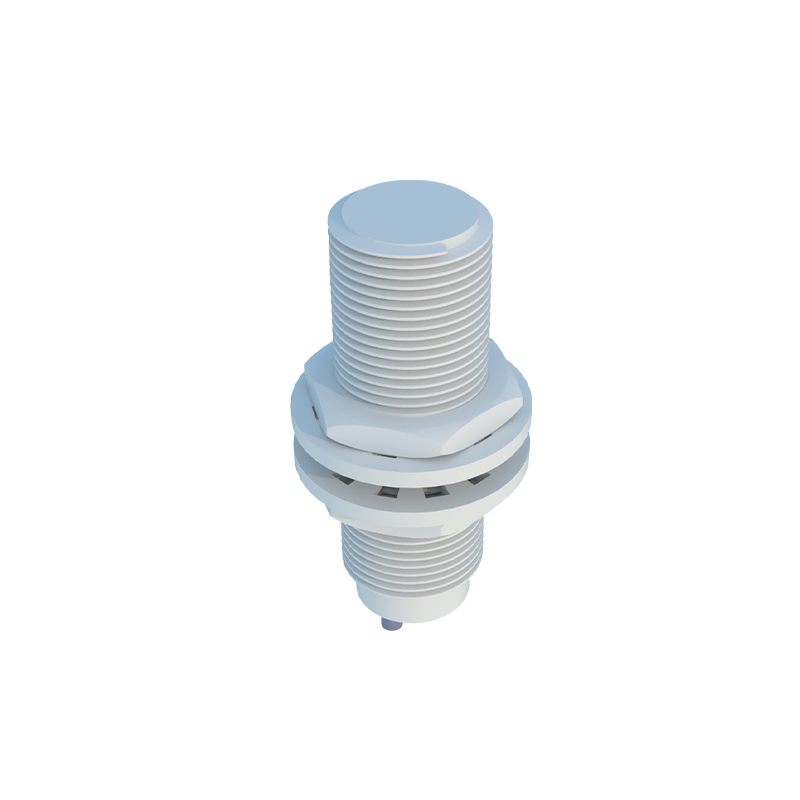
Ultrasonic Proximity Sensors use sound waves beyond the human hearing range (typically above 20 kHz). They operate on the principle of echolocation. The sensor emits ultrasonic pulses and then listens for the echo reflected from a target object. By measuring the time between emission and reception of the echo (time-of-flight), the sensor can calculate the distance to the object. This allows them to perform not just presence detection but also precise distance measurement. They are excellent for detecting objects with complex surfaces, transparent materials (which photoelectric sensors may struggle with), and in environments with heavy airborne dust or mist. Applications include pallet detection, loop control in winding machines, and level measurement in bulk solid silos.
Photoelectric Sensors, or optical proximity sensors, use a beam of light (visible, infrared, or laser) to detect objects. They come in several main styles: Through-beam, Retro-reflective, and Diffuse (proximity) mode. Through-beam sensors have separate emitter and receiver units; an object is detected when it breaks the beam. They offer the longest sensing ranges and highest reliability. Retro-reflective sensors house the emitter and receiver together, using a reflector to bounce the beam back; detection occurs when the beam is broken. Diffuse sensors rely on the target object itself to reflect the emitted light back to the receiver housed in the same unit, making them true "proximity" style sensors. Photoelectric sensors are highly flexible and can detect virtually any material, but their performance can be affected by color, reflectivity, transparency, and environmental contaminants like dirt on the lens. They are ubiquitous in packaging, material handling, and assembly automation.
Beyond these core types, specialized variants exist, such as Magnetic Proximity Sensors (reed switches or Hall-effect sensors) used to detect permanent magnets, often for sensing cylinder positions. The choice of sensor depends on multiple factors: target material, required sensing distance, environmental conditions (temperature, contaminants), required output type (PNP/NPN, analog, IO-Link), and installation constraints.
In conclusion, the selection of a proximity sensor is a critical engineering decision that directly impacts system reliability and efficiency. Inductive sensors excel with metals in dirty environments, capacitive sensors handle diverse materials including liquids, ultrasonic sensors provide distance data and work in challenging atmospheres, and photoelectric sensors offer versatility for non-contact detection of a wide array of objects. A clear understanding of their distinct operating principles and application strengths is essential for designing robust and effective automated systems.