In the realm of industrial automation, robotics, and smart systems, proximity sensing is a fundamental capability. Among the diverse technologies available, the infrared (IR) proximity sensor, particularly models with a 1-meter detection range, has established itself as a versatile and reliable solution. This article delves into the operational principles, key advantages, typical applications, and critical selection criteria for these essential components.
At its core, a 1-meter infrared proximity sensor operates on the principle of modulated light detection. The sensor contains an IR LED emitter that projects a beam of infrared light. When an object enters its detection field, typically within a 0 to 1-meter range, part of this light is reflected back towards the sensor. A phototransistor or photodiode receiver detects this reflected signal. Sophisticated internal circuitry then processes this signal, filtering out ambient infrared noise (such as from sunlight or indoor lighting) to accurately determine the presence or absence of an object. Many advanced models can also provide analog output proportional to the detected distance, enabling more precise control functions beyond simple on/off detection.
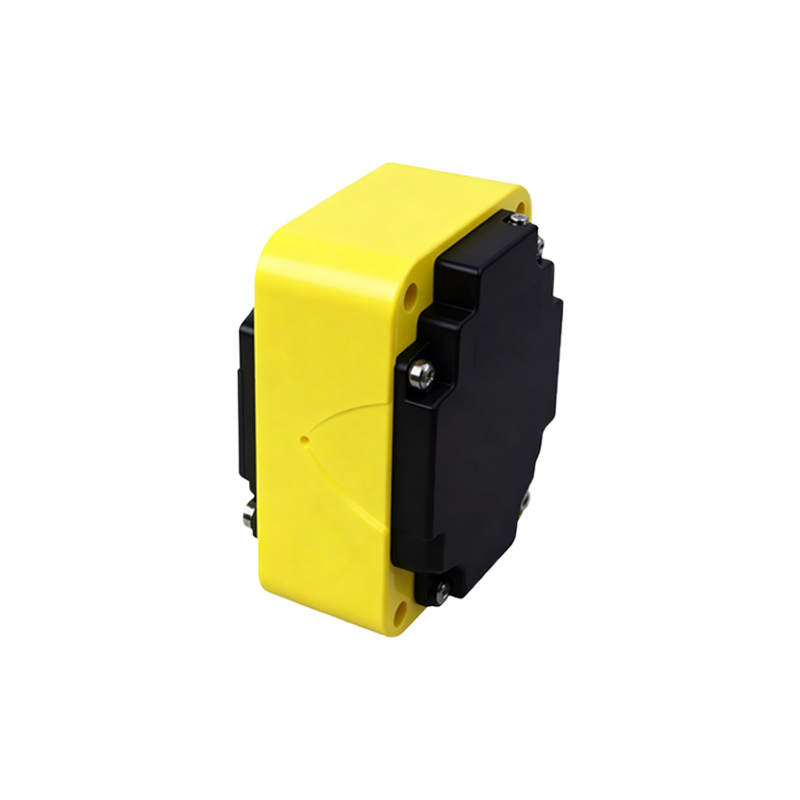
The popularity of the 1-meter IR proximity sensor stems from several inherent advantages. Firstly, it is a non-contact sensing method, eliminating mechanical wear and tear and allowing for the detection of fragile, soft, or easily marred objects. Compared to ultrasonic sensors, IR sensors are generally less affected by air turbulence, temperature gradients, or the material's sound-absorbing properties. They offer a good balance between range, cost, and size, making them suitable for integration into compact devices. Their response time is typically very fast, which is crucial for high-speed automation processes. Furthermore, the focused beam of many IR sensors allows for precise detection, minimizing false triggers from background objects.
The applications for a 1-meter IR proximity sensor are extensive across multiple industries. In industrial automation, they are ubiquitous on production lines for tasks such as object counting, jam detection, and verifying the presence of components on a conveyor belt. In robotics, they serve as essential "bump" or obstacle detection sensors for autonomous guided vehicles (AGVs) and robotic arms, preventing collisions within a critical safety perimeter. The consumer electronics sector utilizes them for features like automatic screen wake/sleep in laptops and tablets when a user approaches or leaves. They are also found in touchless fixtures, such as automatic soap dispensers and faucets, promoting hygiene. In security systems, they can act as a simple beam-break detector for intrusion alerts or to monitor the occupancy of a space.
Selecting the right 1-meter IR proximity sensor requires careful consideration of several parameters beyond just the nominal range. The sensing object's characteristics are paramount: color, material, and surface finish dramatically affect reflectivity. A matte black object absorbs most IR light and may require a sensor with higher output power or a reduced operational range compared to a shiny white object. The required output type must be chosen: a simple digital (NPN or PNP) switch output for presence/absence, or an analog (0-10V, 4-20mA) output for distance-proportional measurement. Environmental conditions like exposure to dust, moisture, or direct sunlight necessitate sensors with appropriate Ingress Protection (IP) ratings and robust housing. The supply voltage (commonly 12-24V DC) and electrical connection style (pre-wired cable or connector) must match the control system. Finally, physical factors such as the sensor's housing size, shape (cylindrical or rectangular), and mounting options (threaded barrel or bracket) are critical for mechanical integration.
Installation and maintenance are straightforward but vital for optimal performance. Sensors should be mounted securely to avoid vibration-induced errors. It is crucial to align the sensor correctly with the expected path of the target object. Regular cleaning of the lens is necessary, as accumulated dust, oil, or debris can scatter or attenuate the IR beam, leading to unreliable operation. Users should also be mindful of potential optical interference from other IR sources or highly reflective surfaces in the sensing environment, which may require shielding or sensor re-positioning.
In conclusion, the 1-meter infrared proximity sensor is a workhorse of modern electro-mechanical systems. Its blend of non-contact operation, reasonable cost, reliability, and adaptability makes it an indispensable tool for engineers and designers. By thoroughly understanding its technology, respecting its limitations regarding target material, and carefully matching its specifications to the application's needs, one can leverage this sensor to create safer, more efficient, and more intelligent automated solutions. As the Internet of Things (IoT) and Industry 4.0 continue to evolve, the role of precise, connected proximity sensing, including IR technology, will only grow in importance.