Photoelectric proximity sensors are essential components in modern industrial automation, offering non-contact detection capabilities for a wide range of applications. These devices operate by emitting a beam of light—typically infrared, visible red, or laser—and detecting changes in the received light signal to determine the presence, absence, or position of an object. Unlike mechanical limit switches or inductive sensors, photoelectric sensors do not require physical contact with the target, making them ideal for fragile materials, high-speed operations, and harsh environments where contamination or wear is a concern.
The fundamental working principle involves three main components: an emitter (light source), a receiver (photodetector), and signal processing circuitry. The emitter projects a focused light beam toward a target area. When an object interrupts or reflects this beam, the receiver detects the variation in light intensity or time-of-flight, triggering an output signal. Based on the sensing method, photoelectric sensors are categorized into three primary types: through-beam, retro-reflective, and diffuse reflective. Through-beam sensors consist of separate emitter and receiver units aligned opposite each other, offering the longest sensing ranges and highest reliability. Retro-reflective models use a single housing with both emitter and receiver, relying on a reflector to bounce light back; they are efficient for medium-range detection. Diffuse reflective sensors detect objects by measuring light scattered directly from the target’s surface, providing flexibility for close-range applications without additional reflectors.
Advanced photoelectric sensors incorporate features like background suppression, which ignores distant objects by focusing on a specific detection zone, and polarization filters to reduce false triggers from shiny surfaces. Many modern variants also support programmable logic, adjustable sensitivity, and connectivity via industrial protocols such as IO-Link or Ethernet/IP. These innovations enable precise detection of diverse materials—including transparent glass, opaque metals, and irregularly shaped items—across industries like packaging, automotive assembly, material handling, and food processing.
When selecting a photoelectric sensor, engineers must consider factors such as sensing distance, response time, environmental conditions (e.g., dust, moisture, or temperature extremes), and output type (e.g., digital PNP/NPN or analog signals). Proper installation and alignment are critical to avoid interference from ambient light or vibrations. Regular maintenance, including lens cleaning and calibration, ensures long-term accuracy and minimizes downtime.
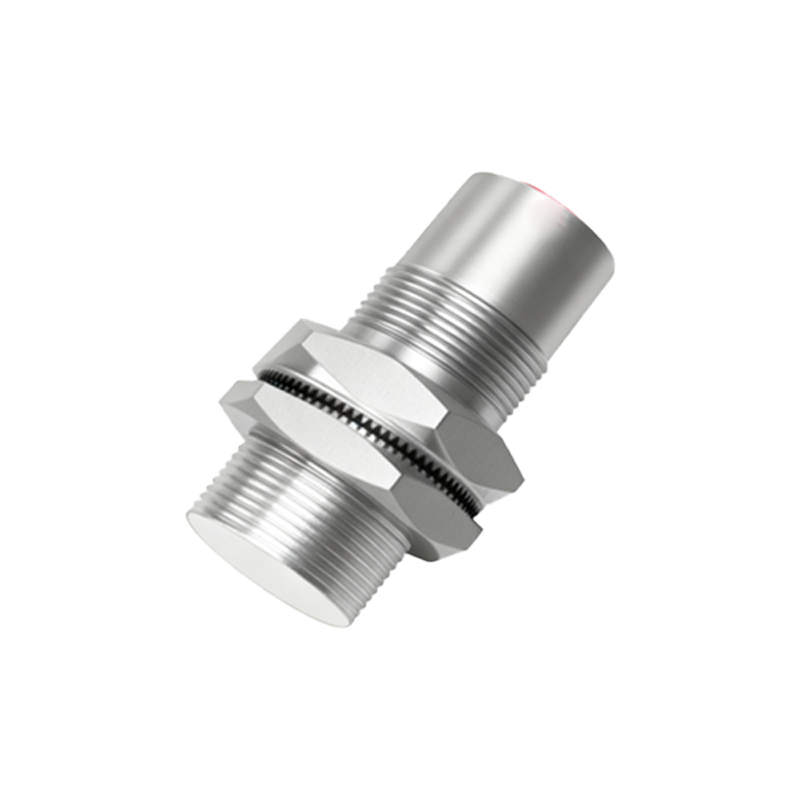
In summary, photoelectric proximity sensors provide versatile, reliable solutions for automation challenges. Their ability to operate without physical contact reduces maintenance costs and enhances system efficiency. As Industry 4.0 evolves, integration with smart factory networks and adaptive sensing technologies will further expand their role in optimizing industrial processes.