In the realm of industrial automation and control systems, proximity sensors are indispensable components for non-contact detection. Among these, the D-C73 series stands out for its reliability, durability, and precision in sensing metallic objects. Proper wiring is not merely a procedural step; it is fundamental to ensuring operational safety, signal integrity, and the longevity of both the sensor and the connected control system, such as a PLC (Programmable Logic Controller). This guide provides a detailed, step-by-step approach to wiring a D-C73 proximity sensor, adhering to standard electrical engineering practices.
First and foremost, safety is paramount. Before initiating any wiring procedure, ensure that all power sources to the control panel or machine are locked out and tagged out (LOTO). Verify the absence of voltage using a appropriately rated multimeter. Always refer to the manufacturer's datasheet for the specific D-C73 model you are using, as specifications like sensing distance, output type (NPN or PNP), and connection styles (pre-wired cable or quick-disconnect) can vary.
The D-C73 is typically a 3-wire DC sensor. The standard wire color coding, though it should be confirmed with the datasheet, is often as follows:
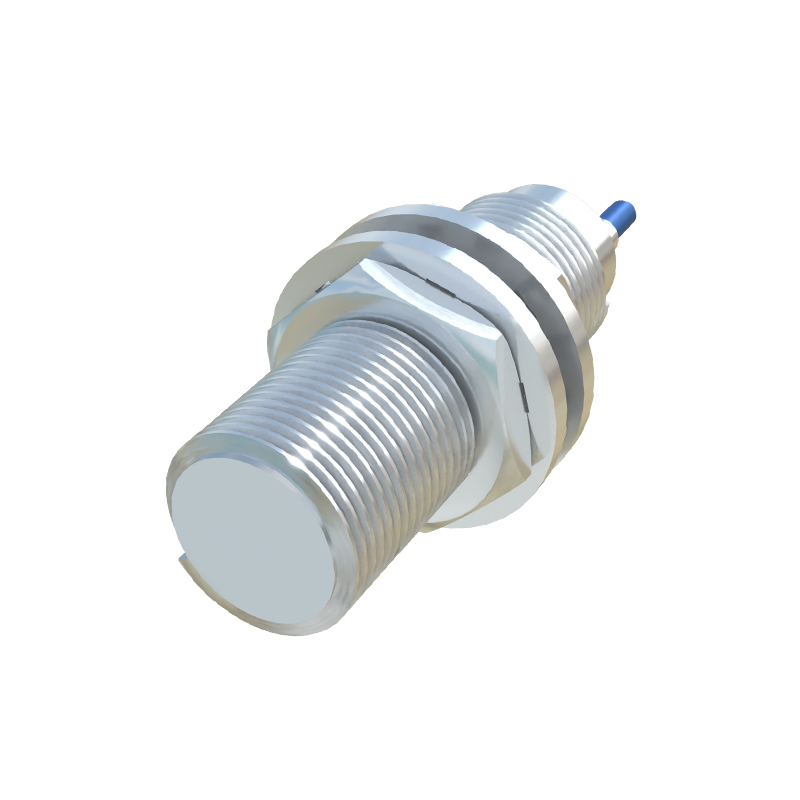
Brown Wire: This is the positive supply voltage line (+V). It must be connected to the positive terminal of your DC power supply. Common operating voltages are 10-30V DC.
Blue Wire: This is the negative supply voltage line (0V or Common). It must be connected to the negative terminal or ground of your DC power supply.
Black Wire: This is the output signal line. The state of this wire (switched ON or OFF) changes based on the presence or absence of a target within the sensor's detection range.
The wiring configuration diverges significantly based on the sensor's output transistor type: NPN or PNP. This defines the "sinking" or "sourcing" nature of the output.
Wiring an NPN Output D-C73 Sensor (Sinking Output):
In an NPN configuration, the output transistor switches the negative (0V) line. When the sensor is activated (target detected), the Black output wire is internally connected to the Blue wire (0V), effectively "sinking" current to ground.
1. Connect the Brown wire to the +V DC supply (e.g., +24V).
2. Connect the Blue wire to the 0V DC supply (common ground).
3. Connect the Black output wire to the input channel of your load (e.g., a PLC digital input module).
4. The other side of that PLC input must then be connected to the positive supply (+V) to complete the circuit. The PLC input acts as the "load" in this sinking circuit. When the sensor activates, it completes the path to ground, allowing current to flow from +V, through the PLC input, through the sensor's NPN transistor, to 0V, thus signaling the PLC.
Wiring a PNP Output D-C73 Sensor (Sourcing Output):
In a PNP configuration, the output transistor switches the positive (+V) line. When activated, the Black output wire is internally connected to the Brown wire (+V), "sourcing" current from the positive supply.
1. Connect the Brown wire to the +V DC supply.
2. Connect the Blue wire to the 0V DC supply.
3. Connect the Black output wire to the input channel of your load (e.g., the PLC digital input).
4. The other side of that PLC input must then be connected to the 0V supply. Here, when the sensor activates, it provides the positive voltage to the PLC input, completing the circuit through the PLC input to 0V.
Critical Considerations for Reliable Operation:
Shielded Cable: In environments with significant electromagnetic interference (EMI) from motors, drives, or welding equipment, use a shielded cable. Connect the cable's shield drain wire to a solid earth ground at the control panel end only. Do not connect it at both ends to avoid ground loops.
Fusing and Protection: Incorporate a fast-acting fuse (typically 1-3A) in the positive supply line (Brown wire) to protect against short circuits. A small-value ceramic capacitor (e.g., 0.1µF) placed across the supply terminals near the sensor can help suppress electrical noise.
Load Compatibility: Ensure the load (PLC input, relay coil, etc.) is compatible with the sensor's output type (NPN/PNP), voltage, and current rating (usually around 200mA). Mismatching NPN and PNP devices will result in non