Proximity sensors are fundamental components in modern industrial automation and machinery, playing a critical role in startup sequences, safety interlocks, and position detection. Unlike traditional mechanical limit switches, these non-contact devices detect the presence or absence of an object within a specified sensing range without physical contact. For engineers designing or troubleshooting startup systems, a deep understanding of their operating principles is essential for ensuring reliable and safe equipment initialization.
The core function of a startup proximity sensor is to provide a definitive signal confirming that a machine component is in its correct "home" or "start" position before allowing the main drive or process to engage. This prevents catastrophic collisions, reduces mechanical stress, and ensures repeatable operation cycles. The most common types used in such applications are inductive, capacitive, and magnetic (reed or Hall effect) sensors, each based on distinct physical principles.
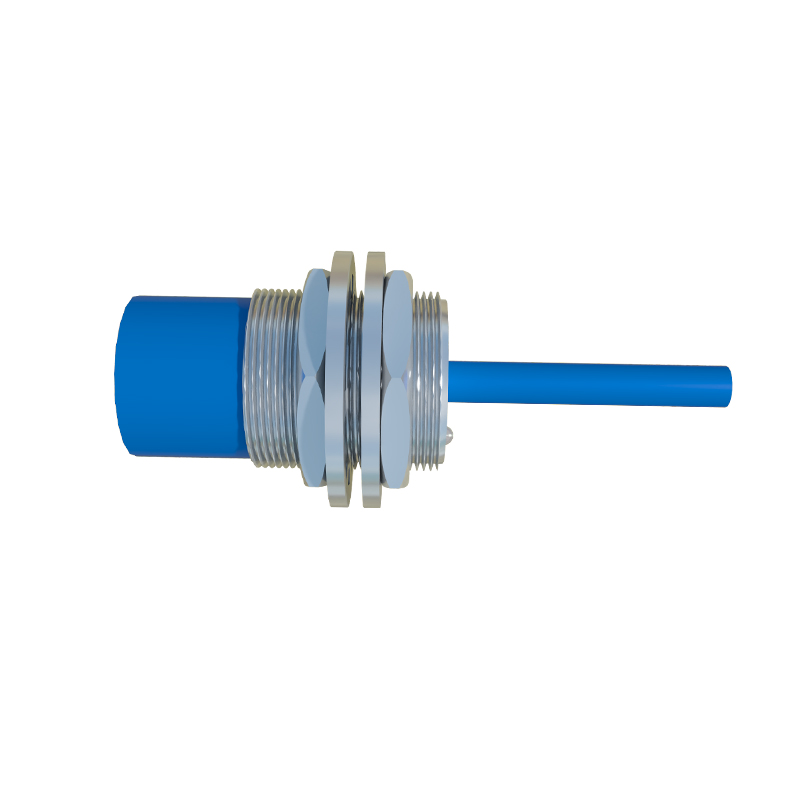
Inductive proximity sensors are the workhorses for detecting metallic objects, typically ferrous metals like steel and iron, though some can detect non-ferrous metals like aluminum or copper at reduced ranges. Their operation is based on the principle of electromagnetic induction. The sensor contains an oscillator circuit that generates a high-frequency electromagnetic field at its active face. When a conductive metal target enters this field, eddy currents are induced on the surface of the target. These eddy currents draw energy from the oscillator, causing a reduction in its oscillation amplitude. An internal evaluation circuit monitors this amplitude change. Once the drop exceeds a predefined threshold—indicating the target is within the nominal sensing distance—the sensor's solid-state output switch (typically PNP or NPN) changes state, sending a signal to the controller (e.g., a PLC) that the "start position" is achieved. For startup routines, this might confirm that a robotic arm is retracted, a guard is closed, or a tool holder is seated.
Capacitive proximity sensors can detect both metallic and non-metallic materials, including liquids, plastics, wood, and glass. They operate by generating an electrostatic field. The sensor's active face acts as one plate of a capacitor, with the target object acting as the other plate, and the air gap as the dielectric. As a target approaches, the capacitance of this system increases. The sensor's internal circuit is tuned to oscillate at a specific frequency related to this capacitance. The presence of the target alters the capacitance, which in turn changes the oscillation frequency. A subsequent circuit detects this frequency shift and triggers the output switch. In startup applications, capacitive sensors are invaluable for verifying the presence of non-metallic components, such as confirming a plastic bottle is in place on a filling line or checking material levels in hoppers before initiating a process.
Magnetic proximity sensors, including reed switches and Hall effect sensors, are specifically designed to detect permanent magnets. Reed switches contain two ferromagnetic reeds sealed in a glass tube filled with inert gas. When a magnet approaches, the reeds magnetize and attract each other, making contact to close the circuit. Hall effect sensors are solid-state devices that produce a voltage output (the Hall voltage) when exposed to a magnetic field, which is then processed to switch an output. These sensors are extremely reliable for detecting position in harsh environments where dirt, oil, or vibration is present. A classic startup application is on hydraulic or pneumatic cylinders with embedded magnets, where the sensor confirms the piston is fully retracted or extended before the next cycle begins.
Key specifications for selecting a proximity sensor for startup duties include sensing distance (nominal and effective), repeat accuracy, hysteresis, response frequency, and environmental ratings (IP, temperature, resistance to chemicals). The mounting and surrounding metal (flush or non-flush) significantly affect the sensing range of inductive sensors and must be carefully considered.
During the startup phase of a machine, these sensors form a critical part of the safety and verification chain. The control system's logic is often designed to require a "true" signal from all relevant proximity sensors before enabling power to motors or actuators. Troubleshooting often involves verifying the sensor's output state with a multimeter or PLC input indicator, checking for proper power supply, ensuring the target is within range and of the correct material, and inspecting for physical damage or environmental contamination like metal chips or buildup that can cause false triggering.
In summary, proximity sensors for startup applications provide the essential "eyes" for a control system, enabling safe, automated, and efficient machine initialization. Their non-contact nature ensures long service life and high reliability. Choosing the correct type based on the target material and environmental conditions, and integrating it properly into the control logic, is paramount for any engineer designing robust industrial systems.