In the rapidly evolving landscape of industrial automation, the demand for precise, reliable, and compact sensing solutions is paramount. The Proximity Sensor Micro-Self-Contained 5 (often abbreviated as PSMSC-5) represents a significant leap forward in this domain. This article provides a comprehensive technical analysis of this advanced sensor, exploring its operating principles, key specifications, and critical applications within modern electrical and control systems.
At its core, the PSMSC-5 is a non-contact, inductive proximity sensor. It operates on the principle of electromagnetic induction. The sensor's oscillator circuit generates a high-frequency electromagnetic field emanating from its active face. When a metallic target object enters this detection field, eddy currents are induced on the target's surface. This causes a measurable change in the oscillation amplitude within the sensor's circuit. An integrated evaluation circuit, a hallmark of the "self-contained" design, processes this change and triggers a solid-state switching output. The entire sensing, processing, and output mechanism is encapsulated within an exceptionally miniature housing, hence the "Micro" designation. This self-contained architecture eliminates the need for external amplifiers or complex wiring, simplifying installation and reducing system footprint.
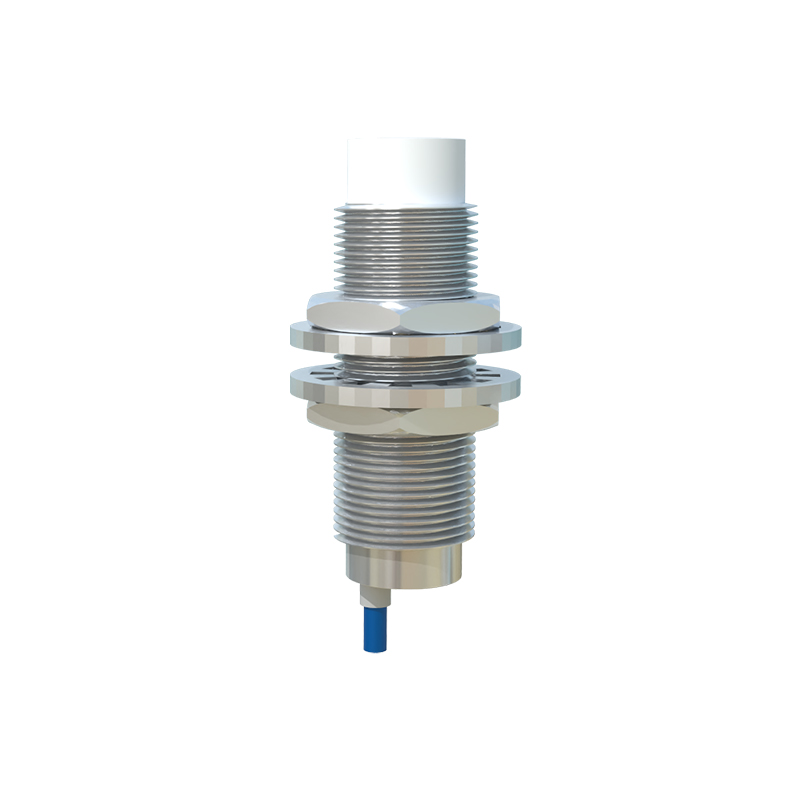
The defining characteristics of the PSMSC-5 set it apart from conventional proximity switches. Its ultra-compact form factor, often with an M5 or M8 threaded barrel, allows for installation in space-constrained applications where traditional sensors cannot fit. Despite its small size, it offers impressive sensing ranges, typically up to 1.5mm for mild steel targets with an M5 model. The housing is constructed from high-grade stainless steel or nickel-plated brass, providing exceptional resistance to mechanical stress, cutting fluids, and coolants commonly found in machining environments. Internally, the sensor features robust protection against short-circuits, reverse polarity, and voltage transients, ensuring high operational reliability and longevity.
A critical advantage of the PSMSC-5 is its output configuration. It is commonly available in both NPN (sinking) and PNP (sourcing) transistor outputs, allowing seamless integration with a wide array of Programmable Logic Controllers (PLCs), frequency drives, and other control devices from different manufacturers. The switching frequency is notably high, enabling the detection of very fast-moving or small parts on high-speed assembly lines. Furthermore, many models in this series feature an LED status indicator, providing immediate visual confirmation of the sensor's operational state and output switching, which is invaluable for troubleshooting and maintenance.
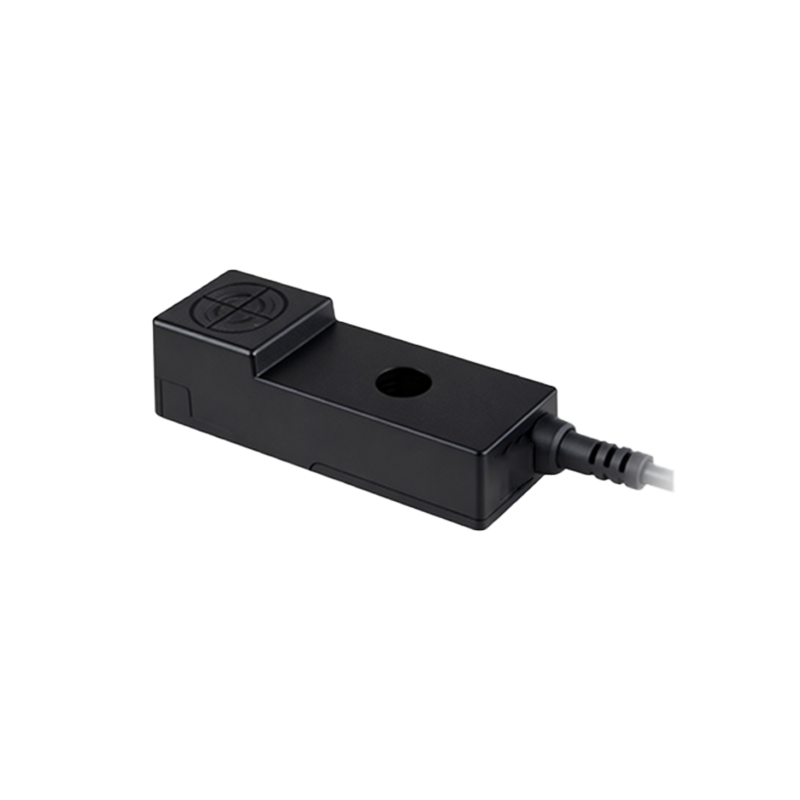
The application spectrum for the Proximity Sensor Micro-Self-Contained 5 is vast. In robotics, these sensors are indispensable for end-effector positioning, gripper jaw detection, and verifying the presence of tools or workpieces. Within CNC machining centers, they are deployed for tool breakage detection, tool length setting, and monitoring pallet positions. The packaging industry leverages their speed and precision for counting, bottle cap detection, and label registration. In automated assembly systems, they verify component placement, detect missing parts, and control indexing mechanisms. Their immunity to environmental contaminants like dust and oil makes them ideal for harsh industrial settings where optical sensors might fail.
When specifying and installing the PSMSC-5, several engineering considerations are crucial. First, the target material significantly affects the sensing distance; factors for different metals must be applied. For instance, the sensing range for aluminum or copper is reduced compared to mild steel. Second, proper mounting is essential to prevent false triggers from the mounting nut or surrounding metal; flush-mounting capabilities are a standard feature. Electrical considerations include ensuring a stable DC power supply within the sensor's rated voltage range (commonly 10-30V DC) and incorporating appropriate suppression diodes or modules when driving inductive loads like relays or solenoids to protect the sensor's output transistor.
In conclusion, the Proximity Sensor Micro-Self-Contained 5 embodies the trend towards miniaturization, intelligence, and robustness in industrial sensing technology. Its integrated design, high performance, and durability make it a cornerstone component for engineers designing compact, high-speed, and reliable automation systems. By understanding its technical nuances and application best practices, electrical professionals can fully harness its capabilities to enhance machine efficiency, improve product quality, and reduce maintenance downtime across countless industrial processes.