In the realm of industrial automation and control systems, sensors act as the fundamental sensory organs, providing critical data on the presence, position, and condition of objects. Among the most versatile and widely used are photoelectric sensors and proximity sensors. While both serve the essential function of non-contact detection, their underlying principles, capabilities, and ideal applications differ significantly. This guide delves into the technology, selection criteria, and practical applications of these two pivotal sensor types.
Photoelectric Sensors: The Power of Light
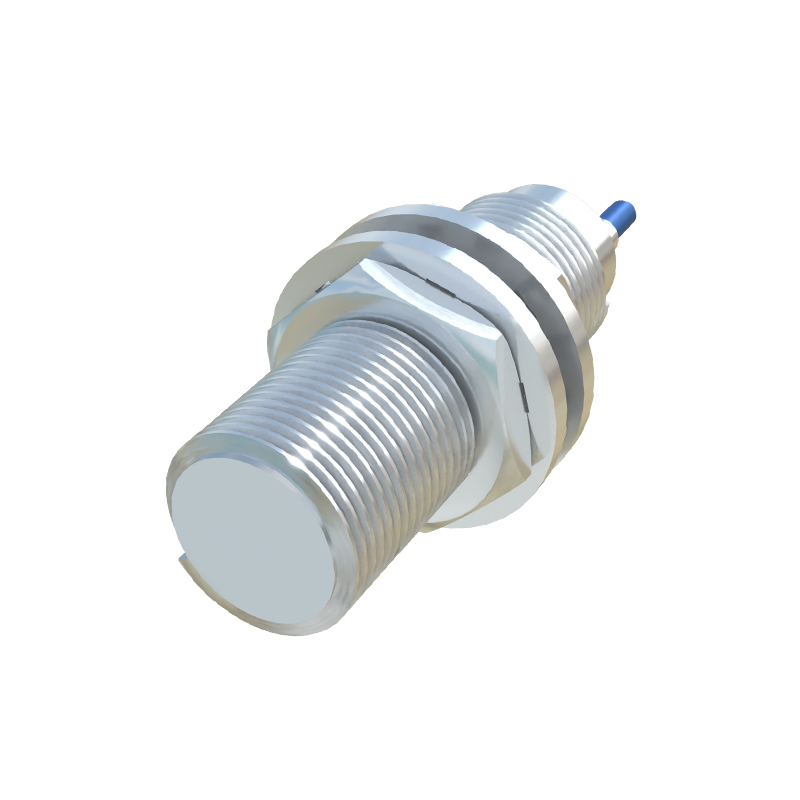
Photoelectric sensors operate on the principle of light transmission and reception. They consist of an emitter (light source) and a receiver. Detection occurs when the emitted light beam is either interrupted or reflected back to the receiver. These sensors are categorized primarily by their sensing modes:
1. Through-beam (Opposed): The emitter and receiver are separate units positioned opposite each other. An object is detected when it breaks the light beam. This mode offers the longest sensing ranges and highest reliability, as it is less affected by object color, reflectivity, or surface finish. Typical applications include part counting on high-speed conveyors, break detection in material webs, and safety curtains.
2. Retro-reflective: The emitter and receiver are housed in the same unit. A special reflector, often a corner-cube reflector, is placed opposite the sensor. The emitted light beam bounces off the reflector and returns to the receiver. Detection occurs when an object interrupts this reflected beam. This mode simplifies wiring and alignment compared to through-beam but has a shorter range. It is suitable for detecting objects on packaging lines or at door openings.
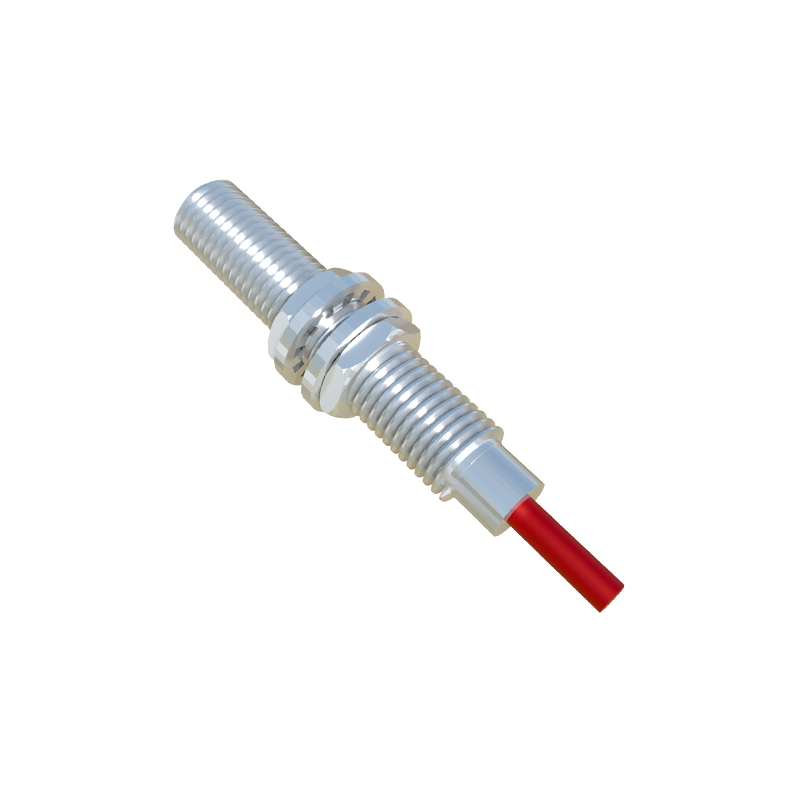
3. Diffuse (Proximity-mode): Both emitter and receiver are in one housing. The sensor detects light reflected directly off the target object itself. Sensing distance depends heavily on the object's size, color, and surface texture (light, shiny objects are detected from farther away). This self-contained design is ideal for detecting objects at short ranges without a separate reflector, such as in bottle filling stations or detecting parts in a bin.
Modern photoelectric sensors often use modulated infrared or visible LED light to minimize interference from ambient light. Advanced models feature background suppression or fixed-field teaching to ignore objects beyond a set distance, and laser models provide extremely precise detection for small parts.
Proximity Sensors: Sensing the Invisible Field
Proximity sensors detect the presence of metallic or, in some cases, non-metallic objects without physical contact by generating an electromagnetic field. The primary types are inductive and capacitive.
1. Inductive Proximity Sensors: These sensors generate a high-frequency oscillating electromagnetic field from a coil in their sensing face. When a ferrous or non-ferrous metal object enters this field, it induces eddy currents, which dampen the oscillation. The sensor's circuit detects this change and triggers an output switch. Inductive sensors are exceptionally robust, immune to dust, oil, and moisture, and offer very fast response times. They are the go-to choice for detecting metal parts in machinery, such as in CNC machines for tool positioning, or in automotive assembly for verifying piston presence. Their sensing range is relatively short and is standardized (e.g., 2mm, 5mm, 10mm).
2. Capacitive Proximity Sensors: These sensors generate an electrostatic field. Any object with a dielectric constant different from air (including metals, plastics, wood, liquids, and granules) entering this field changes the sensor's capacitance, triggering detection. This makes them versatile for detecting non-metallic materials. Common applications include level detection of liquids or powders in tanks, detecting filled vs. empty glass bottles on a line, or sensing the presence of wood or cardboard.
Key Selection Criteria: Photoelectric vs. Proximity
Choosing between these technologies hinges on several factors:
Target Material: For metals only, especially in harsh environments, inductive proximity is superior. For all other materials (plastic, glass, liquid) or for long-range detection, photoelectric is necessary.
Sensing Distance: Photoelectric sensors, especially through-beam, win for long ranges (up to tens of meters). Proximity sensors are for short-range detection (millimeters to a few tens of millimeters).
Environmental Conditions: Inductive sensors excel in dirty, wet, or oily conditions where photoelectric lenses might become obscured. Photoelectric sensors can be affected by airborne dust, steam, or intense ambient light.
Target Characteristics: For detecting transparent objects (like glass), a through-beam or specialized polarized retro-reflective photoelectric sensor is required. For detecting small or precise positions, laser photoelectric or shielded inductive sensors are ideal.
Speed: Both offer high-speed operation, but inductive sensors often have faster response frequencies, suitable for very high-speed counting