Infrared (IR) proximity sensor modules are fundamental components in modern automation, robotics, and countless consumer electronics. As an electrical engineer, a deep understanding of their operation, characteristics, and application nuances is crucial for effective system design. This guide delves into the core principles and practical considerations of these ubiquitous sensors.
At its heart, an IR proximity sensor operates on the principle of active infrared detection. The module typically contains an IR emitter (usually an IR LED) and an IR receiver (a photodiode or phototransistor). The emitter projects a beam of infrared light, which is invisible to the human eye. When an object enters the sensor's field of view, this light is reflected back and detected by the receiver. The module's internal circuitry, often a comparator like the LM393, then processes this signal to produce a digital or analog output indicating the presence or distance of the object.
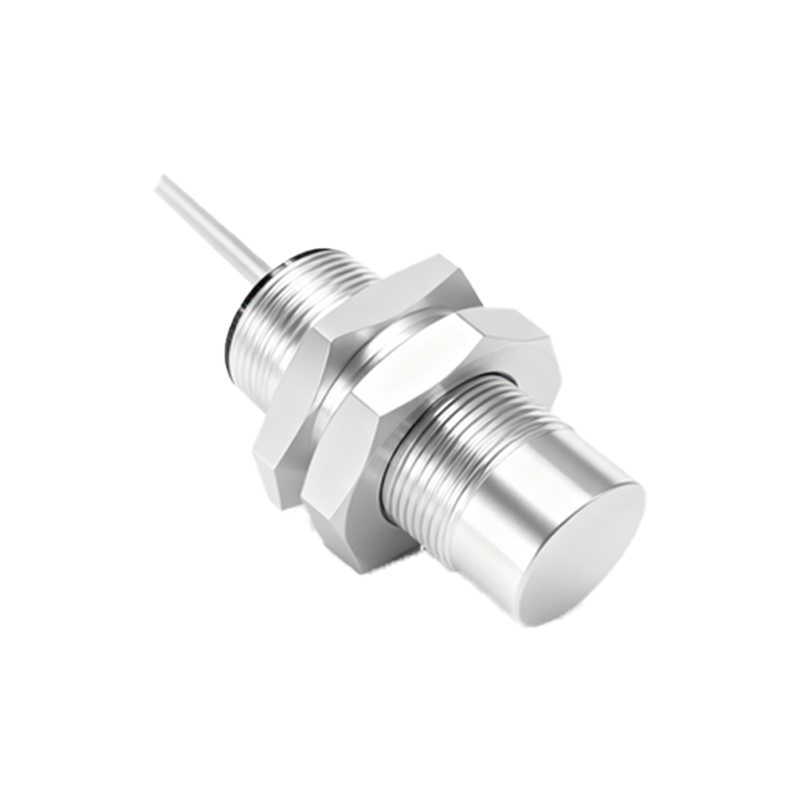
Key specifications define a sensor's performance. Operating Voltage is commonly 3.3V or 5V DC. Sensing Distance is a critical parameter, ranging from a few centimeters to several meters, adjustable via a potentiometer on many modules. Output Type is a major differentiator: Digital Output modules provide a simple HIGH/LOW signal via a Schmitt trigger, ideal for obstacle detection. Analog Output modules yield a voltage proportional to the reflected IR intensity, allowing for rudimentary distance estimation. Response Time is typically very fast, in the microsecond range. The Detection Pattern or beam angle, often between 20° to 60°, determines the sensor's field of view.
The advantages of IR proximity sensors are significant. They are low-cost, compact, and consume minimal power. Their non-contact nature prevents wear and tear. However, engineers must carefully account for their limitations. Ambient infrared light from sources like sunlight or incandescent bulbs can cause interference and false triggers. The reflectivity of the target object dramatically affects performance; dark, matte, or absorbent surfaces reflect less IR light, reducing effective range. Consistency can be an issue, as performance may vary with environmental conditions.
For robust implementation, consider these design strategies. Modulation and Demodulation: High-quality modules use a modulated IR signal (e.g., 38kHz). The receiver is tuned to this frequency, effectively filtering out constant ambient IR noise. Shielding and Optics: Proper housing and lenses can limit the field of view, reducing crosstalk and improving directivity. Calibration and Threshold Setting: Always calibrate the sensor's potentiometer or software threshold in the actual operating environment. For analog sensors, establish a baseline reading for "no object" and a threshold for detection. Software Debouncing: Implement a simple time-delay or counter in your microcontroller code to ignore transient signal fluctuations.
Typical applications are vast. In robotics, they are used for obstacle avoidance and line following. In consumer devices, they enable touchless faucets, paper detection in printers, and screen blanking in phones. In industrial settings, they count objects on conveyors or detect product positioning.
When selecting a module, match the specifications to the application. For simple presence detection in a controlled environment, a basic digital output sensor suffices. For tasks requiring sensitivity to different materials or distances, an analog output sensor paired with an ADC offers more flexibility. For environments with high ambient IR noise, insist on a modulated sensor module.
In conclusion, the infrared proximity sensor module is a versatile and economical solution for non-contact detection. Its successful integration hinges not just on connecting VCC, GND, and OUT pins, but on a thorough understanding of its operational principles and environmental sensitivities. By carefully considering output type, implementing noise mitigation, and performing in-situ calibration, engineers can leverage these modules to create reliable and responsive systems across a wide spectrum of technological applications.