Proximity Hall Effect sensors are integral components in modern industrial automation, automotive systems, and consumer electronics, enabling non-contact detection of magnetic objects. Their construction is based on the Hall Effect, discovered by Edwin Hall in 1879, which describes the generation of a voltage difference (the Hall voltage) across an electrical conductor when a magnetic field is applied perpendicular to the current flow. The core of a proximity Hall sensor is a thin semiconductor plate, typically made from materials like gallium arsenide (GaAs), indium antimonide (InSb), or silicon (Si). This plate is known as the Hall element. When a bias current is applied longitudinally through this element and an external magnetic field from a target (like a permanent magnet or ferrous gear tooth) passes perpendicularly through it, a measurable Hall voltage appears across the opposite edges of the plate. This voltage is proportional to the strength of the magnetic flux density.
The construction of a practical proximity sensor involves more than just the Hall element. It is usually packaged as an integrated circuit (IC) containing several key subsystems. First, the Hall element itself is fabricated using planar semiconductor technology. It is then connected to a signal conditioning circuit. This circuit typically includes a low-noise amplifier to boost the tiny millivolt-level Hall signal. Following amplification, the signal often passes through a Schmitt trigger or comparator circuit. This stage converts the analog voltage into a clean, digital output signal (open-collector or push-pull) that switches states (ON/OFF) when the magnetic flux exceeds a predefined threshold. This digital switching behavior is what classifies it as a proximity or position sensor. Some advanced versions incorporate a linear amplifier to provide an analog output voltage proportional to the magnetic field strength, useful for precise distance measurement.
Power regulation is another critical internal block. The IC includes voltage regulators and protection diodes to ensure stable operation over a wide supply voltage range (commonly 3.5V to 24V DC) and to guard against reverse polarity, overvoltage, and electromagnetic interference (EMI). The entire die is then encapsulated in a robust housing. Common package types include plastic SIP (Single In-line Package), SOT (Small Outline Transistor), or surface-mount packages like SOIC. The housing provides mechanical strength, thermal management, and environmental protection against moisture, dust, and chemicals. For sensing applications, the package is often designed with a marked "sensitive face" where the magnetic field is most effectively coupled to the Hall element.
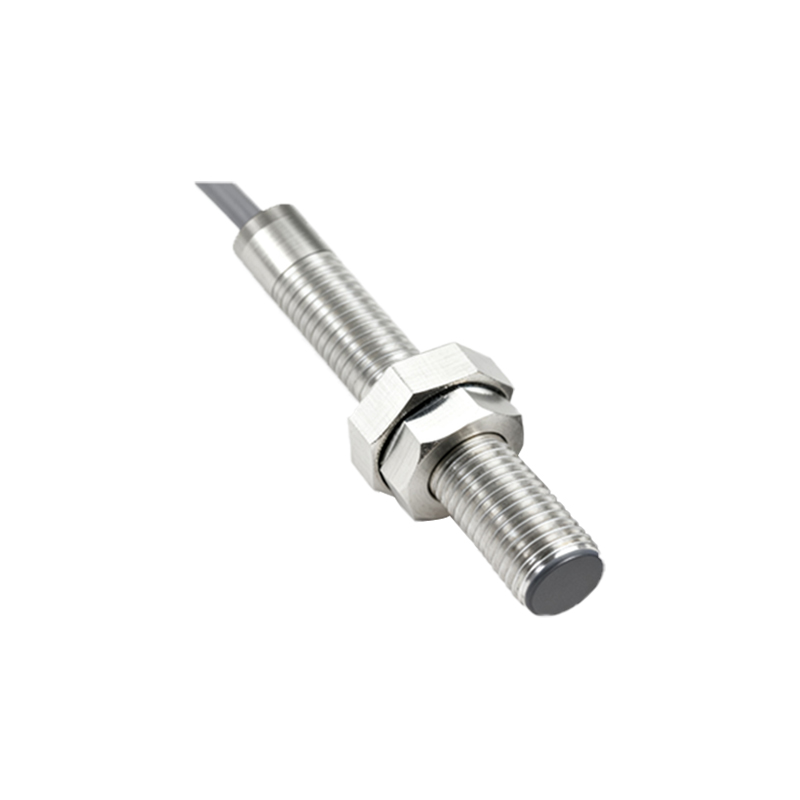
The operational principle hinges on the movement of a magnetic target. In a typical unipolar switch configuration, when a south magnetic pole of sufficient strength approaches the sensitive face, the output transistor switches on, sinking current. When the magnet moves away, the output switches off. Bipolar switches require both a south pole to turn on and a north pole to turn off, offering protection against false triggering from stray fields. Key performance parameters include operating point (B_OP) and release point (B_RP) flux densities, which define the switch's hysteresis—a built-in feature to prevent chatter near the threshold. Sensitivity, response frequency, temperature stability, and output current capability are all carefully engineered based on the application, such as gear tooth sensing, valve position detection, or brushless DC motor commutation.
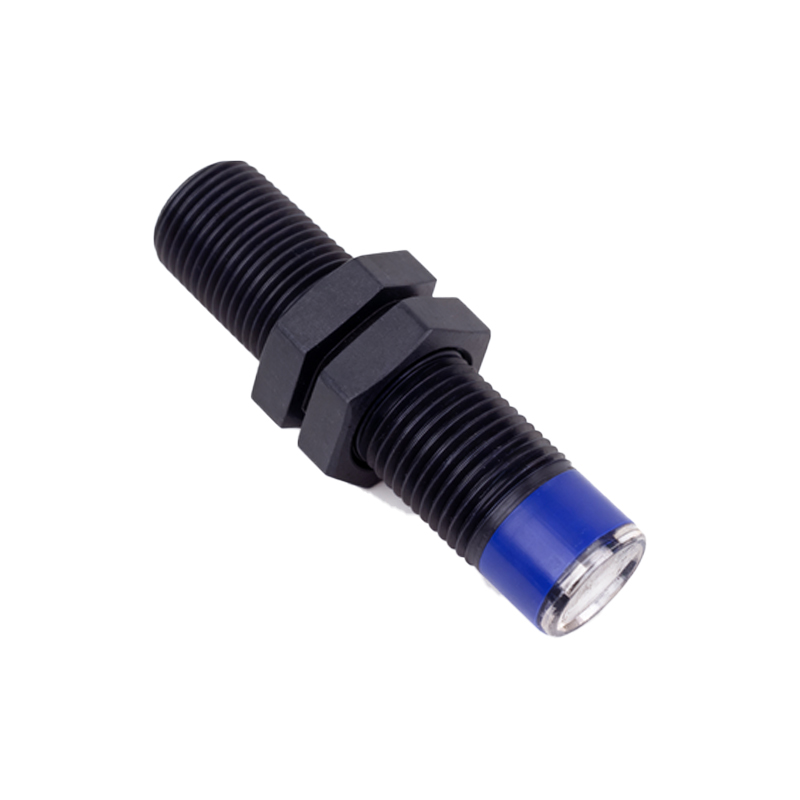
In summary, the construction of a proximity Hall sensor is a sophisticated integration of solid-state physics, analog and digital circuit design, and robust packaging. The Hall element acts as the magnetic field transducer, while the supporting IC provides the necessary signal processing, conditioning, and interface logic. This combination results in a highly reliable, solid-state device with no moving parts, offering long life, fast response, and immunity to contaminants, making it superior to mechanical limit switches and inductive proximity sensors in many magnetic sensing scenarios.