In the realm of industrial automation and control, the reliable detection of metallic objects is a fundamental requirement. Among the various sensing technologies available, the metal three-wire proximity sensor stands out as a robust, versatile, and widely adopted solution. This article delves into the operational principles, key characteristics, wiring configurations, and critical application considerations for these essential components.
At its core, a metal three-wire proximity sensor is a non-contact electronic device designed to detect the presence or absence of ferrous and often non-ferrous metallic targets without any physical contact. The "three-wire" designation refers to its standard electrical connection scheme: one wire for the positive DC supply voltage (typically labeled as brown or +V), one wire for the negative or ground (typically blue or 0V), and one wire for the switched output signal (typically black or white). This configuration is a significant improvement over two-wire sensors, offering superior performance, easier integration with programmable logic controllers (PLCs), and more stable operation, albeit at a slightly higher cost and requiring a dedicated output line.
The most common operating principle for detecting metals is the inductive method. The sensor contains a coil that is part of an oscillator circuit, generating a high-frequency electromagnetic field at its active face. When a metallic object enters this field, eddy currents are induced within the target. These currents absorb energy from the oscillator, causing its amplitude to decrease. A subsequent evaluation circuit detects this change and triggers a solid-state switch (usually a transistor) to change the state of the output signal. For DC sensors, this output can be either NPN (sinking) or PNP (sourcing), a crucial distinction that determines how the sensor interfaces with the control system's common potential.
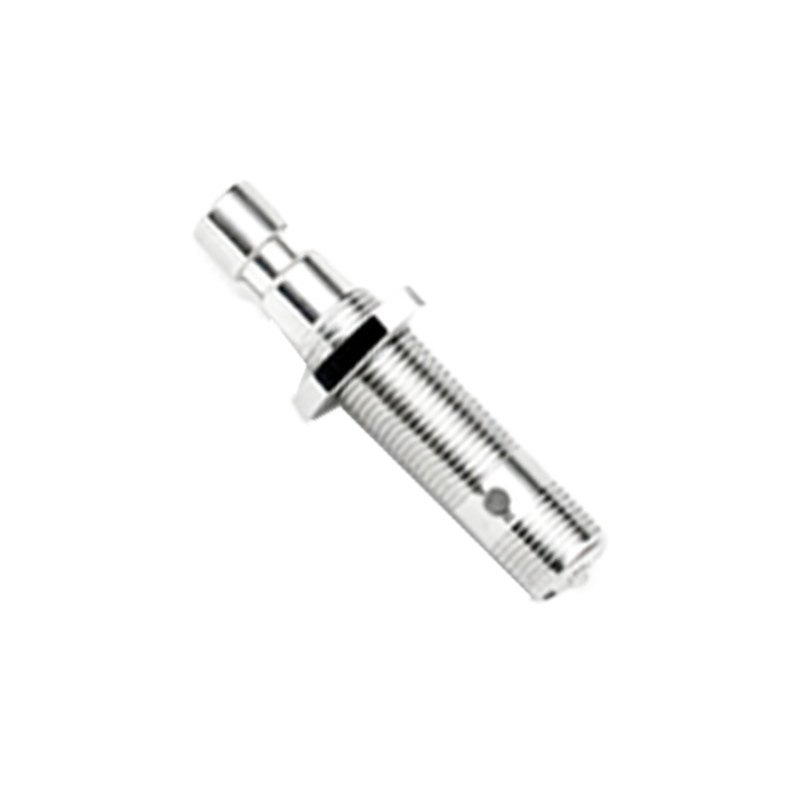
Key performance specifications define a sensor's suitability for an application. Sensing distance, or nominal range (Sn), is the rated detection distance for a standard target, usually a square of mild steel. It is critical to note that this distance can vary with different metals; for instance, the effective range for stainless steel or aluminum is often a fraction of the rated Sn. Repeat accuracy, hysteresis, and switching frequency are other vital parameters. Hysteresis, the difference between the switch-on and switch-off points, prevents output chatter when a target is at the exact sensing limit. Switching frequency dictates how quickly the sensor can detect passing objects, a critical factor in high-speed counting or positioning tasks.
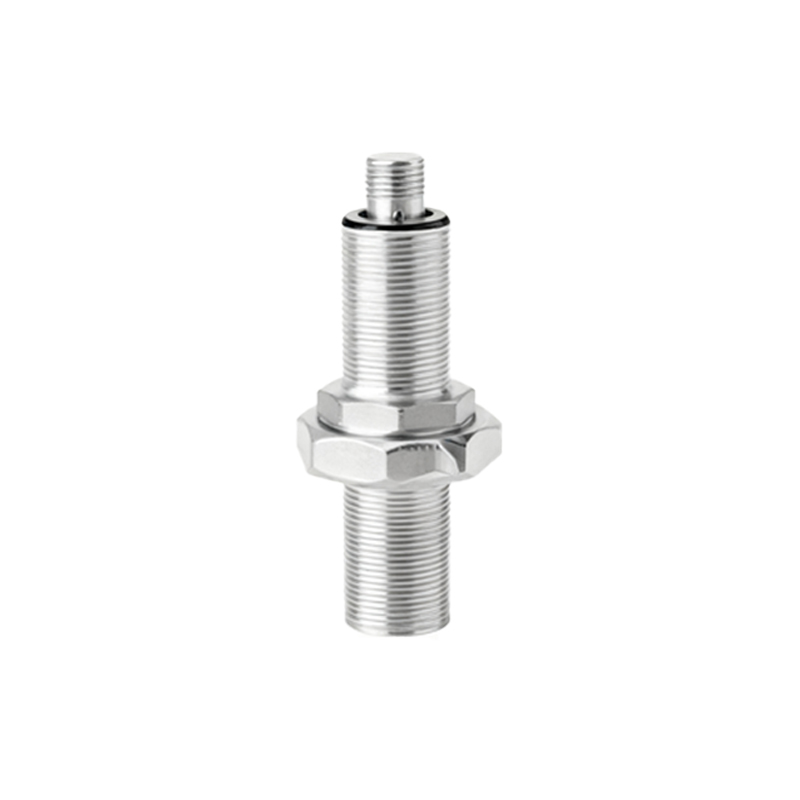
Wiring is a fundamental aspect of installation. For a DC three-wire sensor:
- The brown wire connects to the positive terminal of the power supply (e.g., +24V DC).
- The blue wire connects to the negative terminal (0V DC).
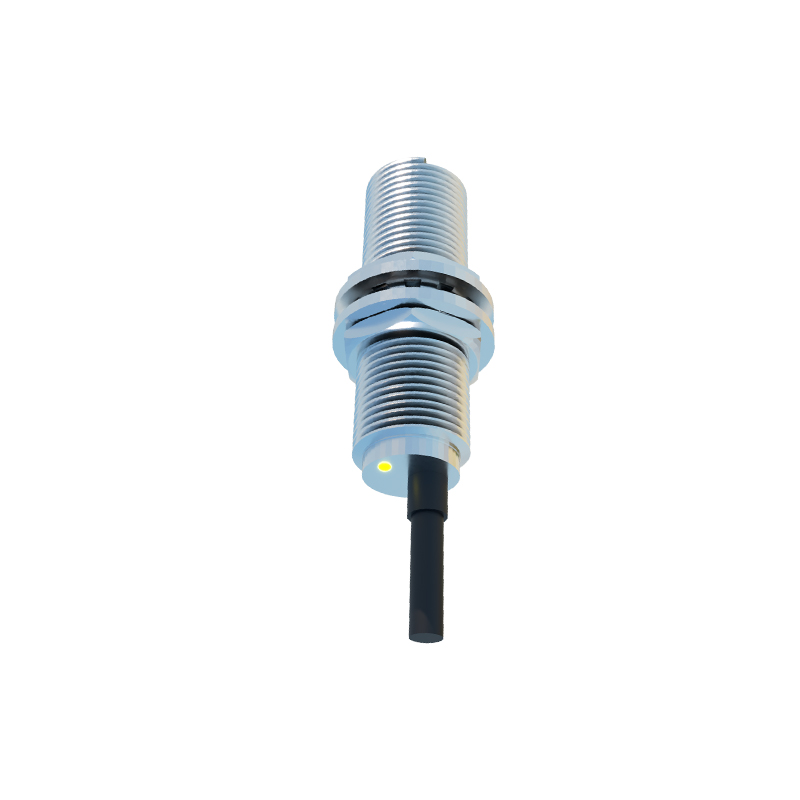
- The output wire (black or white) connects to the input channel of the controller (PLC, relay, etc.).
For an NPN sensor, the output transistor connects the output line to 0V when active (sinking current to the load). For a PNP sensor, the output transistor connects the output line to +V when active (sourcing current to the load). Mismatching NPN/PNP with the controller's input type is a common installation error that prevents operation. Always consult the sensor's datasheet and the controller's manual.
Selecting the right sensor involves several considerations beyond just the sensing distance. The housing material is paramount; sensors in harsh environments may require stainless steel housings or specialized coatings to resist chemicals, cutting fluids, or physical impact. Environmental ratings, denoted by IP (Ingress Protection) codes like IP67 or IP69K, indicate resistance to dust and water ingress. Temperature range, output current capacity, and the presence of built-in protection against short-circuits, reverse polarity, and electrical noise (surge protection) are also critical for long-term reliability.
Applications for metal three-wire proximity sensors are ubiquitous. They are used for:
- Position verification of machine parts (e.g., cylinder end-of-stroke detection).
- Object counting on conveyor lines.
- Rotational speed monitoring via gear tooth detection.
- Safety interlocking to confirm guard doors are closed.
- Level detection of metal powders or granules in hoppers.
In conclusion, the metal three-wire proximity sensor is a cornerstone of modern industrial sensing. Its non-contact nature ensures long service life and maintenance-free operation. By understanding its operating principle, carefully matching the NPN/PNP output type to the control system, and selecting a model with appropriate environmental and performance ratings, engineers and technicians can ensure robust, fail-safe detection that enhances the efficiency, safety, and reliability of automated processes. Proper installation, including secure mounting and correct electrical connections, is the final step in leveraging the full potential of this indispensable industrial component.