In the demanding and often hazardous environment of modern mining operations, the reliability and precision of sensing technology are non-negotiable. Among the various solutions deployed, electromagnetic proximity sensors stand out as a cornerstone for safety, automation, and efficiency. Unlike optical or capacitive sensors, which can be compromised by dust, moisture, or variable material properties, electromagnetic sensors offer robust performance where it matters most.
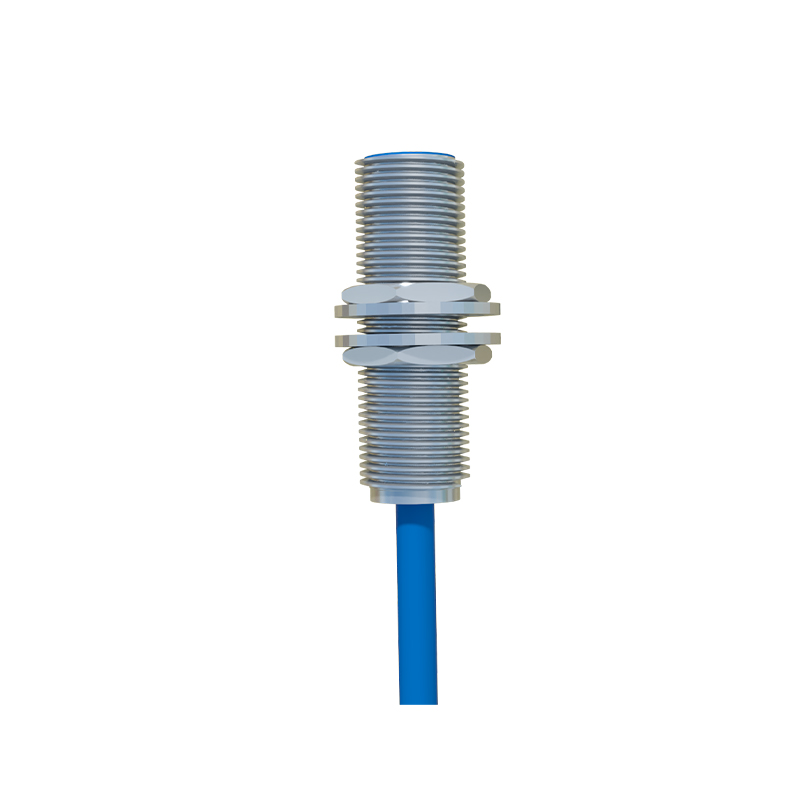
The core principle of an electromagnetic proximity sensor, specifically the inductive type commonly used in mining, is based on Eddy currents. The sensor generates an oscillating electromagnetic field from its coil. When a metallic target—such as a drill bit, conveyor component, or vehicle—enters this field, Eddy currents are induced within the target. This causes a measurable change in the oscillation amplitude within the sensor's circuit, triggering a solid-state switch. This non-contact detection method is key to its durability, eliminating mechanical wear and tear.
The mining industry presents a unique set of challenges: pervasive conductive dust, constant vibration, extreme temperatures, and potential exposure to corrosive chemicals. Electromagnetic sensors are engineered to meet these rigors. Housings are typically constructed from nickel-plated brass or stainless steel, offering high resistance to impact and corrosion. They are often sealed to IP67, IP68, or IP69K standards, ensuring protection against dust ingress and high-pressure water jets during washdowns. Furthermore, their inherent insensitivity to non-metallic substances like coal dust, slurry, or rock particles makes them exceptionally reliable for position sensing on machinery.
Applications within a mining site are vast and critical. On long-wall shearers and continuous miners, these sensors monitor the position of cutting drums and roof supports, ensuring precise operation and preventing catastrophic collisions. Along conveyor systems, they act as zero-speed monitors, detecting if a belt has stopped or slipped, thereby preventing pile-ups and costly downtime. In material handling, they verify the open/closed status of large gate valves or the position of shuttle cars. Perhaps most importantly, they serve as vital safety interlocks on access doors to high-voltage enclosures or rotating equipment, ensuring power is cut before maintenance personnel can enter a danger zone.
When selecting an electromagnetic proximity sensor for a mining application, several specifications are paramount. Sensing range, typically a few millimeters to several centimeters, must be chosen with the target material (steel, aluminum, etc.) in mind, as different metals affect the range. The operating frequency, or switching speed, must be high enough for fast-moving machinery. Robust electrical designs featuring short-circuit, overload, and reverse-polarity protection are standard necessities. Many modern sensors also incorporate LED status indicators for quick diagnostics in poorly lit areas.
The evolution towards Industry 4.0 and smart mining has further elevated their role. Sensors with IO-Link capability can transmit not just a simple on/off signal, but also parametric data like temperature, signal strength, or operating hours to a central control system. This enables predictive maintenance, where a gradual change in a sensor's response can signal the need for service before a failure occurs, moving from reactive to proactive operational management.
In conclusion, the electromagnetic proximity sensor is far more than a simple switch. It is a fundamental, resilient component that underpins the automated, safe, and continuous operation of contemporary mining. Its ability to provide unwavering, contactless detection of metallic objects in the planet's toughest industrial environments makes it an indispensable tool in the relentless pursuit of mineral extraction efficiency and, above all, worker safety. As mining technology advances towards greater autonomy, the dependable data provided by these sensors will remain the bedrock of operational intelligence.