Proximity switches, particularly inductive sensors, are fundamental components in modern industrial automation and control systems. These non-contact sensing devices detect the presence or absence of metallic objects without any physical touch, offering reliability, longevity, and precision in harsh environments. Their operation is based on the principle of electromagnetic induction, making them indispensable for tasks like position sensing, object counting, speed detection, and end-of-travel limit applications.
An inductive proximity sensor primarily consists of four key parts: a coil wound around a ferrite core, an oscillator, a detection circuit, and an output circuit. When power is applied, the oscillator generates a high-frequency electromagnetic field that radiates from the sensor's active face. In the absence of a target, this field remains stable. However, when a conductive metal object enters this field, eddy currents are induced on the object's surface. These eddy currents draw energy from the oscillator, causing its amplitude to decrease. The sensor's detection circuit monitors this change in oscillation. Once the amplitude drop reaches a predetermined threshold, the circuit triggers the solid-state output switch—typically in NPN (sinking) or PNP (sourcing) configurations—to change state, signaling the object's presence to a controller like a PLC.
The performance and suitability of an inductive sensor are defined by several critical specifications. The sensing distance, or nominal range, is a paramount factor, usually ranging from a few millimeters to about 60 mm for standard cylindrical models. It's crucial to note that this rated distance is defined for a standard mild steel target. For other metals, a correction factor must be applied; for instance, stainless steel may reduce the effective range, while copper or aluminum reduces it even more significantly. Another vital characteristic is the hysteresis, which is the difference between the switch-on point (as the target approaches) and the switch-off point (as it moves away). This feature prevents output chatter when a target is at the exact sensing limit, ensuring stable switching.
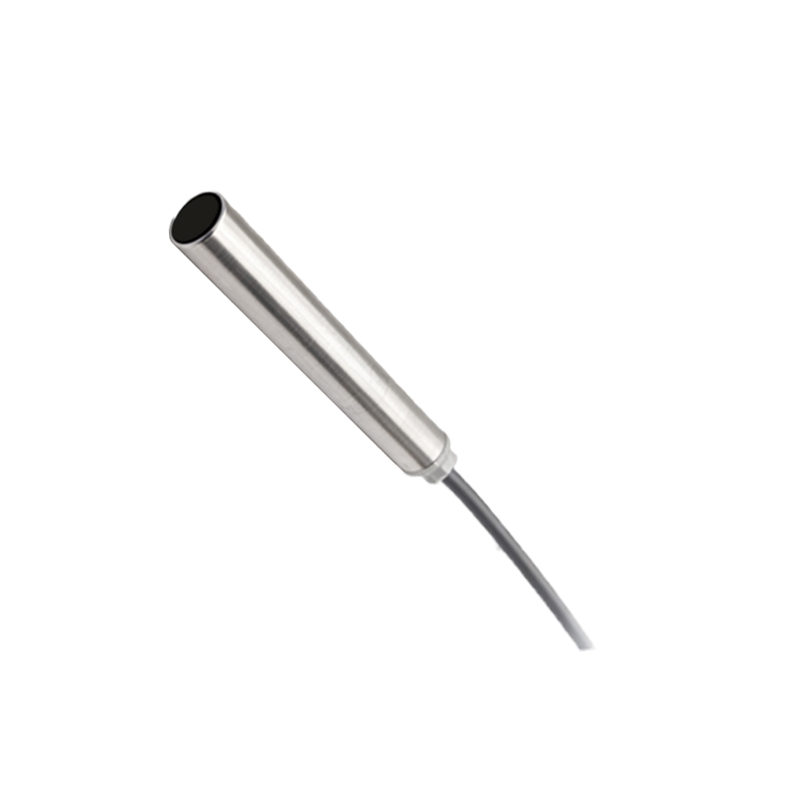
Selecting the right inductive sensor requires careful consideration of the application environment. Key electrical parameters include the operating voltage (commonly 10-30V DC or 20-250V AC), output type (e.g., normally open, normally closed), and current rating. The housing material and Ingress Protection (IP) rating are equally important for durability. Sensors with nickel-plated brass or stainless steel housings and high IP ratings (like IP67 or IP69K) can withstand washdowns, coolants, metal chips, and extreme temperatures common in machining, packaging, and automotive assembly. Furthermore, the form factor—such as cylindrical (threaded barrel), rectangular, or ring-shaped—must be chosen to fit the mechanical installation constraints.
The advantages of inductive proximity switches over mechanical limit switches are substantial. With no moving parts to wear out, they offer an exceptionally long operational life, often rated for tens of millions of cycles. Their non-contact nature allows for high-speed detection, capable of sensing objects at frequencies exceeding several kilohertz. They are also inherently resistant to contamination from dust, oil, and moisture when properly sealed. However, their principal limitation is that they only detect metallic objects. For non-metallic materials, capacitive or ultrasonic sensors would be the appropriate choice.
Installation and wiring practices significantly impact sensor performance and longevity. Engineers must ensure adequate clearance around the sensor's sensing face—lateral clearance from adjacent metal and rear clearance from the mounting nut—to prevent false triggering. Shielding is another consideration; shielded (flush-mountable) sensors can be embedded in metal, while unshielded types offer a longer sensing range but require non-metallic surroundings. Proper wiring according to the datasheet, including correct polarity for DC models and the use of surge suppression for AC models driving inductive loads, is essential to prevent damage.
In conclusion, inductive proximity sensors are a cornerstone of industrial sensing technology. Their robust, contactless design provides reliable detection in demanding conditions, directly contributing to increased machine efficiency, safety, and automation intelligence. A thorough understanding of their operating principles, key specifications, and application guidelines enables engineers and technicians to deploy these sensors effectively, ensuring optimal performance and system reliability across countless manufacturing and processing operations. From simple presence detection to complex sequential control, the inductive proximity switch remains a versatile and trusted solution in the engineer's toolkit.