In the dynamic landscape of industrial automation and machinery design, the demand for specialized sensing solutions continues to grow. Among these, proximity sensors with integrated bending or angled configurations have emerged as critical components for solving complex spatial and environmental challenges. Unlike their standard straight-bodied counterparts, these sensors are engineered with a pre-defined bend in their housing or sensing face, offering unparalleled flexibility in installation and detection capabilities.
The primary design rationale behind a bent or angled proximity sensor is to overcome physical obstructions. In densely packed control panels, robotic cells, or within the confines of machinery housings, straight-line access to the target is often impossible. A sensor with a 90-degree, 45-degree, or even a custom-angle bend allows engineers to route the sensing head around obstacles, ensuring the sensing face is positioned precisely where needed without redesigning the entire machine layout. This is not merely a mechanical adaptation; it involves careful recalibration of the sensing field. The electromagnetic or capacitive field of an inductive or capacitive proximity sensor, for instance, must be tuned to project correctly from the angled face, maintaining the specified sensing range and avoiding false triggers from adjacent metallic structures or the mounting bracket itself.
Several key technologies enable these designs. Moulded PVC, PBT, or stainless steel housings are crafted to incorporate the bend while maintaining IP67, IP69K, or higher ingress protection ratings, making them suitable for washdown environments in food and beverage or pharmaceutical applications. The internal coil and electronics are potted with specialized compounds to withstand vibration and mechanical stress concentrated at the bend point. From a functional perspective, all standard sensing types are available in bent configurations: inductive sensors for metal detection, capacitive sensors for levels of liquids or non-metals, and even ultrasonic variants for distance measurement in tight corners.
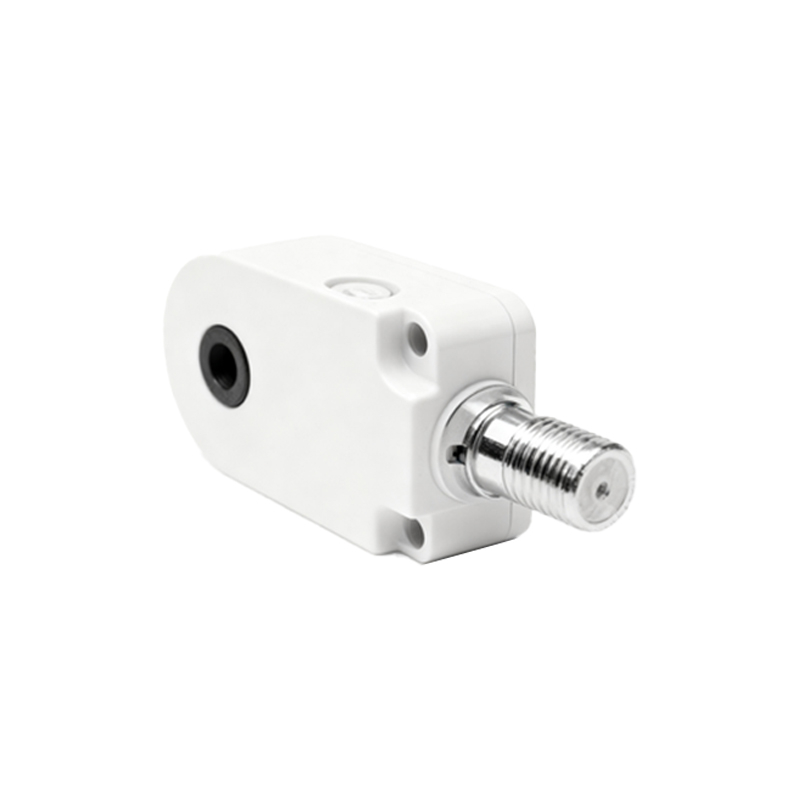
The applications are vast and industry-specific. In automotive manufacturing, bent sensors are deployed within welding gun assemblies to detect piston position or clamp closure where space is extremely limited. In packaging machinery, they monitor the position of folding flaps or the presence of products on curved conveyor chutes. Material handling systems utilize them to detect the edge of pallets or the position of goods on shelving, where a straight sensor would protrude into the travel path and risk damage. A particularly critical application is in semiconductor fabrication equipment, where sensors with ceramic faces and specific bend angles are used in vacuum chambers to detect wafer position without generating particulate contamination.
Selecting the right bent proximity sensor requires careful consideration of several parameters beyond the angle. The sensing range may be slightly affected compared to a straight model, so consulting manufacturer datasheets is crucial. The mounting method—whether threaded barrel, rectangular body with separate bracket, or flush-mountable—must align with the mechanical design. Environmental factors are paramount; sensors in bent configurations used in high-temperature areas must ensure the bending does not create a heat trap or compromise the seal. Electrical output (PNP/NPN, NO/NC) and connection type (pre-wired cable, quick-disconnect) remain standard choices but must be planned considering the cable exit direction relative to the bend.
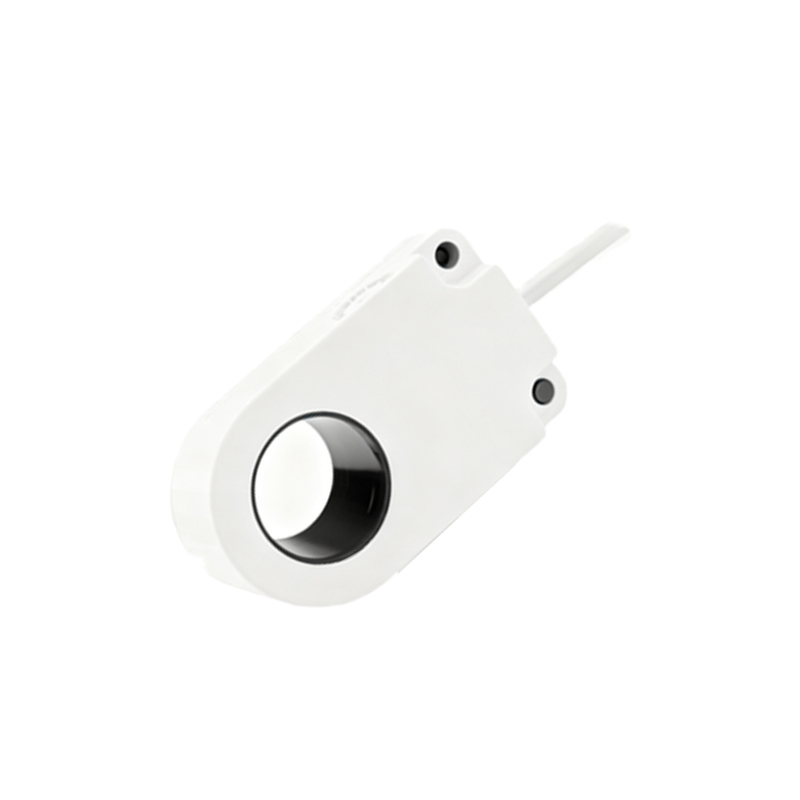
Installation and maintenance present unique points. While offering placement solutions, the bent housing can sometimes make visual confirmation of the LED status indicator difficult. Some advanced models now feature side-facing LEDs or remote indication options. During maintenance, technicians must ensure that the sensor is not used as a handhold or leverage point, as excessive force on the bent section can compromise integrity. Regular checks for cracks in the housing or seal at the bend are recommended in high-cycle or harsh environments.
Looking forward, the integration of IO-Link communication into bent proximity sensors is a significant trend. This allows for not only the transmission of simple on/off signals but also detailed parameterization and health monitoring data (operating temperature, signal strength) from these hard-to-reach locations, enabling predictive maintenance. Furthermore, miniaturization continues, with micro-bent sensors under 4mm in diameter becoming available for ultra-compact robotic grippers and medical devices.
In conclusion, proximity sensors with bending are far from a niche accessory. They represent a sophisticated fusion of mechanical design and sensing electronics, providing essential solutions for real-world engineering constraints. By enabling reliable detection in previously inaccessible locations, they enhance machine reliability, optimize design compactness, and contribute significantly to the advancement of automated systems across all industrial sectors. Their continued evolution alongside Industry 4.0 principles will undoubtedly unlock even more innovative applications in the years to come.