In the rapidly evolving landscape of automotive safety, automatic braking systems have emerged as a cornerstone technology, significantly reducing collision risks and enhancing driver assistance. At the heart of these advanced systems lies the laser sensor—a critical component that enables precise, real-time detection and response to potential hazards. This article delves into the engineering principles, operational mechanisms, and future trends of laser sensors in automatic braking applications, offering insights for industry professionals and enthusiasts alike.
Laser sensors, often utilizing LiDAR (Light Detection and Ranging) or similar technologies, function by emitting pulsed laser beams toward the vehicle's surroundings. These beams reflect off objects—such as other vehicles, pedestrians, or obstacles—and return to the sensor. By calculating the time-of-flight (ToF) of these pulses, the sensor accurately measures distances and generates a detailed, three-dimensional map of the environment. This data is processed by an onboard electronic control unit (ECU), which analyzes factors like relative speed, trajectory, and proximity. If an imminent collision is detected, the system automatically initiates braking maneuvers, either partially or fully, to mitigate or avoid impact. The precision of laser sensors allows for detection ranges extending over 200 meters, with millimeter-level accuracy, even in low-visibility conditions like fog or darkness.
The integration of laser sensors into automatic braking systems represents a leap forward from traditional radar or camera-based solutions. While radar excels in velocity measurement and adverse weather performance, it often lacks the spatial resolution needed for identifying smaller objects. Cameras provide rich visual data but can struggle with depth perception and lighting variations. Laser sensors bridge these gaps by offering high-resolution, long-range capabilities that enhance object classification—distinguishing, for example, between a pedestrian and a stationary pole. This synergy is crucial for developing SAE Level 3+ autonomous driving systems, where reliability is paramount. Modern implementations, such as those in premium electric vehicles, combine multiple sensor types (sensor fusion) to create redundant, fail-safe architectures that minimize false positives and ensure robust operation.
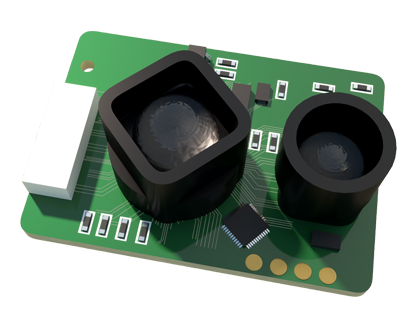
From an engineering perspective, designing laser sensors for automotive use involves addressing several challenges. Durability is a key concern, as sensors must withstand extreme temperatures, vibrations, and exposure to contaminants like dirt or rain. Manufacturers employ hardened housings and self-cleaning mechanisms to maintain optical clarity. Power efficiency is another critical factor, with advancements in solid-state LiDAR reducing energy consumption and costs while improving scalability. Additionally, signal processing algorithms have evolved to filter noise and prioritize relevant data points, enabling faster decision-making. Industry standards, such as ISO 26262 for functional safety, guide the development process to ensure these systems meet rigorous automotive-grade requirements.
Looking ahead, the future of automatic braking laser sensors is poised for transformative growth. Innovations in photonics and semiconductor technology are driving the miniaturization of components, allowing for sleeker, more integrated designs. The advent of 4D LiDAR, which adds velocity measurement to traditional 3D mapping, promises even greater situational awareness. Furthermore, the rise of vehicle-to-everything (V2X) communication will enable sensors to share data with infrastructure and other vehicles, creating a collaborative safety ecosystem. As regulatory bodies worldwide mandate advanced driver-assistance systems (ADAS), the demand for cost-effective, high-performance laser sensors is expected to surge, potentially making them standard in mass-market vehicles within the next decade.
In conclusion, laser sensors are indispensable to the efficacy of automatic braking systems, offering unparalleled accuracy and reliability in obstacle detection. Their continued evolution, coupled with interdisciplinary advancements in AI and connectivity, will further redefine automotive safety paradigms. For engineers and stakeholders, staying abreast of these trends is essential to harnessing the full potential of this technology, ultimately paving the way for safer, more autonomous transportation networks.

