In the realm of industrial automation, proximity switch sensors stand as fundamental components for non-contact object detection. Among the various specifications that define their performance, the detection range is a critical parameter. This article delves into the specifics of sensors with a 12mm detection distance, exploring their operating principles, typical applications, and key selection considerations.
The 12mm detection range is a common and highly practical specification found in many inductive and capacitive proximity sensors. This distance refers to the nominal or rated operating distance (Sn), defined by international standards such as IEC 60947-5-2. It is the distance at which a standard target—typically a square steel plate of defined dimensions (e.g., 1mm thick, side length equal to the sensor's diameter or 3 times Sn)—triggers the sensor's switching signal. It is crucial to understand that this is a nominal value under ideal conditions. Factors like target material, size, temperature, and supply voltage variations can influence the actual sensing distance. A reliable sensor will account for these with a design that ensures a guaranteed operating distance (Sa), typically 0 to 81% of Sn, and a useful operating distance (Su) from 0 to 90% of Sn, preventing false triggers.
Inductive proximity sensors with a 12mm range are predominantly used for detecting metallic objects. Their operation is based on generating an electromagnetic field from a coil in the sensor's face. When a metallic target enters this field, eddy currents are induced, causing a change in the oscillation amplitude, which is detected and converted into a switching output. The 12mm range offers an excellent balance between reach and physical size. It allows for sufficient stand-off distance for mechanical clearance, protecting the sensor from accidental impacts, while maintaining a compact housing. Common barrel-style M30 sensors often feature this range. Applications are ubiquitous: counting metal parts on a conveyor, verifying the position of a machine tool slide, detecting the presence of a metal pallet, or serving as an end-of-travel limit switch in actuators.
For capacitive proximity sensors, a 12mm detection range enables the sensing of non-metallic materials like plastics, glass, wood, and liquids. These sensors detect changes in capacitance caused by the target material altering the dielectric constant of the sensing field. This makes them ideal for level detection in tanks (e.g., detecting plastic pellets or liquid levels through a container wall), monitoring the presence of cardboard boxes on a packaging line, or controlling the fill level of bottles in beverage production. The 12mm distance provides enough sensitivity for these tasks without being overly susceptible to environmental moisture or contamination.
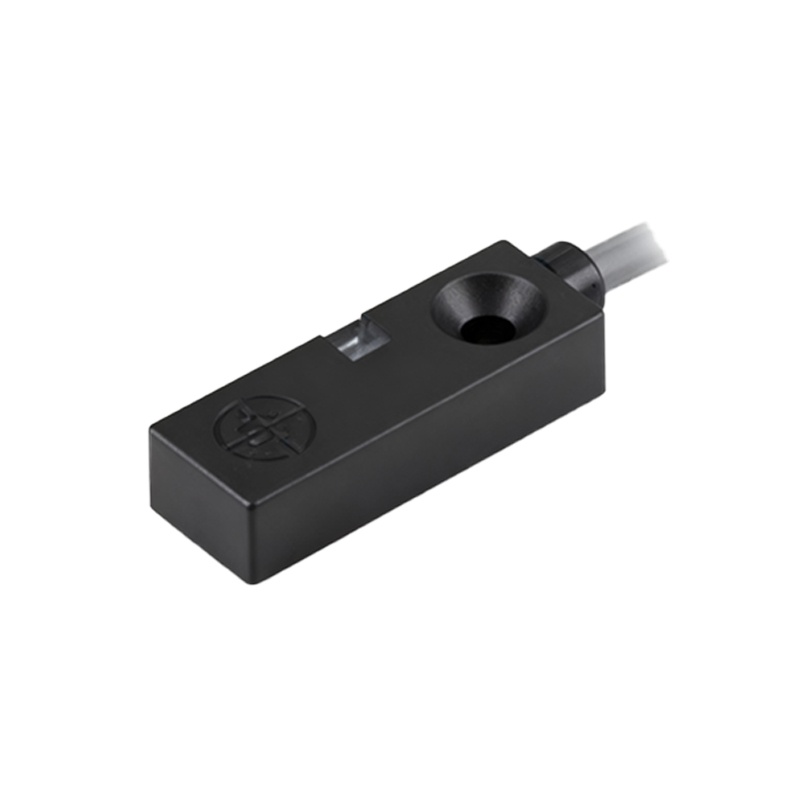
Selecting a 12mm-range proximity sensor requires careful evaluation beyond just the distance. First, determine the sensor type: inductive for metals, capacitive for non-metals or specific media detection. Output configuration is next—PNP (sourcing) or NPN (sinking) transistor outputs are standard, with 3-wire DC models being most common. The choice must match the input card of your PLC or controller. Housing material is vital; nickel-plated brass or stainless steel housings offer robustness in harsh environments. Ingress Protection (IP) ratings like IP67 or IP69K indicate suitability for washdown or outdoor use. Temperature rating must align with the operational environment. Finally, consider the switching frequency if detecting fast-moving objects; a 12mm sensor with a 1kHz response can handle speeds that a slower sensor cannot.
Installation and commissioning are straightforward but demand attention. Always respect the reduction factors for different metals (e.g., stainless steel may reduce the effective range). Ensure parallel alignment of the standard target to the sensing face for maximum range. Maintain adequate clearance from surrounding metal (non-target material) as specified in the datasheet to prevent magnetic field distortion. Regular testing with the actual target material under real conditions is recommended to verify reliable operation.
In summary, the 12mm detection range represents a versatile sweet spot in proximity sensing technology. It provides a reliable, medium-range detection capability suitable for a vast array of industrial automation tasks involving both metallic and non-metallic objects. By understanding the underlying principles, application contexts, and selection criteria outlined here, engineers and technicians can effectively integrate these sensors to enhance machine safety, precision, and operational efficiency. Their reliability, solid-state design, and non-contact nature make them indispensable in building robust and intelligent automated systems.
