In the realm of industrial automation and control systems, proximity sensors stand as fundamental components, enabling machines to "sense" the presence or absence of objects without physical contact. Their primary function is to detect, measure, or identify the position of a target object within a specified sensing range, triggering an electrical signal for further processing by a Programmable Logic Controller (PLC) or other control unit. This non-contact operation is their defining characteristic, eliminating mechanical wear, reducing maintenance needs, and ensuring high reliability and longevity in demanding environments.
The core principle behind proximity sensing involves the emission of an electromagnetic field or a beam of radiation (like infrared light). When a target object enters this field, it causes a change in the field's properties—such as oscillation amplitude, capacitance, or light reflection. The sensor's internal circuitry detects this change and switches its output state. This output is typically a simple digital signal (ON/OFF), though analog versions providing distance-proportional signals are also available for precise positioning tasks.
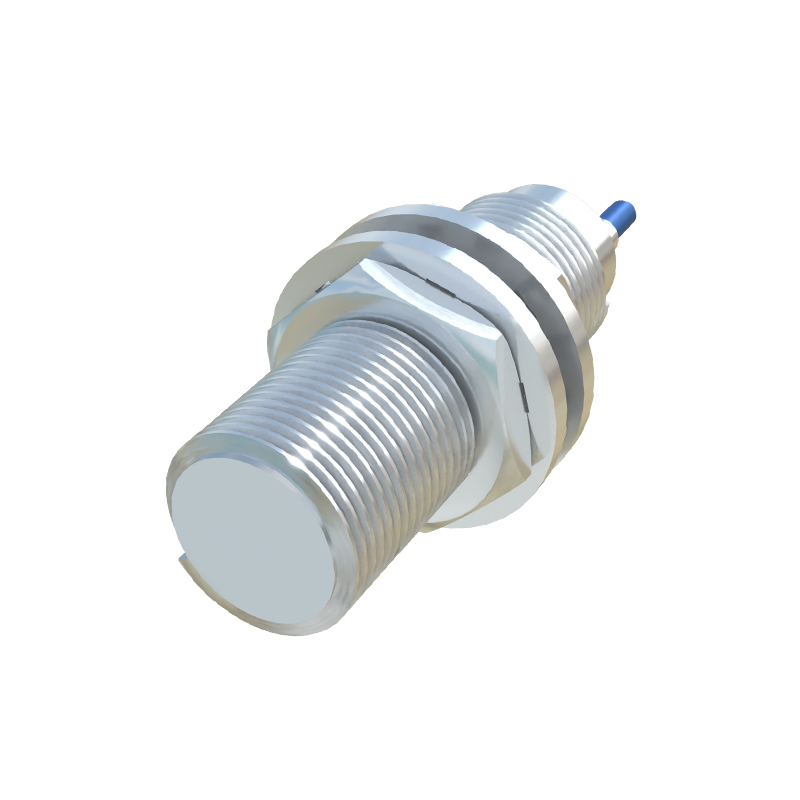
Several key types of proximity sensors dominate industrial applications, each based on a distinct detection technology. Inductive proximity sensors are among the most common. They generate an oscillating electromagnetic field and detect the eddy current losses induced in conductive metallic targets. They are robust, cost-effective, and immune to non-metallic substances like dust, oil, or water, making them ideal for metal detection in machine tools, robotic arms, and conveyor systems. However, their limitation is clear: they only detect metals.
Capacitive proximity sensors, on the other hand, can detect both metallic and non-metallic materials—liquids, plastics, wood, or granules. They function by sensing changes in capacitance between the sensor's electrode and the ground when a material with a different dielectric constant enters the sensing field. This makes them perfect for level detection in tanks (e.g., monitoring liquid or powder levels), presence detection of plastic bottles, or monitoring material composition.
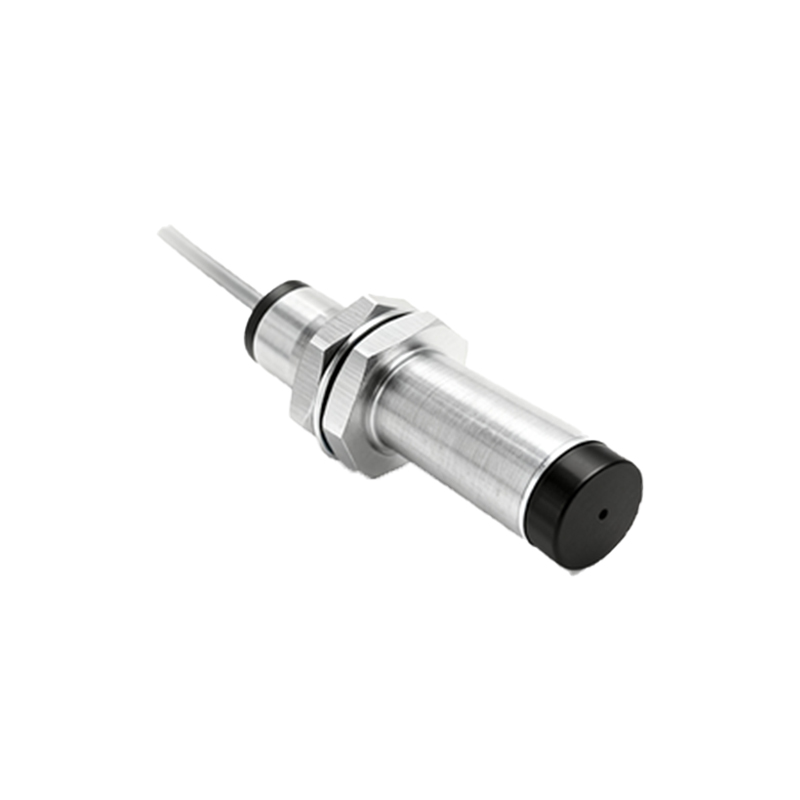
For longer-range detection and sensing of non-metallic objects, photoelectric sensors are frequently employed. These use a light emitter (usually LED) and a receiver. They come in three main configurations: through-beam (separate emitter and receiver), retro-reflective (bounces light off a reflector), and diffuse (reflects light directly off the target). They excel at detecting small objects, seeing through transparent materials, or operating over distances of several meters, commonly used in packaging, material handling, and safety light curtains.
Ultrasonic proximity sensors measure the time taken for a sound wave to reflect off a target. They are excellent for detecting objects of any material, shape, or color, and are particularly effective in harsh environments with dust, smoke, or vapors where optical sensors might fail. Typical applications include distance measurement, pallet stacking height control, and liquid level sensing in challenging conditions.
The applications of proximity sensors are vast and integral to modern manufacturing. On assembly lines, they count products, verify part presence before a machining operation, or confirm correct positioning. In robotics, they provide end-of-arm tooling with tactile-like feedback for pick-and-place operations. They serve as limit switches to prevent over-travel of mechanical components. In automotive manufacturing, thousands of proximity sensors ensure precise welding, part insertion, and quality checks. Furthermore, they are crucial for safety, forming part of interlock systems that prevent machine operation if a guard door is open.
Selecting the right proximity sensor involves careful consideration of several factors: the target material (metal, plastic, liquid), the required sensing distance, the environmental conditions (temperature, humidity, contaminants), the output type needed (NPN/PNP, analog/digital), and the mounting constraints. Proper installation is equally critical; sensors must be positioned correctly to avoid false triggers from background objects or electrical noise from nearby motors and drives.
In conclusion, proximity sensors are the silent, reliable sentinels of automation. By providing accurate, non-contact detection, they form the essential sensory layer that feeds data to control systems, enabling precision, efficiency, and safety in countless industrial processes. Their continued evolution, with trends toward miniaturization, increased intelligence (IO-Link connectivity for parameterization and diagnostics), and higher resilience, ensures they will remain indispensable in the smart factories of the future.