In the demanding world of industrial automation and machinery, the choice of sensor housing material is not merely a matter of specification but a critical decision impacting reliability, longevity, and overall system integrity. Among the various options, proximity switch sensors encased in stainless steel stand out as the premier choice for a vast array of challenging environments. This article delves into the technical merits, application-specific advantages, and selection criteria for these robust sensing components.
Stainless steel, primarily grades such as 303, 304, and the more corrosion-resistant 316, offers an unparalleled combination of properties ideal for sensor housings. Its inherent strength provides excellent mechanical protection against impacts, vibrations, and crushing forces commonly encountered on factory floors, in material handling systems, and within heavy machinery. This durability translates directly to reduced downtime and maintenance costs, as the sensor body can withstand incidental contact and harsh physical treatment that would compromise lesser materials like brass or plastic.
The most celebrated attribute of stainless steel is its exceptional corrosion resistance. This is paramount in industries where sensors are exposed to moisture, humidity, chemical vapors, coolants, washdown procedures, or saline atmospheres. In food and beverage processing, pharmaceutical manufacturing, and marine applications, frequent high-pressure cleaning with aggressive detergents is standard. AISI 316 stainless steel sensors are specifically engineered to resist pitting and crevice corrosion in such chloride-rich environments, ensuring consistent performance and hygiene compliance where other materials would rapidly degrade.
Furthermore, stainless steel housings maintain their integrity across a wide temperature range. Unlike polymer-based sensors that may become brittle in extreme cold or deform under high heat, stainless steel proximity switches reliably operate in both freezer applications and near ovens or welding stations. This thermal stability ensures stable sensing distances and switching points, which is crucial for precision automation tasks.
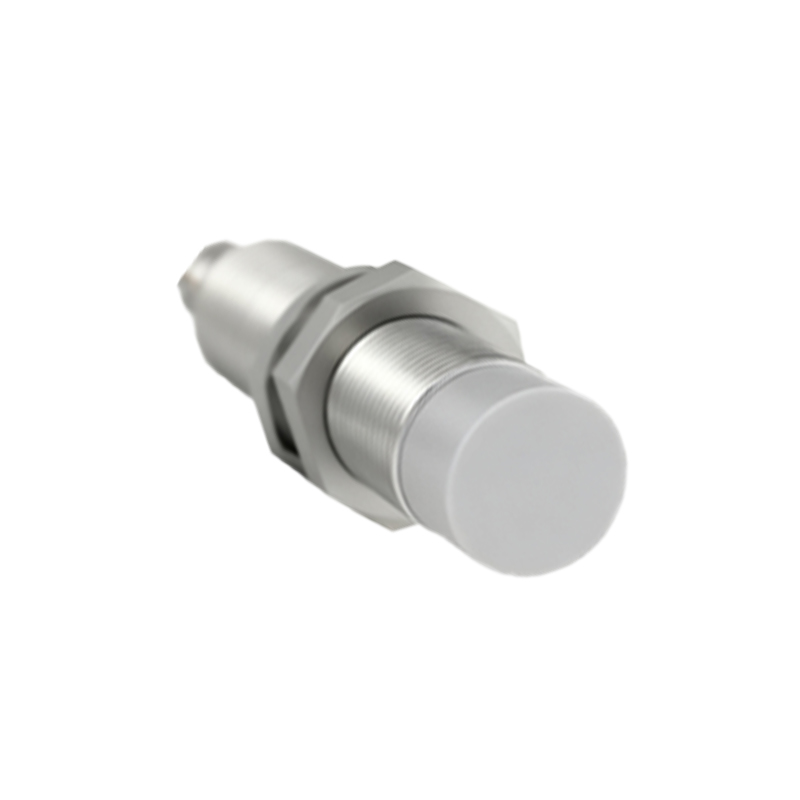
From a functional perspective, the use of stainless steel does not impede the sensor's core inductive, capacitive, or magnetic operating principles. Modern designs effectively shield the internal oscillator and evaluation electronics, minimizing the potential for interference from the metallic housing itself. Engineers have perfected the design of the sensing face, often incorporating a specialized front cap made of a material optimized for the specific sensing technology (like PTFE or PPS for capacitive sensors), while the robust stainless steel body provides the structural and environmental defense.
When selecting a stainless steel proximity sensor, several key parameters must be considered. First is the IP (Ingress Protection) rating, with IP67 and IP69K being common benchmarks for stainless steel units, indicating protection against dust ingress and high-pressure, high-temperature water jets. The housing shape—tubular (e.g., M8, M12, M18, M30 threaded barrels) or rectangular—must suit the mounting constraints. The sensing distance, output type (PNP/NPN, NO/NC, analog, IO-Link), and connection method (cable or connector) are selected based on the control system requirements.
Application areas for these sensors are extensive. They are indispensable in packaging machinery, where they detect metal parts on high-speed lines. In machine tools, they provide precise position feedback for tool changers and slides. Within the automotive industry, they operate reliably in robotic welding cells exposed to spatter and coolants. Their hygienic properties make them ideal for bottling plants, dairy conveyors, and anywhere sanitary design is mandated.
In conclusion, specifying a proximity switch sensor with a stainless steel housing is a strategic investment in system resilience. It addresses the core challenges of industrial environments: physical abuse, corrosive media, and thermal extremes. While the initial cost may be higher than alternatives, the total cost of ownership is often lower due to extended service life, reduced failure rates, and minimal maintenance. For engineers designing systems where reliability is non-negotiable, stainless steel proximity sensors represent the definitive solution, ensuring accurate, repeatable sensing performance where it matters most.