Laser monitoring sensors have become indispensable components in modern industrial automation, offering unparalleled precision, reliability, and versatility. These sensors operate on the principle of emitting a focused laser beam towards a target and analyzing the reflected light to determine various parameters such as distance, presence, position, or thickness. Unlike traditional photoelectric or proximity sensors, laser sensors utilize coherent, monochromatic light, which allows for extremely fine beam spots and long sensing ranges with minimal divergence. This characteristic makes them ideal for applications requiring high accuracy, even in challenging environments with dust, smoke, or varying ambient light conditions.
The core technology behind these sensors often involves time-of-flight (ToF), triangulation, or laser Doppler vibrometry principles. Time-of-flight sensors calculate distance by measuring the time delay between the emitted laser pulse and the received reflection. This method is highly effective for long-range measurements, commonly used in warehouse automation for pallet positioning or in logistics for volume scanning. Triangulation-based sensors, on the other hand, use a geometric approach where a laser diode projects a spot onto the target, and a receiver lens at a known angle captures the reflected light's position on a CCD or CMOS array. Displacement of the spot on the array correlates directly to the target's distance or profile, enabling micron-level resolution crucial for quality control in semiconductor manufacturing or precision assembly lines.
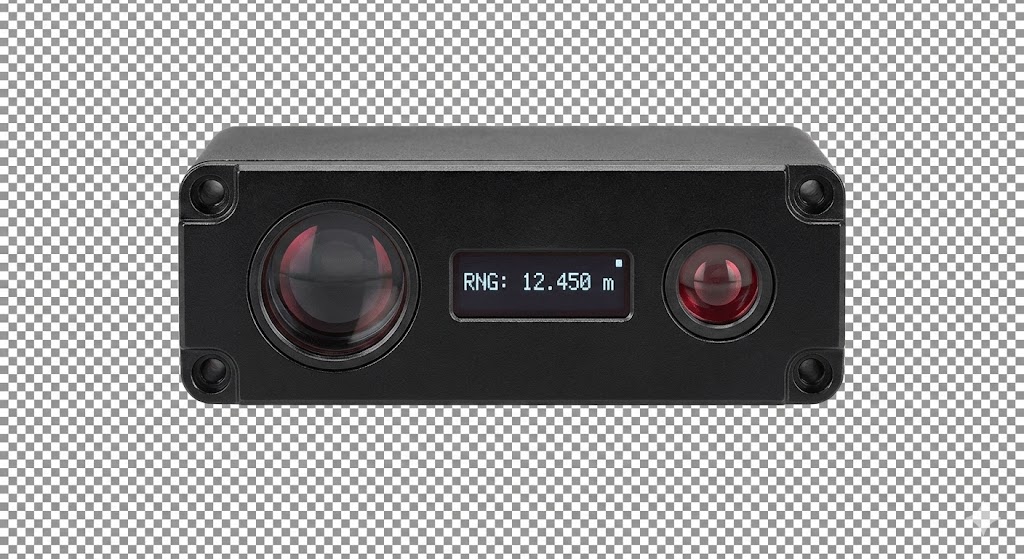
In industrial settings, laser monitoring sensors are deployed across a vast spectrum of tasks. One primary application is non-contact dimensional gauging and inspection. For instance, in automotive production, laser sensors meticulously measure the gap and flush between body panels to ensure aesthetic and aerodynamic standards. In the pharmaceutical industry, they verify the fill level in vials or the thickness of tablet coatings without risking contamination. Another critical use is in vibration analysis and condition monitoring. By employing laser Doppler techniques, engineers can detect minute vibrations in rotating machinery like turbines or motors, facilitating predictive maintenance and preventing catastrophic failures. This non-intrusive monitoring is far superior to contacting methods that might alter the system's dynamics.
Furthermore, laser sensors play a pivotal role in safety and access control systems. Safety laser scanners create two-dimensional protective fields around hazardous machinery, such as robotic cells or press brakes. If an object or person breaches this invisible curtain, the system triggers an immediate machine shutdown, adhering to strict safety standards like ISO 13849. In logistics, laser-based light curtains safeguard loading docks and conveyor intersections.
The integration of these sensors with Industrial Internet of Things (IIoT) platforms represents the next evolutionary step. Modern laser sensors come equipped with digital interfaces like IO-Link, Ethernet/IP, or PROFINET, enabling real-time data transmission to supervisory control systems. This connectivity allows for continuous process optimization, remote diagnostics, and data analytics, contributing to the development of smart factories. For example, a laser measurement system on a packaging line can not only detect misaligned labels but also feed statistical process control (SPC) data to a central dashboard, triggering automatic adjustments to maintain Six Sigma quality levels.
Selecting the right laser sensor requires careful consideration of several technical parameters. Key specifications include measuring range, resolution, repeatability, response time, and the type of output (analog, digital, or switch). The target's properties—such as color, material, surface texture, and reflectivity—also significantly influence performance. A highly reflective, smooth surface might cause saturation, while a dark, absorbent, or rough surface could weaken the signal. Many advanced sensors feature automatic background suppression or teach-in functions to adapt to different target conditions. Environmental factors like temperature extremes, humidity, and exposure to chemicals or mechanical shocks dictate the required ingress protection (IP) rating and housing material, typically stainless steel or ruggedized plastics.
Despite their advantages, challenges persist. Laser safety is paramount, as even low-power visible or infrared lasers can pose risks to human eyes. Compliance with international standards such as IEC 60825-1 for laser product safety is mandatory. Sensors must be classified appropriately (e.g., Class 1, 1M, 2) and installed with proper guarding and labeling. Cost can also be a barrier, as laser sensors are generally more expensive than conventional alternatives. However, the total cost of ownership is often justified by reduced downtime, higher yield, and lower maintenance costs.
Looking ahead, advancements in miniaturization, cost reduction, and the integration of artificial intelligence for pattern recognition will further expand the applications of laser monitoring sensors. Emerging trends include the use of multi-spectral lasers for material identification and the development of 3D laser profiling systems for complete volumetric inspection. As industries continue to pursue greater efficiency, quality, and safety, the role of laser monitoring sensors will only grow more central, solidifying their status as a cornerstone technology in the fourth industrial revolution.