In modern industrial automation and precision engineering, the accurate measurement of guide rails is critical for ensuring the performance, reliability, and longevity of machinery. Guide rails, which provide linear motion support in equipment such as CNC machines, robotics, and material handling systems, must maintain strict dimensional tolerances and surface quality. Traditional measurement methods, including mechanical gauges and manual inspection, often fall short in terms of speed, accuracy, and repeatability. This is where laser sensors emerge as a transformative solution, offering non-contact, high-precision measurement capabilities that align with the demands of Industry 4.0.
Laser sensors operate on the principle of triangulation or time-of-flight, emitting a focused laser beam onto the target surface—in this case, the guide rail. The reflected light is captured by a detector, and the system calculates distance or displacement based on the beam's angle or travel time. For guide rail measurement, key parameters include straightness, flatness, parallelism, and surface roughness. Laser sensors can be configured in various setups, such as single-point sensors for spot measurements or line lasers for profiling entire rail sections. Their ability to perform measurements at high speeds—often in microseconds—makes them ideal for in-line inspection during manufacturing or maintenance cycles, minimizing downtime and enhancing quality control.

The advantages of using laser sensors for guide rail measurement are manifold. First, non-contact measurement eliminates the risk of surface damage or wear that can occur with tactile probes, preserving the rail's integrity. Second, laser sensors provide micron-level resolution, enabling detection of minute deviations that could lead to vibration, noise, or premature wear in machinery. For instance, a deviation of just a few micrometers in rail straightness can affect the positioning accuracy of a robotic arm, impacting overall production quality. Third, these sensors are highly adaptable to harsh industrial environments, with models featuring robust enclosures that resist dust, moisture, and temperature fluctuations. Integration with data acquisition systems and software allows for real-time monitoring, trend analysis, and automated feedback loops, facilitating predictive maintenance and reducing unplanned outages.
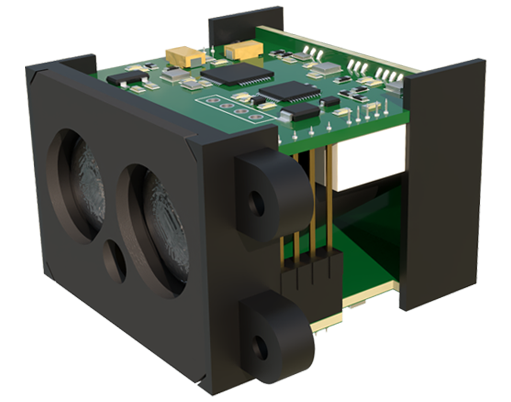
In practical applications, laser sensor systems are deployed in both static and dynamic measurement scenarios. Static measurements might involve scanning a guide rail on a calibration bench to map its geometry, while dynamic measurements could track rail wear during machine operation. For example, in high-speed rail transport systems, laser sensors are used to monitor guide rail alignment and surface conditions, ensuring safety and compliance with regulatory standards. Similarly, in semiconductor manufacturing, where precision is paramount, laser-based inspection of linear guide rails in wafer handling equipment helps maintain sub-micron accuracy. The data collected can be visualized through 3D models or graphs, providing engineers with actionable insights for adjustments or replacements.

Despite their benefits, implementing laser sensor measurement requires careful consideration. Factors such as sensor selection (based on range, resolution, and environmental rating), alignment, and calibration are crucial to avoid errors. Surface properties of the guide rail—like reflectivity or color—can influence measurement accuracy, necessitating sensor tuning or the use of complementary technologies. Additionally, proper training for personnel is essential to interpret results and maintain equipment. Looking ahead, advancements in laser technology, such as the integration of artificial intelligence for anomaly detection, promise to further enhance measurement capabilities, making guide rail assessment more intelligent and autonomous.
In conclusion, laser sensors represent a cornerstone of precision measurement in the electrical and industrial engineering sectors, particularly for guide rail applications. By delivering fast, accurate, and non-contact data, they support the drive toward higher efficiency and quality in manufacturing and maintenance. As industries continue to embrace digitalization, the role of laser sensors in ensuring optimal guide rail performance will only grow, underpinning the reliability of modern automated systems.