In the realm of industrial automation and control systems, proximity sensors are indispensable components. They are non-contact sensors designed to detect the presence or absence of an object within their sensing range without any physical contact. This fundamental capability makes them crucial for tasks like object counting, position verification, limit switching, and speed detection across countless manufacturing, packaging, and material handling applications. Their reliability, long operational life, and immunity to environmental factors like dust and moisture have cemented their status. This guide delves into the primary types of proximity sensors, explaining their operating principles, typical applications, and key considerations for selection.
The most prevalent category is the Inductive Proximity Sensor. These sensors generate an electromagnetic field. When a metallic object (typically ferrous metals like steel or iron, though some models detect non-ferrous metals) enters this field, it induces eddy currents within the object. This change in the electromagnetic field is detected by the sensor's internal circuitry, triggering an output signal. Inductive sensors are exclusively for detecting metals. Their sensing range depends on the target metal's properties and size, but it is generally short, often a few millimeters to tens of millimeters. They are exceptionally robust, resistant to harsh conditions like coolant or oil splashes, and are widely used in metal machining, robotic arms, and conveyor systems for part detection.
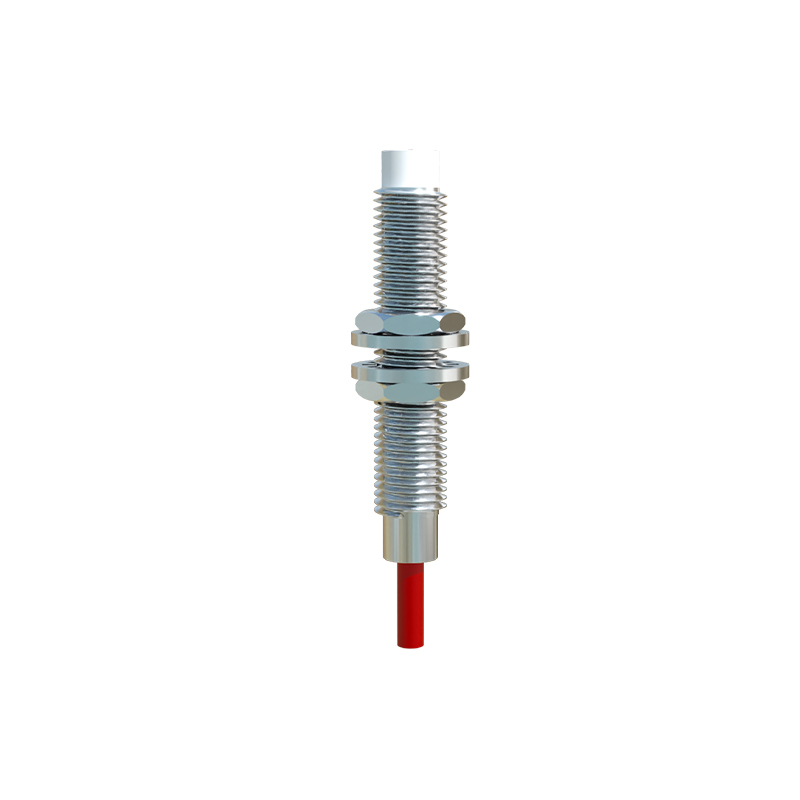
For detecting non-metallic objects, Capacitive Proximity Sensors are the go-to solution. They function by generating an electrostatic field. Any object that enters this field, whether metallic, plastic, wood, liquid, or even granular materials, alters the capacitance of the sensor's circuit. This change is measured to detect the object's presence. Capacitive sensors can sense through certain non-metallic materials, making them suitable for level detection in tanks (e.g., detecting liquid or powder levels through a glass or plastic wall). They are sensitive to environmental changes like humidity and temperature, which must be considered during installation and calibration. Common applications include fill level control, material handling of plastics or paper, and touch-sensitive interfaces.
Magnetic Proximity Sensors, specifically Reed Switch and Hall Effect sensors, detect permanent magnets. A Reed Switch sensor contains two ferromagnetic reeds sealed in a glass tube. When a magnet approaches, the reeds magnetize and attract each other, closing the electrical contact. Hall Effect sensors, which are solid-state, produce a voltage output when exposed to a magnetic field. Both types are highly reliable for detecting the position of cylinders with embedded magnets (piston position in pneumatic cylinders), door/window position sensing, and in low-speed rotational encoding. They offer very long life, especially the solid-state Hall Effect types, and are immune to dust, dirt, and non-magnetic contaminants.
Ultrasonic Proximity Sensors operate on a principle similar to sonar. They emit high-frequency sound waves (ultrasound) and evaluate the echo reflected back from a target object. By measuring the time between emission and reception of the echo, the sensor can determine both the presence and the distance to the object. This makes them excellent for precise distance measurement and level sensing of bulk solids or liquids, even in challenging environments with steam, dust, or varying colors and surface properties that confuse optical sensors. They can detect virtually any material that reflects sound. Applications include pallet stacking height control, loop control in web processing, and collision avoidance in automated guided vehicles (AGVs).
Finally, Photoelectric Sensors, while sometimes categorized separately, function as proximity sensors in their diffuse (reflective) mode. They consist of a light emitter (usually LED) and a receiver. In the diffuse mode, the sensor emits a light beam, and the target object reflects part of this beam back to the receiver for detection. They offer longer sensing ranges compared to inductive or capacitive sensors and can detect objects of almost any material, color, or finish, though performance varies with reflectivity. They are versatile but can be affected by ambient light, heavy dust, or highly absorbent surfaces. Common uses include detecting transparent bottles on a conveyor, box counting, and registration mark detection.
Selecting the right proximity sensor requires a careful analysis of the application: Target material (metal, plastic, liquid), required sensing distance, environmental conditions (temperature, contaminants, washdown needs), output type (PNP/NPN, analog, IO-Link), and electrical requirements. Understanding the core principles behind inductive, capacitive, magnetic, ultrasonic, and photoelectric types provides a solid foundation for making an informed, reliable choice that ensures system efficiency and longevity. As Industry 4.0 advances, these sensors continue to evolve with smarter features like diagnostic data and network connectivity, further integrating into the intelligent factory floor.