The global laser sensor market is experiencing significant growth, driven by advancements in automation, consumer electronics, and smart manufacturing. Within this landscape, BOE Technology Group, a leading Chinese display and sensor manufacturer, has emerged as a key player. Understanding the pricing of BOE laser sensors requires a nuanced look beyond a simple price tag, as it is influenced by a complex matrix of technological specifications, application demands, volume, and market dynamics.
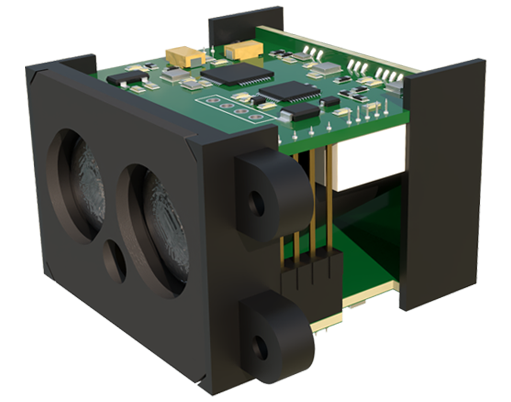
Unlike standardized commodity components, BOE laser sensors are engineered for specific functions. The core technology, such as Time-of-Flight (ToF), LiDAR, or structured light, fundamentally dictates the cost structure. A high-resolution, long-range LiDAR module designed for autonomous vehicle perception systems involves sophisticated optics, precise calibration, and robust data processing, placing it at a premium price point. Conversely, a simple proximity or gesture recognition sensor for a smartphone or home appliance, utilizing a more basic ToF principle, is manufactured at a significantly lower cost. The performance parameters—including range, accuracy, resolution, field of view, and frame rate—are direct cost drivers. A sensor with sub-millimeter accuracy and a 120-degree field of view will command a higher price than one with centimeter-level accuracy and a narrow field.

The intended application is perhaps the most critical factor shaping the price. BOE supplies sensors across diverse industries, each with unique requirements. In the consumer electronics sector (e.g., smartphones, tablets, AR/VR devices), the emphasis is on miniaturization, low power consumption, and mass-production scalability. Prices here are highly competitive, often negotiated in contracts for millions of units, driving the per-unit cost down dramatically. For industrial automation, sensors must prioritize reliability, durability in harsh environments, and high-speed operation. These ruggedized models, while possibly produced in lower volumes, incur higher costs for materials and testing. The automotive sector, particularly for Advanced Driver-Assistance Systems (ADAS), demands sensors that meet stringent automotive-grade qualifications for temperature, vibration, and longevity, adding substantial certification and manufacturing overhead.
Volume is the universal lever in electronics pricing. BOE, with its massive manufacturing scale honed in the display panel industry, can achieve considerable economies of scale. An original equipment manufacturer (OEM) ordering 500,000 units annually for a laptop line will receive a vastly different unit quote compared to a research lab or a startup prototyping with an order of 100 pieces. Large-volume contracts allow BOE to amortize R&D, tooling, and setup costs over many units, reducing the price significantly. Therefore, published "list prices" are rare; pricing is almost exclusively quotation-based.
The competitive landscape also exerts pressure on BOE's pricing strategy. The company competes with established international sensor giants like Sony, STMicroelectronics, and ams OSRAM, as well as other Chinese manufacturers. To gain market share, especially in the high-volume consumer space, BOE may adopt aggressive pricing strategies. However, this is balanced against its value proposition, which increasingly includes not just the sensor hardware but also integrated software solutions, algorithm support, and customization services. This "solution-selling" approach can justify a price premium for certain clients.
Current market trends further influence price trajectories. The surge in demand for 3D sensing in mobile devices, robotics, and smart home products is expanding the market, potentially leading to lower costs through scale. Simultaneously, supply chain stability, the cost of raw materials like specialized semiconductors and optical glass, and global logistics factors introduce volatility. As BOE continues to advance its sensor technology—improving performance while reducing size and power draw—the cost-performance ratio is expected to improve steadily.
In conclusion, pinpointing a single "price" for a BOE laser sensor is not feasible. A basic proximity sensor might cost just a few dollars in high volume, while a cutting-edge automotive LiDAR module could run into hundreds. For businesses and engineers, the process involves clearly defining technical specifications, application context, and required volume, then engaging directly with BOE or its authorized distributors for a formal quotation. The broader trend suggests that as adoption widens and manufacturing scales, the effective price for a given level of laser sensing capability will continue to decrease, fueling further innovation across industries.