In the realm of industrial automation and control systems, proximity switch sensors are indispensable components for non-contact detection of metallic and, in some cases, non-metallic objects. Among the diverse range of models available, the "blue head" proximity sensor has carved out a significant niche, recognized for its specific performance characteristics and reliability. This article delves into the technical aspects, operational principles, and key application scenarios of the blue head inductive proximity sensor.
Fundamentally, a blue head proximity sensor is a type of inductive sensor. The distinctive blue housing, typically made from PBT or similar robust thermoplastic, is not merely an aesthetic choice. It often signifies a specific performance grade or material composition designed for challenging environments. The core operating principle remains electromagnetic induction. The sensor generates a high-frequency oscillating electromagnetic field from its active face (the blue head). When a metallic object enters this field, eddy currents are induced on the object's surface. This causes a change in the oscillation amplitude within the sensor's internal LC circuit. The sensor's electronics detect this damping effect and trigger a switching signal—either PNP (sourcing) or NPN (sinking)—to the connected control system, such as a PLC.
The blue coloration is frequently associated with enhanced features. Many blue head sensors are engineered to be weld-field immune. In welding applications, intense magnetic fields from welding equipment can cause standard inductive sensors to malfunction or trigger falsely. Weld-field immune models incorporate special shielding and filtering circuits within that iconic blue housing to resist these interfering magnetic fields, ensuring stable operation near spot welders or welding robots. Furthermore, the blue plastic is often formulated to offer superior resistance to common industrial chemicals, coolants, and cutting oils, providing an extra layer of protection for the internal coil and electronic components.
Another critical specification where blue head sensors often excel is their switching frequency and sensing distance. While dependent on the exact model and target material, they are commonly available in standard sensing ranges (e.g., 2mm, 4mm, 8mm) with high repeat accuracy. Their response speed is typically fast enough for high-speed counting or positioning tasks on production lines. The housing design also plays a role in installation versatility; many feature a threaded barrel style (e.g., M8, M12, M18, M30) allowing for easy mounting in nuts, with options for flush or non-flush mounting capabilities. Non-flush mountable sensors (those with a sensing field projecting from the sides) generally offer a longer sensing range but require more careful installation to avoid physical damage.
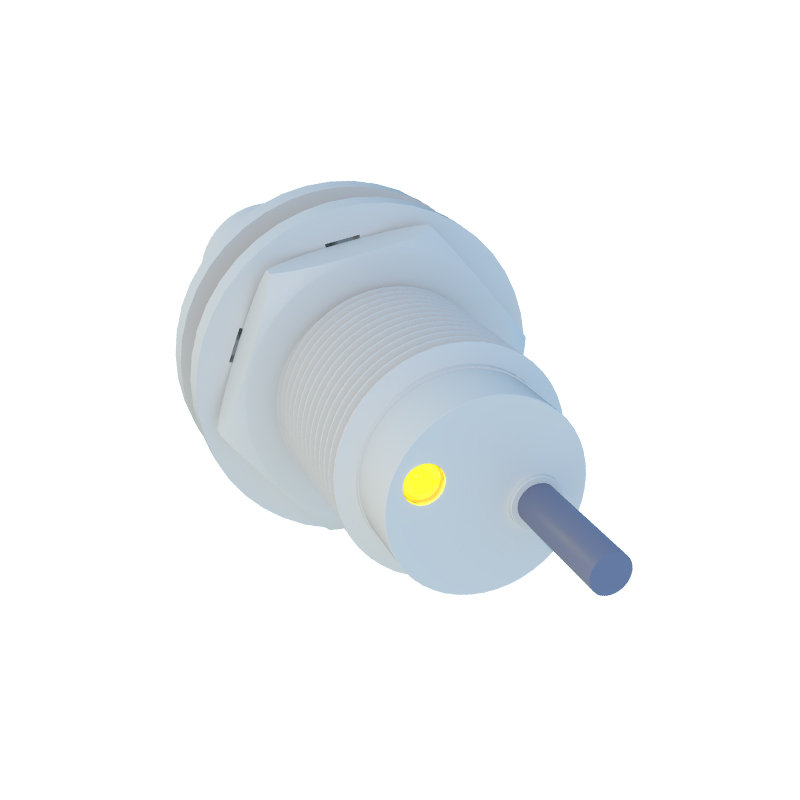
Application areas for these robust sensors are vast across factory automation. They are ubiquitous in metal machining centers for tool breakage detection, part presence verification, and end-of-travel limit sensing. On automated assembly and packaging lines, they reliably detect metallic components, conveyor chain links, or the position of actuator cylinders. Their weld-field immunity makes them the go-to choice in automotive manufacturing body shops and any robotic welding cell. Material handling systems, including robotic arms and transfer lines, rely on them for precise positioning control.
When selecting and installing a blue head proximity sensor, several factors must be considered. First, determine the target material (usually ferrous metals like steel or non-ferrous like aluminum, brass, or copper); sensing distance is reduced for non-ferrous metals. The required sensing distance (Sn) should be chosen with a safety margin, typically 70-80% of the rated Sn to account for temperature variations and part tolerances. Electrical characteristics are paramount: the operating voltage (commonly 10-30V DC), output type (PNP/NPN, NO/NC), and current rating must match the control system. The IP (Ingress Protection) rating, such as IP67 or IP69K, indicates the level of protection against dust and water, crucial for washdown environments in food and beverage or pharmaceutical industries.
Maintenance is generally minimal due to their non-contact nature, but periodic checks are advised. This includes verifying the mechanical integrity of the housing and cable, cleaning the sensing face from accumulated debris or metal chips, and confirming the stability of the output signal under normal operating conditions. Ensuring a stable, clean power supply is also essential for long-term reliability.
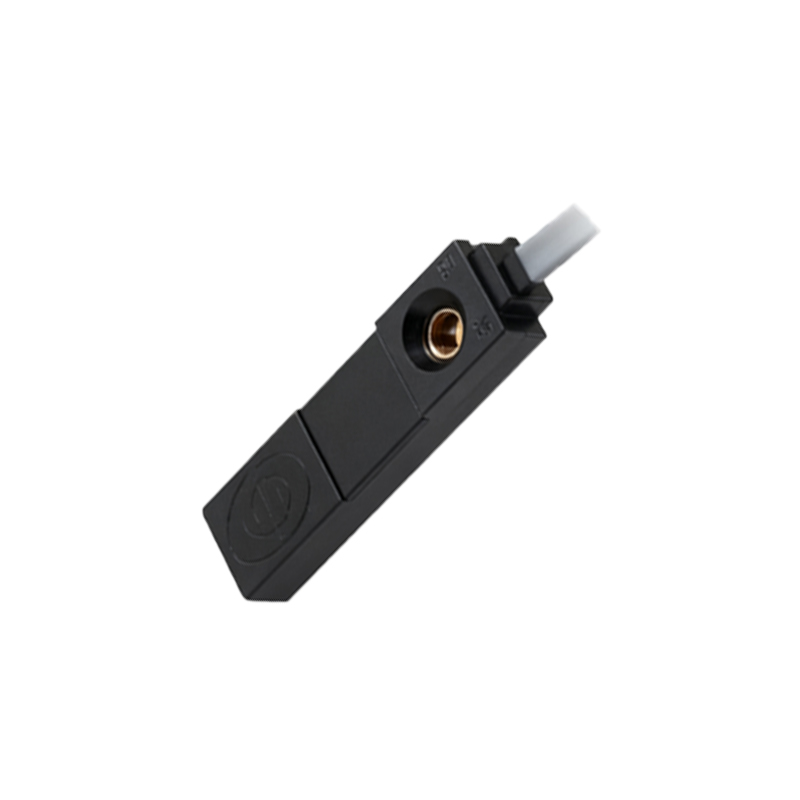
In conclusion, the blue head proximity switch sensor is far more than a colored variant. It represents a class of industrial-grade inductive sensors designed for durability, stability in electromagnetically noisy environments, and consistent performance. Its widespread adoption is a testament to its ability to solve complex detection problems reliably, forming a critical link in the chain of modern industrial automation. Understanding its specifications and proper application is key to leveraging its full potential in creating efficient, resilient, and safe automated systems.
