Proximity sensors are critical components in modern industrial automation, enabling non-contact detection of objects with high reliability and precision. The manufacturing process of these sensors involves a sophisticated blend of material science, electronic engineering, and meticulous assembly techniques. This article delves into the key stages of proximity sensor production, highlighting the engineering principles and quality controls that ensure optimal performance in demanding environments.
The journey begins with the selection of raw materials. For inductive proximity sensors, ferrite cores are commonly used due to their excellent magnetic properties. These cores are precision-molded and sintered to achieve consistent permeability and minimal energy loss. Capacitive sensors, on the other hand, utilize specialized dielectric materials and conductive plates, often made from high-grade metals like brass or stainless steel, to detect both metallic and non-metallic targets. The housing materials, typically thermoplastics such as PBT or metals like nickel-plated brass, are chosen for durability, environmental resistance, and electromagnetic compatibility.
Electronic component fabrication forms the heart of sensor manufacturing. The oscillator circuit, a core element in inductive sensors, is built using surface-mount technology (SMT) on printed circuit boards (PCBs). Automated pick-and-place machines position micro-components like resistors, capacitors, and integrated circuits with micron-level accuracy. The oscillator generates a high-frequency electromagnetic field, and any metallic object entering this field induces eddy currents, dampening the oscillation. This change is detected by a threshold circuit, which triggers the sensor's output. For capacitive sensors, the circuit measures changes in capacitance caused by the proximity of any material altering the electric field.
Assembly requires a clean, controlled environment to prevent contamination. The sensing coil for inductive types is wound with ultra-fine copper wire, often using automated winding machines to ensure consistent turns and tension. This coil is then encapsulated with epoxy resin to protect against moisture, vibration, and thermal stress. The electronic module is integrated into the housing, with careful attention to shielding against electromagnetic interference (EMI). Laser welding or ultrasonic sealing techniques are employed to hermetically seal the sensor, achieving high ingress protection (IP) ratings such as IP67 or IP69K for use in washdown or harsh conditions.
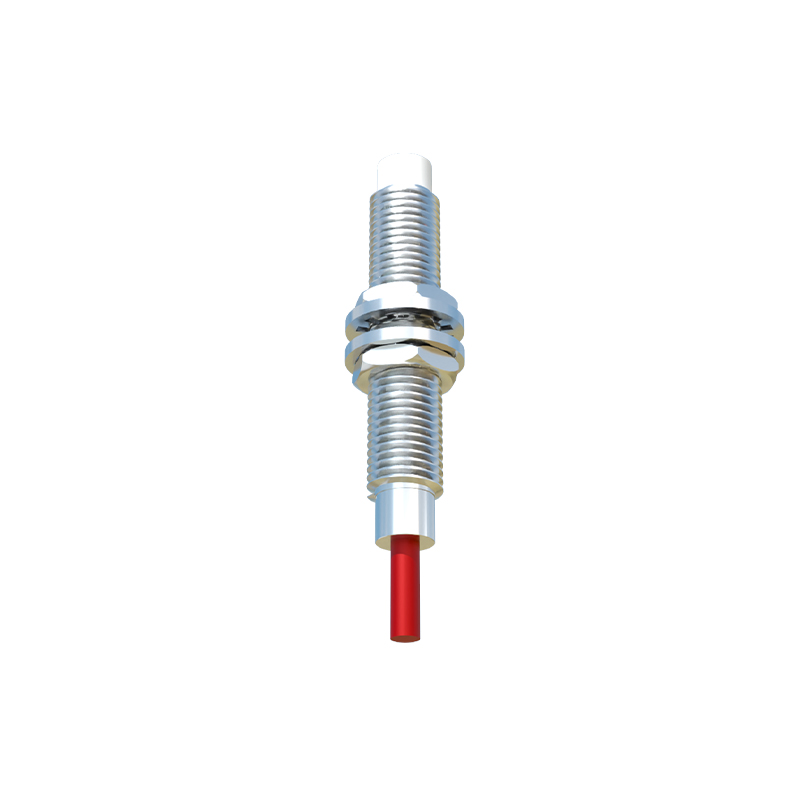
Calibration and testing are paramount. Each sensor undergoes rigorous functional checks using automated test benches. Key parameters like sensing distance, hysteresis, response time, and temperature stability are measured against strict tolerances. For example, an inductive sensor rated for a 10mm range must detect a standard target at precisely that distance, with minimal deviation across production batches. Environmental stress testing, including thermal cycling, vibration tests, and exposure to corrosive agents, validates durability. Advanced manufacturers employ statistical process control (SPC) to monitor production metrics, ensuring long-term consistency.
Innovations in manufacturing continue to evolve. The integration of IO-Link communication enables smart sensors with diagnostic capabilities, requiring embedded firmware programming during production. Miniaturization trends drive the use of micro-electromechanical systems (MEMS) and advanced lithography for compact designs. Additive manufacturing, or 3D printing, is being explored for prototyping custom housings and complex internal structures rapidly.
In conclusion, the manufacturing of proximity sensors is a testament to precision engineering. From material selection to final testing, each step is optimized to deliver devices that operate reliably in diverse industrial settings, from automotive assembly lines to food processing plants. As Industry 4.0 advances, the demand for smarter, more robust sensors will further refine these production methodologies, pushing the boundaries of automation technology.