In the realm of industrial automation and smart device integration, the demand for reliable, cost-effective, and versatile sensing solutions continues to grow. Among the diverse array of sensors available, the paper proximity switch sensor represents a fascinating and increasingly relevant technology. This article delves into the operational principles, key applications, and emerging trends surrounding these unique sensors, providing a comprehensive overview for engineers, designers, and technology enthusiasts.
At its core, a paper proximity switch sensor is a type of non-contact sensor designed to detect the presence or absence of paper or paper-based materials within a specific range. Unlike traditional mechanical switches that require physical contact, these sensors operate by emitting a field or beam and monitoring changes in that field caused by the target object. The most common technologies employed are capacitive and optical sensing.
Capacitive paper proximity sensors work by generating an electrostatic field. When paper, which has dielectric properties, enters this field, it causes a detectable change in capacitance. This change triggers the sensor's switching mechanism. These sensors are particularly effective for detecting various paper grades, including those with different thicknesses or moisture content, without direct contact. Optical sensors, on the other hand, typically use an infrared LED and a phototransistor. They detect paper by measuring the reflection or interruption of a light beam. Reflective sensors bounce light off the paper surface, while through-beam sensors have separate emitter and receiver units, with the paper breaking the beam.
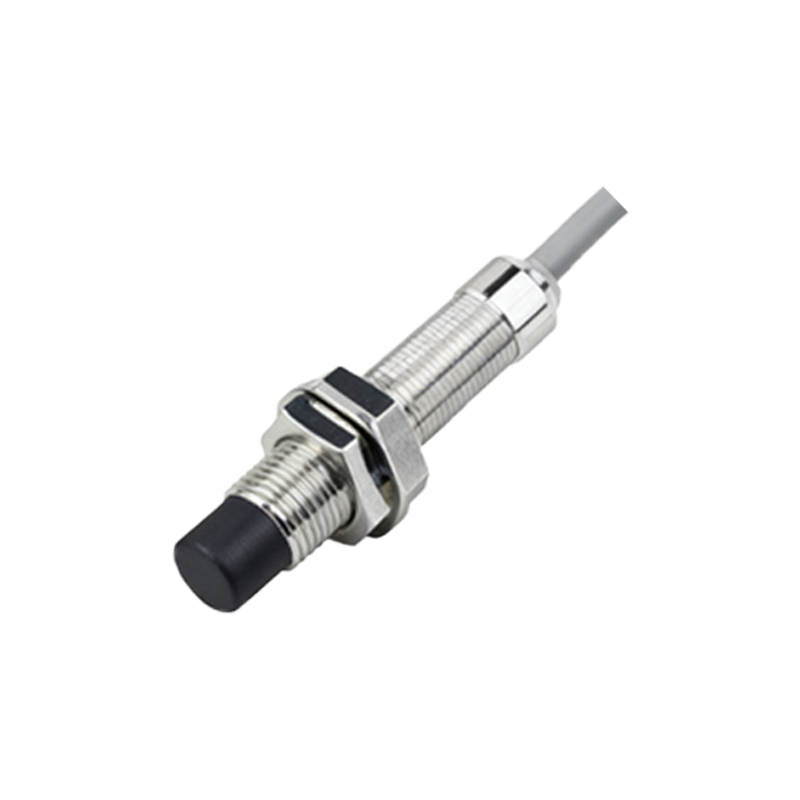
The advantages of using dedicated paper proximity sensors are manifold. Firstly, they prevent mechanical wear and tear since no physical contact is made with the paper, leading to higher longevity and reduced maintenance. Secondly, they enable high-speed detection, which is crucial in fast-paced environments like printing presses or packaging lines. They can also handle delicate papers that might be damaged by mechanical feelers. Furthermore, their non-contact nature minimizes the risk of marking or smudging sensitive printed materials.
Applications for paper proximity switch sensors are widespread across several industries. In the printing and publishing sector, they are indispensable for tasks such as paper jam detection, sheet counting, and edge alignment in printers, copiers, and large-scale printing presses. In packaging automation, these sensors ensure correct paper feed for carton forming, label application, and verifying the presence of paper inserts or instructions within packages. Office automation equipment, including high-volume scanners and document sorters, relies on them for precise paper path monitoring. Additionally, they find use in ATM machines for detecting the presence of banknotes and in manufacturing processes involving paper-based composites or filters.
When selecting a paper proximity sensor for a specific application, several factors must be considered. Sensing range is paramount; it must be appropriate for the machine's design and the paper's position. The response time must be fast enough to keep up with the machine's operational cycle. Environmental conditions like ambient light (for optical sensors), dust, humidity, and temperature fluctuations can affect performance, necessitating sensors with suitable ingress protection (IP) ratings. The sensor's output type—whether NPN, PNP, or analog—must be compatible with the existing control system, such as a PLC.
Looking toward the future, trends in paper proximity sensing are aligning with broader Industry 4.0 initiatives. The integration of IO-Link and other smart communication protocols is becoming more common, allowing for digital parameter setting, remote monitoring, and predictive maintenance data from the sensor itself. There is also a push for miniaturization, enabling their installation in increasingly compact devices. Furthermore, advancements in sensing algorithms are improving discrimination, allowing sensors to better distinguish between paper, plastic films, or other materials in complex workflows, reducing false triggers.
In conclusion, paper proximity switch sensors are critical components that enhance efficiency, reliability, and quality in numerous paper-handling processes. Their ability to provide non-contact, high-speed detection makes them a superior choice over mechanical alternatives in modern automated systems. As technology progresses, these sensors will become smarter, more connected, and more adaptable, solidifying their role in the automated and intelligent systems of tomorrow. Understanding their function and potential is key for anyone involved in designing, maintaining, or optimizing equipment where paper is a fundamental element.