Selecting the ideal proximity sensor for an industrial application is a critical decision that impacts system reliability, efficiency, and cost. With a myriad of technologies available—inductive, capacitive, ultrasonic, photoelectric, and magnetic—navigating the options can be daunting. This guide provides a structured approach to making an informed choice, focusing on key technical and environmental parameters.
The first and most fundamental step is to define the target object's characteristics. What material is it made of? Inductive sensors excel at detecting all metals but are most sensitive to ferrous materials like steel and iron. For non-ferrous metals like aluminum or copper, specialized versions with reduced sensing ranges are required. If the target is non-metallic—such as plastic, wood, glass, or liquid—capacitive or photoelectric sensors become the primary candidates. The target's size, shape, and required sensing distance (the gap between the sensor and the object) are equally crucial. A small target may require a sensor with a more focused sensing field.
Next, consider the operating environment. Industrial settings are harsh. Will the sensor be exposed to dust, oil, coolant, or chemical washdowns? An IP (Ingress Protection) rating of IP67 is standard for resistance to dust and temporary immersion, while IP69K indicates suitability for high-pressure, high-temperature cleaning. Temperature extremes, both ambient and from nearby machinery, can affect performance. Vibration and mechanical shock demand robust housing, typically made of stainless steel (V2A/AISI 304 or V4A/AISI 316) for corrosive environments or nickel-plated brass for general use. Electrical noise from motors and variable frequency drives (VFDs) can cause false triggering, necessitating sensors with good electromagnetic compatibility (EMC) shielding.
The sensor's output type must match the control system's input. The two main categories are discrete (digital) and analog. Discrete outputs, like NPN (sinking) or PNP (sourcing) transistors, provide a simple ON/OFF signal and are the most common. The choice between NPN and PNP depends on the PLC's or controller's input card configuration. Analog outputs (4-20 mA or 0-10 V) provide a continuous signal proportional to the sensing distance, ideal for applications like measuring position or thickness. Some sensors also offer IO-Link digital communication, enabling advanced diagnostics, parameter setting, and process data integration into Industry 4.0 architectures.
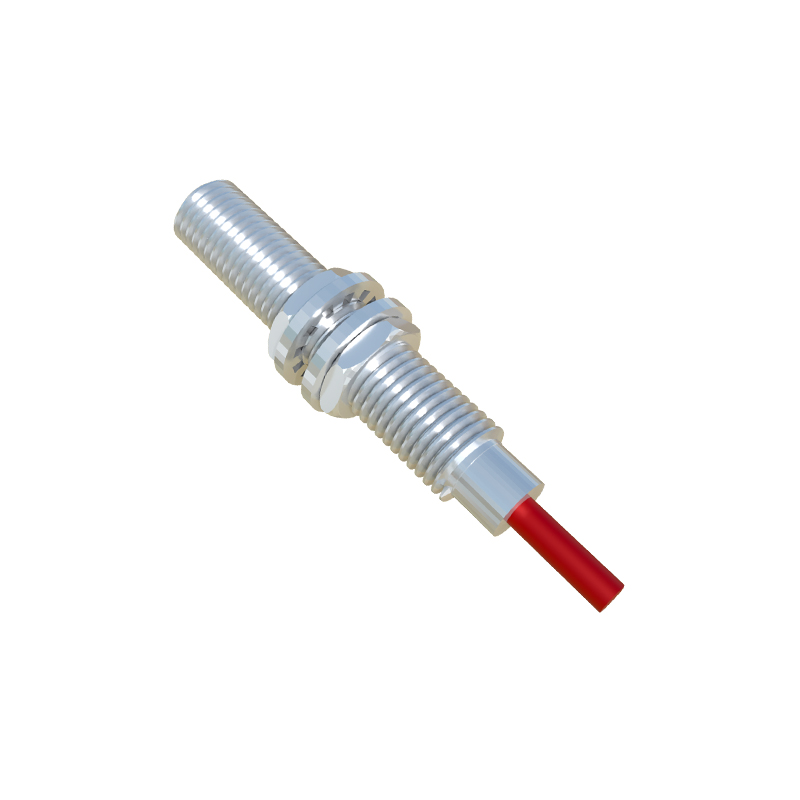
Physical installation constraints are often overlooked. The sensor's housing shape—barrel (cylindrical), rectangular, or ring-shaped—must fit the available space. Barrel sensors are common but require a specific mounting hole. Consider whether a shielded (flush-mountable) or unshielded (non-flush) model is needed. Shielded sensors can be mounted flush in metal without affecting their range, whereas unshielded sensors offer longer ranges but require clearance around the sensing face. The electrical connection type, such as pre-wired cables, quick-disconnect (M8 or M12 connectors), or terminal connections, affects maintenance and replacement ease.
Finally, evaluate performance specifications beyond the basic data sheet. Response time, the speed at which the sensor reacts to a target, is vital for high-speed counting or sorting. Repeatability, the consistency of the switching point, ensures precision. Hysteresis, a built-in difference between the switch-on and switch-off points, prevents chatter when a target is at the edge of the sensing range. For challenging applications with varying backgrounds or highly reflective targets, photoelectric sensors with background suppression or true background suppression technology are essential.
In conclusion, there is no universal "best" proximity sensor. The optimal selection is a systematic compromise between target material, environmental resilience, electrical interface, mechanical form factor, and required performance. By methodically analyzing these factors, engineers can specify a sensor that delivers long-term, trouble-free operation, optimizing both process performance and total cost of ownership. Always consult specific manufacturer datasheets and, when in doubt, request samples for real-world testing in your application.