Laser dust sensors have become a popular choice for particulate matter monitoring across various industries, including manufacturing, HVAC, and environmental control. Their ability to provide real-time data with relatively high precision makes them attractive for maintaining air quality standards and ensuring workplace safety. However, despite their widespread adoption, these sensors are not without significant limitations. A critical examination reveals several inherent drawbacks that engineers and system designers must carefully consider before implementation.
One of the primary disadvantages is their sensitivity to environmental conditions. Laser-based optical scattering techniques can be severely affected by humidity and temperature fluctuations. High humidity levels often cause water vapor to condense on particulate matter, altering the particle's effective size and scattering properties. This leads to inaccurate readings, as the sensor may interpret a humid aerosol as a higher concentration of dry dust. Similarly, extreme temperatures can affect the laser diode's output stability and the performance of the photodetector, introducing drift and calibration errors over time. Inconsistent environmental conditions, common in many industrial settings, can therefore compromise the reliability of the data.
Another considerable drawback is the issue of particle composition and color dependency. The principle of light scattering assumes certain optical properties of the particles being measured. In reality, industrial dust is a complex mixture of materials—metallic, carbon-based, mineral, or organic—each with different shapes, colors, and light absorption coefficients. Dark-colored particles, like carbon black, absorb more light than they scatter, leading to a weaker signal and potential under-reporting of concentration. Conversely, light-colored or reflective particles may produce an exaggerated signal. This material dependency means a sensor calibrated for one type of dust in a laboratory may provide misleading data when deployed in a different industrial context without site-specific recalibration.
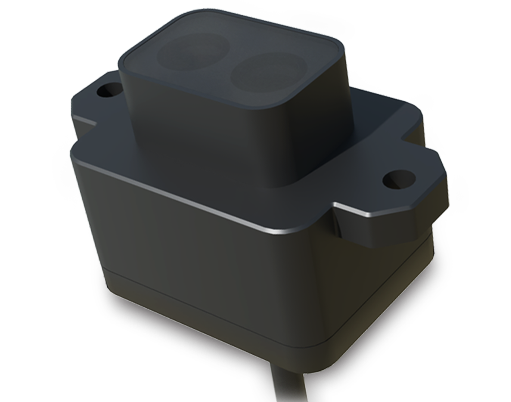
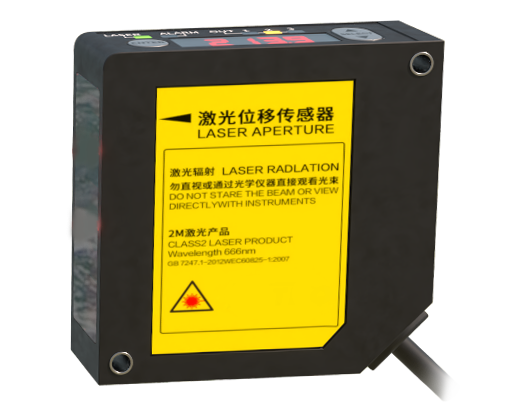
Maintenance and fouling present persistent operational challenges. The optical components—the laser window and the receiver lens—are directly exposed to the very environment they are measuring. Over time, a thin layer of dust can accumulate on these surfaces, attenuating the outgoing laser beam and scattering the incoming light before it reaches the detector. This gradual fouling causes a slow, often unnoticed, degradation in sensor sensitivity, leading to a downward drift in reported values. While some models feature automatic cleaning mechanisms (e.g., air purging), these add complexity and cost and are not always fully effective in harsh, high-concentration environments. Regular, manual cleaning and validation are necessary, increasing the total cost of ownership and creating potential points of failure or neglect.
Furthermore, laser dust sensors typically provide a particle concentration value based on scattered light intensity, but this metric has limitations. They often lack the ability to differentiate particle sizes with high resolution beyond broad categories like PM2.5 or PM10. The reported mass concentration is usually derived from an algorithm that assumes a standard particle density and size distribution. In industrial scenarios where particle density can vary dramatically (e.g., comparing lightweight textile fibers to heavy metal oxides), this assumption can result in significant inaccuracies in the calculated mass concentration. For applications requiring strict regulatory compliance based on mass, such as occupational exposure limits, this can be a critical flaw.
Cost remains a significant barrier, especially for high-accuracy industrial-grade units. While low-cost consumer-grade sensors have proliferated, their performance in demanding industrial environments is often inadequate. Robust sensors designed to withstand vibrations, corrosive atmospheres, and wide temperature ranges command a premium price. Additionally, the need for periodic professional recalibration using reference instruments adds to the long-term operational expenses. For large-scale deployments requiring multiple sensor points, the initial capital and ongoing maintenance costs can be prohibitive.
Finally, there is the challenge of cross-sensitivity to other airborne interferents. In many industrial processes, the air may contain oil mists, water sprays, or vapors that are not the target particulate matter but can still scatter laser light. A sensor cannot inherently distinguish between a water droplet and a solid dust particle of the same optical size, potentially triggering false alarms or masking genuine dust events. This lack of specificity can limit the sensor's usefulness in complex, multi-phase atmospheric conditions.
In conclusion, while laser dust sensors offer valuable real-time monitoring capabilities, their performance is constrained by environmental dependencies, material biases, maintenance needs, limited size-resolution, high costs, and interference issues. A thorough system design must account for these drawbacks, potentially integrating them with other sensing technologies (like gravimetric sampling for calibration) or implementing robust data correction algorithms to ensure reliable and actionable air quality monitoring in industrial applications.