In the realm of precision measurement, laser displacement sensors have emerged as a cornerstone technology, fundamentally transforming how industries approach height and distance measurement. These non-contact sensors operate on the principle of triangulation or time-of-flight, projecting a focused laser beam onto a target surface and analyzing the reflected light to calculate displacement with remarkable accuracy. The core advantage lies in their ability to perform high-speed, non-invasive measurements, eliminating physical contact that could damage delicate surfaces or introduce errors through mechanical force.
Modern laser displacement sensors offer resolutions down to the sub-micron level, with sampling rates exceeding hundreds of thousands of measurements per second. This makes them indispensable in automated production lines for tasks such as thickness gauging of materials, warp detection in electronics, and profile inspection of machined components. For instance, in semiconductor manufacturing, these sensors verify the coplanarity of ball grid arrays (BGAs) on integrated circuits, ensuring reliable solder connections. In automotive assembly, they measure the gap and flushness between body panels to maintain aesthetic quality and aerodynamic efficiency. The technology's robustness allows it to function reliably in harsh environments with vibrations, dust, or variable temperatures, often where traditional contact probes would fail.
Key to their performance is the selection of the appropriate laser type—red visible lasers for general-purpose applications or blue lasers for enhanced performance on organic materials and transparent surfaces. Advanced models incorporate CMOS or PSD (Position Sensitive Detector) elements and sophisticated algorithms to filter out ambient light noise and compensate for surface color or texture variations. Integration with industrial networks like EtherCAT or PROFINET enables real-time data streaming to PLCs for immediate process control, facilitating closed-loop feedback systems that automatically adjust machinery parameters.
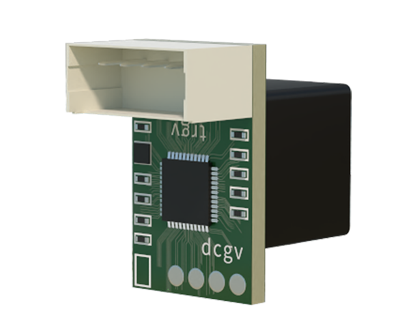
Despite their capabilities, successful implementation requires careful consideration of factors such as stand-off distance, measurement range, and beam spot size relative to the target's features. Calibration against traceable standards is essential for maintaining measurement traceability in quality-critical applications. As Industry 4.0 advances, laser displacement sensors are increasingly paired with machine vision and AI analytics, not only measuring height but also interpreting complex surface topographies for predictive maintenance and zero-defect manufacturing strategies. Their evolution continues toward miniaturization, higher power efficiency, and smarter embedded diagnostics, solidifying their role as a pivotal tool in the digital transformation of industrial metrology.
