In industrial environments where laser systems are employed, ensuring operator safety and regulatory compliance is paramount. Laser safety sensors, also vital as area guards or light curtains, are critical components designed to detect the presence of personnel or objects within a hazardous laser zone and trigger immediate safety responses, such as laser shutdown or machine stoppage. Their effectiveness hinges on a set of precise technical parameters that engineers and safety officers must thoroughly understand to select and implement the correct device.
One of the most fundamental parameters is the Detection Capability. This refers to the sensor's ability to reliably detect an object of a specified minimum size. It is typically expressed as the resolution or object sensitivity, measured in millimeters (mm). For instance, a sensor with a 14mm resolution is designed to detect any object 14mm in diameter or larger that breaks its protective field. This parameter is directly tied to the required safety level; finer resolutions are necessary for applications where even small body parts, like fingers, could be at risk.
Closely related is the Response Time. This is the total time elapsed from the moment an object is detected within the protected field to the moment the safety output signal switches state to initiate the protective stop. Response time is measured in milliseconds (ms). A faster response time is crucial for applications with high-speed machinery or lasers with high power density, as it minimizes the hazardous exposure time. The system's overall safety distance calculation must incorporate this response time to ensure the machine comes to a complete stop before a person can reach the danger point.

The Protective Field Height and Range define the physical coverage of the sensor. The height is the vertical dimension of the detection zone, while the range (or operating range) is the maximum distance over which the transmitter and receiver can reliably operate. For large machinery access points, a tall protective field height is essential. The range must be chosen to accommodate the physical layout of the workstation without signal degradation.
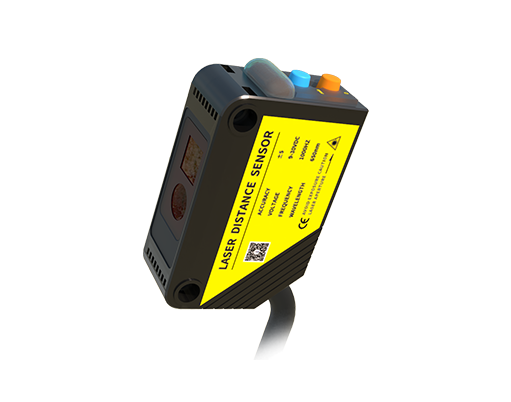
Safety Integrity Level (SIL) and Performance Level (PL) are critical functional safety parameters. They provide a quantified measure of the risk reduction offered by the safety function. SIL, as defined in IEC 61508 and IEC 62061, and PL, as defined in ISO 13849-1, rate the system's reliability based on its architecture, diagnostic coverage, and probability of dangerous failure. Industrial laser applications often require a minimum of SIL 2 / PL c, with higher-risk scenarios demanding SIL 3 / PL d or e. Selecting a sensor with the appropriate rating is non-negotiable for compliance with international safety standards.
Another key specification is the Number of Beams. While simpler systems may use a single beam, most modern laser safety sensors employ multiple, closely spaced parallel beams to create a dense protective curtain. A higher number of beams for a given height improves detection reliability, making it harder for an object to pass through undetected.
Environmental Ratings, such as the Ingress Protection (IP) code (e.g., IP65, IP67), indicate the sensor's resilience against dust and water. In industrial settings with coolant, dust, or outdoor exposure, a high IP rating ensures long-term reliability and prevents false triggers or failures. Similarly, robust housing material (often anodized aluminum or stainless steel) and high vibration/shock resistance are vital for durability in harsh plant environments.
Finally, Output Types and Control System Integration capabilities are practical considerations. Safety sensors typically provide solid-state safety-rated outputs (OSSDs - Output Signal Switching Devices) that connect directly to a safety relay or a safety PLC. Features like muting, blanking, or cascading allow for flexible integration into automated processes without compromising the safety function.
In conclusion, specifying a laser safety sensor is not a generic task. It requires a meticulous analysis of the application's specific hazards, machine kinematics, and environmental conditions against these core parameters. A sensor chosen with precise attention to its detection capability, response time, safety ratings, and environmental robustness forms the cornerstone of a reliable, standards-compliant safety system, safeguarding personnel while supporting uninterrupted, productive operations.