In industrial automation, process control, and advanced research applications, operating environments often extend far beyond standard room temperature conditions. The demand for reliable sensing in cryogenic temperatures—typically defined as below -40°C and extending into the liquid nitrogen (-196°C) or even liquid helium ranges—presents a unique set of engineering challenges. Standard inductive, capacitive, or photoelectric proximity sensors frequently fail in these conditions due to material embrittlement, lubricant failure, electronic component drift, and condensation or icing. This is where the specialized field of customized cryogenic proximity sensors becomes critical, requiring a holistic approach to design, material science, and system integration.
The primary driver for customization is the specific operational envelope. A sensor for a -50°C freezer monitoring a robotic palletizer has vastly different requirements than one submerged in liquid nitrogen for superconducting magnet gap detection or installed on a liquefied natural gas (LNG) transfer arm. Key specification parameters that must be defined include the exact temperature range (minimum and maximum), required sensing distance, target material, response time, output type (e.g., PNP/NPN, analog 4-20mA, IO-Link), housing protection rating (IP/IP69K), and the thermal cycling profile it will endure.
Material selection is the cornerstone of cryogenic sensor durability. Standard engineering plastics like polycarbonate or ABS become brittle. Custom housings often utilize specialized polymers such as PTFE (Teflon), PEEK, or certain grades of stainless steel with known performance at low temperatures. Internal seals and O-rings must be made from elastomers like fluorocarbon or perfluoroelastomer (FFKM) that retain elasticity. For inductive sensors, the coil former and potting compound require formulations with matching coefficients of thermal expansion to prevent cracking and delamination during repeated thermal shocks.
The electronic heart of the sensor—the oscillator, amplifier, and output stage—demands careful component curation. Standard semiconductors can exhibit significant parametric shifts or cease functioning. Custom designs employ components specifically rated or screened for low-temperature operation. Furthermore, thermal management strategies, such as internal heating elements or thermal buffers, are sometimes integrated to maintain a minimal operational temperature for sensitive circuitry, even when the sensing face is exposed to extreme cold. This is a delicate balance, as added heat must not interfere with the process or exceed safety limits.
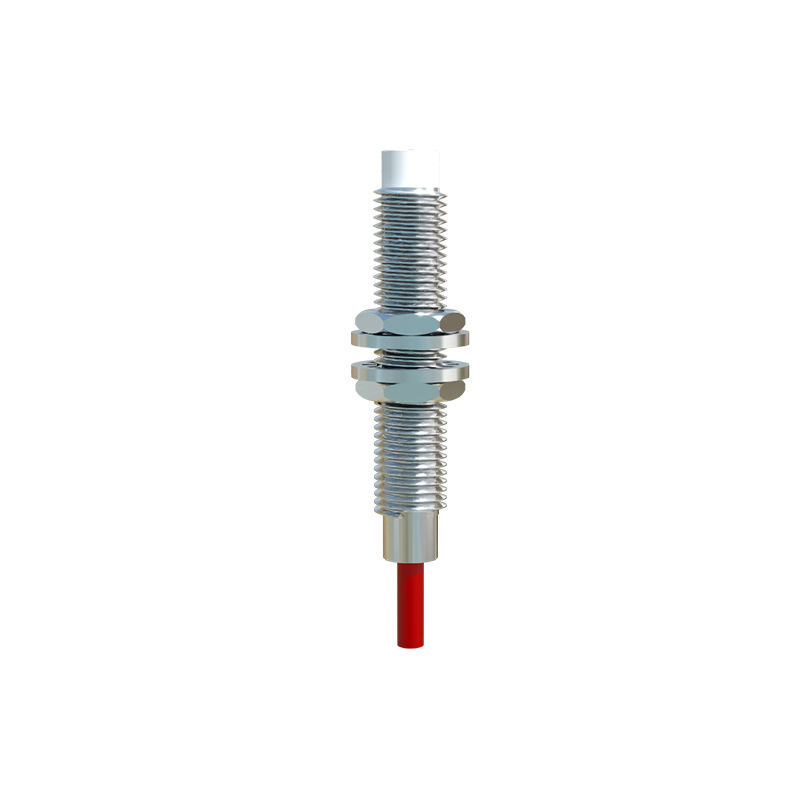
Output signal integrity is another critical focus. Long cable runs from a cryogenic vessel to a room-temperature controller can introduce noise and capacitance issues. Custom solutions may incorporate signal conditioning directly in the sensor head or a remote amplifier. The rise of smart sensors with IO-Link communication offers significant advantages here, enabling digital parameter setting, temperature compensation data, and advanced diagnostics to be transmitted reliably, providing real-time health monitoring of the sensor itself.
Integration and installation considerations are equally vital. Custom mounting brackets, thermal breaks to reduce heat conduction, and specialized connector types that won't crack upon tightening at low temperatures are often part of the package. Collaboration between the sensor manufacturer and the client's engineering team is essential to model thermal stresses and ensure the mechanical design prevents the ingress of moisture, which would instantly freeze and cause failure.
Applications for these tailored solutions are diverse. They are indispensable in the energy sector for LNG production, storage, and shipping; in aerospace for testing and fueling operations; in pharmaceuticals for lyophilization (freeze-drying) processes; and in high-energy physics for particle accelerator systems. Each application validates that an off-the-shelf sensor is a liability, whereas a meticulously customized cryogenic proximity sensor becomes a cornerstone of system reliability.
Ultimately, the customization of a proximity sensor for cryogenic service is not a minor modification but a fundamental re-engineering. It demands expertise in low-temperature physics, materials engineering, and precision electronics. The goal is to deliver a sensor that provides the same unwavering detection confidence at -200°C as its standard counterpart does at +25°C, ensuring safety, precision, and uptime in the world's coldest industrial environments. The process is a testament to applied engineering, transforming a basic component into a mission-critical device.