Proximity sensors are indispensable components in modern industrial automation, enabling non-contact detection of objects with high precision and reliability. These sensors operate on various principles, each suited to specific applications and environmental conditions. The most common types include inductive, capacitive, ultrasonic, and photoelectric sensors, each with distinct advantages and limitations.
Inductive proximity sensors are widely used for detecting metallic objects. They generate an electromagnetic field and sense changes caused by metallic targets entering this field. Typically, these sensors are ideal for harsh environments involving dust, oil, or moisture, as they are sealed robustly. Common applications include position sensing in conveyor systems, metal detection in manufacturing, and safety interlocks in machinery. Their range is limited, usually up to 60 mm, but they offer fast response times and high switching frequencies.
Capacitive proximity sensors can detect both metallic and non-metallic materials, such as plastics, liquids, or granular substances. They work by measuring changes in capacitance when an object enters their electrostatic field. These sensors are valuable in industries like food processing, where they monitor levels of materials in containers, or in packaging lines for detecting transparent films. However, they are sensitive to environmental factors like humidity and temperature, requiring careful calibration.
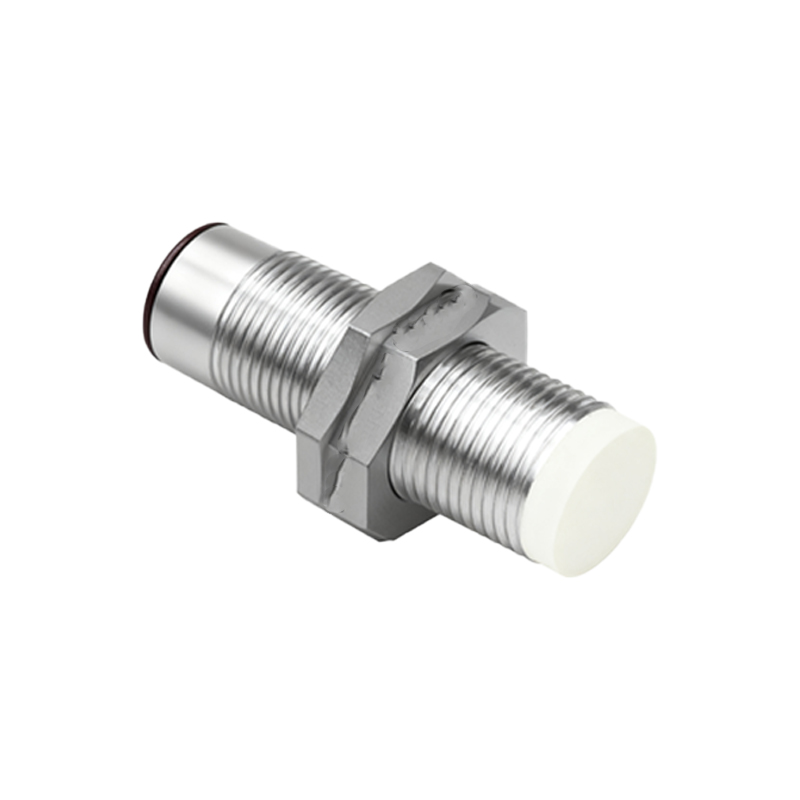
Ultrasonic sensors utilize sound waves beyond human hearing to detect objects and measure distances. They emit ultrasonic pulses and calculate the time taken for echoes to return. This technology is effective for detecting objects regardless of color, transparency, or material, making it versatile for applications like liquid level control, robotic navigation, and presence detection in complex layouts. While offering longer ranges (up to several meters), they can be affected by air turbulence or soft materials that absorb sound.
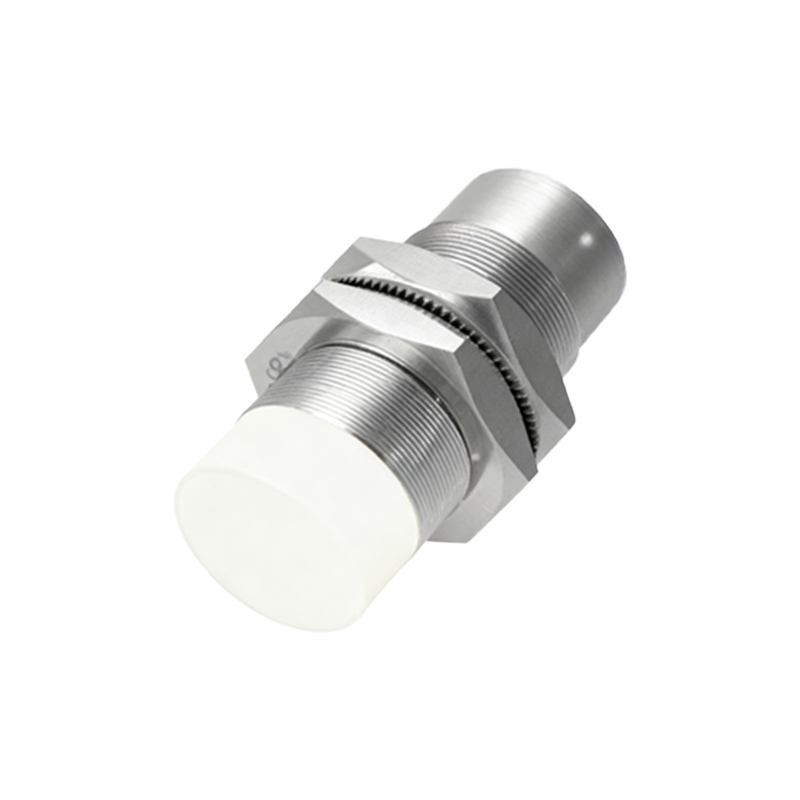
Photoelectric sensors employ light beams, often infrared or laser, to sense objects. They come in three main configurations: through-beam, retro-reflective, and diffuse reflective. Through-beam sensors have separate emitters and receivers, providing long-range and high-accuracy detection, suitable for safety barriers or counting items on high-speed lines. Retro-reflective types use a reflector to bounce light back, ideal for detecting objects that interrupt the beam. Diffuse sensors rely on light reflected directly from the target, useful for short-range applications like detecting small parts. Photoelectric sensors are sensitive to environmental conditions like fog or dust, which can scatter light.
Selecting the right proximity sensor involves considering factors such as target material, sensing distance, environmental conditions, and required response speed. For instance, inductive sensors excel in metal detection with immunity to contaminants, while capacitive sensors handle diverse materials but need stable environments. Ultrasonic and photoelectric sensors offer flexibility but may require shielding from interference.
In industrial settings, proximity sensors enhance efficiency and safety. They enable precise control in automated assembly lines, reduce downtime by preventing collisions, and ensure compliance with safety standards through non-contact operation. Regular maintenance, including cleaning and calibration, is essential to sustain performance. As Industry 4.0 advances, smart sensors with IoT connectivity are emerging, allowing real-time monitoring and predictive maintenance, further optimizing industrial processes.
Overall, understanding the technologies behind proximity sensors empowers engineers to implement solutions that boost productivity and reliability. By matching sensor capabilities to application demands, industries can achieve seamless automation and improved operational outcomes.