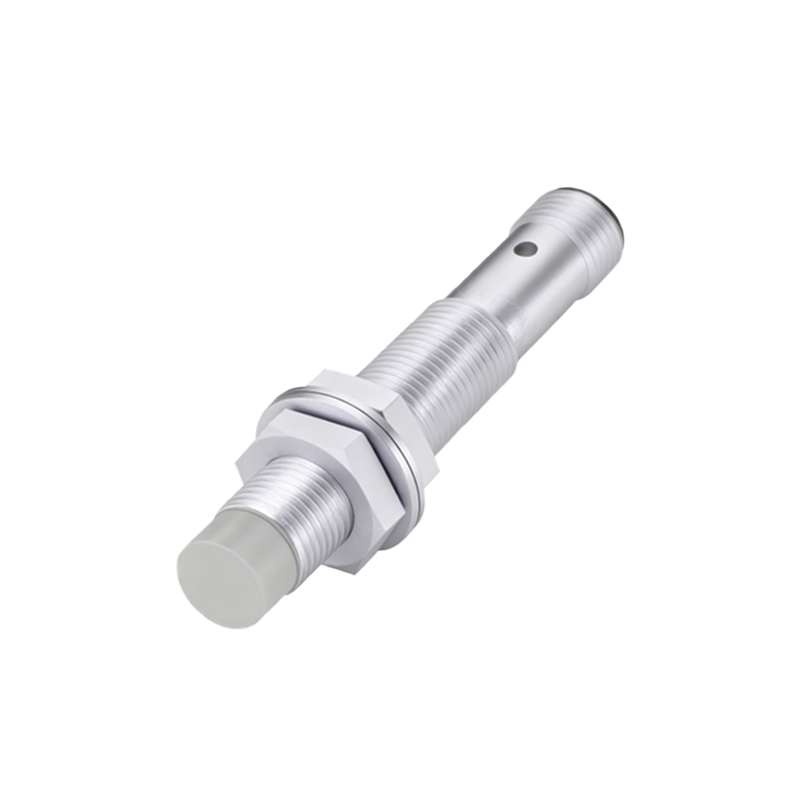
Ultrasonic proximity sensors have become indispensable in modern industrial automation, offering reliable non-contact detection across diverse applications. These sensors operate by emitting high-frequency sound waves, typically between 20 kHz and 200 kHz, which are inaudible to humans. When these waves encounter an object, they reflect back to the sensor. By calculating the time difference between emission and reception, the sensor accurately determines the presence, distance, or position of the target. This principle, known as time-of-flight measurement, enables precise detection ranging from a few centimeters to several meters, depending on the sensor model and environmental conditions.
One of the primary advantages of ultrasonic sensors is their versatility. Unlike optical or inductive sensors, they are unaffected by color, transparency, or material composition, making them suitable for detecting liquids, solids, granular materials, and even transparent objects like glass or plastic films. This capability is particularly valuable in industries such as packaging, food and beverage, and pharmaceuticals, where products vary widely in physical properties. For instance, in bottling plants, ultrasonic sensors reliably monitor fill levels in containers regardless of whether the liquid is clear water, dark syrup, or opaque dairy products. Their immunity to dust, smoke, and ambient light further enhances robustness in harsh environments like mining, construction, or outdoor logistics.
In manufacturing automation, ultrasonic proximity sensors play a critical role in object positioning and collision avoidance. On assembly lines, they ensure components are correctly aligned before robotic arms engage, reducing errors and downtime. Autonomous guided vehicles (AGVs) use these sensors for navigation and obstacle detection, allowing safe movement in dynamic warehouses. Additionally, ultrasonic sensors contribute to process control by monitoring material levels in silos or tanks, preventing overflows or shortages. Their analog output options, such as 4-20 mA or 0-10 V signals, enable seamless integration with programmable logic controllers (PLCs) for real-time adjustments.
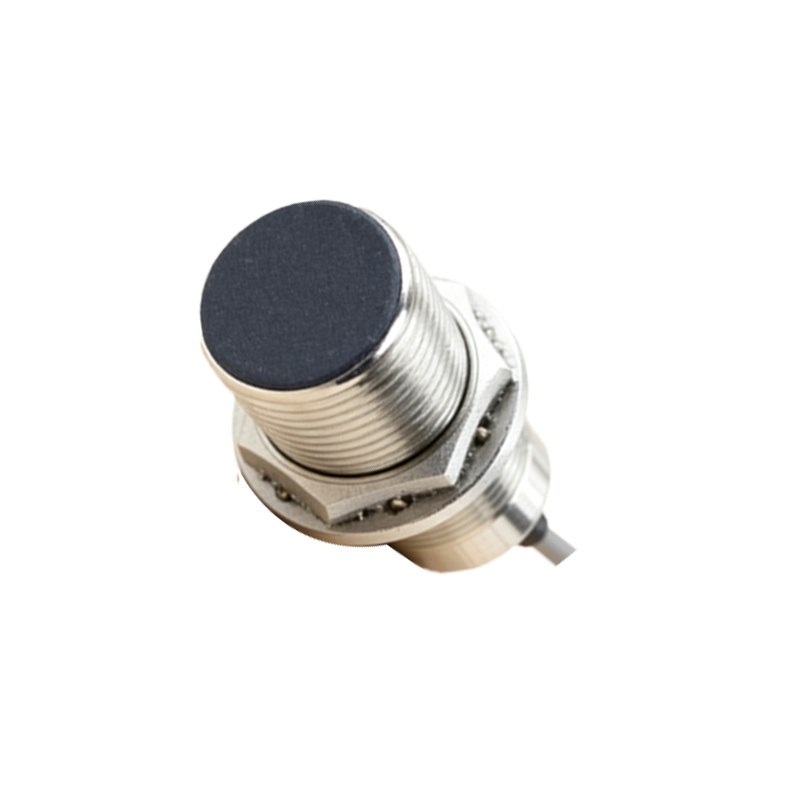
Despite their robustness, ultrasonic sensors require careful consideration during installation and operation. Factors like temperature fluctuations, humidity, and air turbulence can affect sound wave propagation, potentially reducing accuracy. Modern sensors incorporate temperature compensation algorithms to mitigate these effects. Regular maintenance, such as cleaning transducer surfaces to prevent contamination from dirt or moisture, ensures long-term reliability. When selecting a sensor, engineers must evaluate parameters like sensing range, beam angle, response time, and housing ratings (e.g., IP67 for water and dust resistance) to match specific application needs.
Looking ahead, advancements in ultrasonic technology continue to expand its applications. Miniaturized sensors are enabling integration into compact devices, while enhanced signal processing improves discrimination between multiple objects. The rise of Industry 4.0 and IoT connectivity allows ultrasonic sensors to transmit data to cloud platforms for predictive analytics, facilitating proactive maintenance and optimization. As industries strive for greater efficiency and safety, ultrasonic proximity sensors remain a cornerstone of intelligent automation systems, driving innovation from smart factories to sustainable energy solutions.