In the dynamic landscape of industrial automation, proximity sensors stand as silent sentinels, enabling seamless, efficient, and safe operations. These non-contact detection devices, which sense the presence or absence of an object within their field without physical contact, are fundamental components across countless applications. Their ability to provide reliable feedback in harsh environments—amidst dust, moisture, and vibration—makes them indispensable. This article explores several concrete examples of proximity sensor applications, highlighting their critical role in modern manufacturing, packaging, automotive, and material handling sectors.
One of the most prevalent applications is in conveyor line object detection and counting. Inductive proximity sensors, which detect metallic objects, are extensively used to monitor the flow of components on assembly lines. For instance, in an automotive engine assembly plant, these sensors verify the passage of piston heads or crankshafts. They trigger counting functions, ensuring the correct number of parts proceed to the next station, and can halt the conveyor if a jam is detected by noting an unexpected absence or prolonged presence of an object. Similarly, capacitive sensors, capable of detecting non-metallic materials like plastic, wood, or liquid, are perfect for monitoring bottled products on filling lines in beverage or pharmaceutical industries.
Positioning and end-of-travel detection constitute another critical area. In automated machinery, precise positioning of robotic arms, slides, or cylinders is paramount. Here, proximity sensors act as limit switches. A common example is in CNC machining centers, where sensors confirm the home position of tool changers or the open/closed status of safety doors. In hydraulic or pneumatic cylinder applications, a sensor mounted on the cylinder body detects the piston's magnetic ring, providing exact feedback on whether the cylinder is fully extended or retracted. This prevents over-travel, reduces mechanical stress, and ensures repeatable cycle sequences.
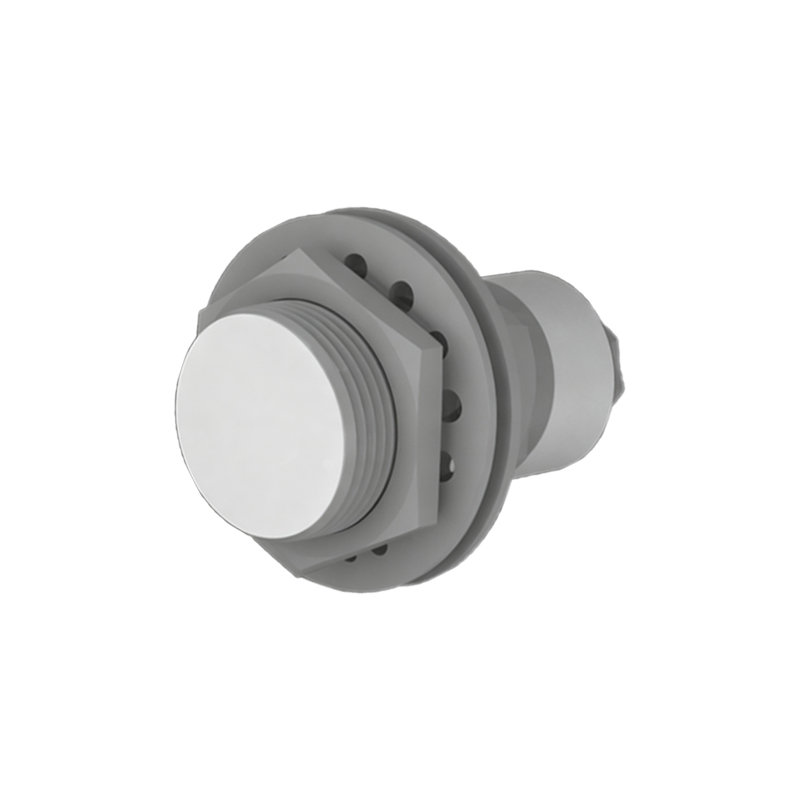
In the realm of safety, proximity sensors are vital for creating guarded zones and ensuring machine operator protection. Safety-rated magnetic sensors, for example, are used to monitor the position of safety interlock guards on heavy presses or robotic work cells. The machine control system receives a signal only when the guard door is securely closed and locked. If a sensor detects the door opening during operation, it initiates an immediate and safe shutdown. This application directly contributes to compliance with international safety standards like ISO 13849.
Level detection in tanks and silos is a further practical application. Capacitive and ultrasonic proximity sensors are employed to monitor the level of bulk solids, powders, or liquids. In a grain silo, a capacitive sensor mounted at a high point can detect when the material reaches a maximum fill level, preventing overfilling. Conversely, a sensor at a low point can signal when the material is depleted, triggering a refill process. This automation eliminates manual checking, reduces waste, and ensures continuous process flow.
The automotive industry provides a rich tapestry of proximity sensor uses. Beyond assembly lines, they are integral to modern vehicle systems themselves. In automated welding stations, sensors precisely locate car body panels for accurate robot welding paths. In paint shops, they ensure vehicle bodies are correctly positioned for spray booths. Furthermore, ultrasonic sensors on modern cars for parking assistance are a form of proximity sensor, detecting obstacles and providing distance feedback to the driver.
In packaging machinery, the need for high-speed, accurate detection is intense. Photoelectric sensors (a type of proximity sensor using light beams) are often used to detect labels, tabs, or the presence of a product in a blister pack. Inductive sensors verify the presence of metal lids on jars before capping. The synchronization of cutting, filling, and sealing operations frequently relies on the precise timing signals provided by these sensors, directly impacting throughput and minimizing product waste.
The benefits driving these widespread applications are clear. Proximity sensors enhance reliability by eliminating mechanical wear associated with physical contact switches. They offer high switching speeds, suitable for fast-paced production environments. Their solid-state construction provides longevity and resistance to environmental contaminants. Most importantly, they deliver the critical data points necessary for closed-loop control systems, forming the backbone of Industry 4.0 and smart factory initiatives where real-time monitoring and data exchange are key.
From ensuring a bottle is in place before filling to confirming a robotic weld is precisely located, proximity sensors provide the essential "eyes" of automated equipment. Their versatility across sensor types—inductive, capacitive, magnetic, and photoelectric—allows engineers to select the perfect technology for each specific material and environmental challenge. As automation evolves towards greater intelligence and flexibility, the fundamental role of the robust and reliable proximity sensor will only continue to expand, solidifying its status as a cornerstone of industrial innovation.