In the demanding world of industrial automation, the reliability of sensing technology is paramount. High immunity proximity sensors have emerged as critical components, specifically engineered to perform with unwavering accuracy in environments saturated with electromagnetic interference (EMI), strong magnetic fields, and electrical noise. Unlike standard inductive or capacitive sensors, these robust devices are designed with advanced shielding, specialized circuitry, and intelligent filtering algorithms to reject external disturbances that would typically cause false triggering, signal degradation, or complete sensor failure.
The core principle of a standard inductive proximity sensor involves generating a high-frequency electromagnetic field. When a metallic target enters this field, it induces eddy currents, causing a change in oscillation amplitude that is detected by the sensor. However, in applications such as welding cells, large motor control centers, high-frequency induction heating systems, or near heavy-duty power cables, this sensitive detection mechanism is vulnerable. Stray magnetic fields can induce voltages in the sensor's wiring or internal components, while EMI from switch-mode power supplies or radio transmitters can be coupled into the signal path, leading to erratic operation.
High immunity sensors combat these challenges through a multi-faceted design approach. Firstly, they incorporate extensive magnetic shielding, often using high-permeability alloys like mu-metal, to create a Faraday cage effect that diverts external magnetic flux away from the sensing coil and critical electronics. Secondly, their electronic design features differential input stages, high common-mode rejection ratios (CMRR), and sophisticated digital signal processing (DSP). This DSP actively monitors the received signal, distinguishing between the legitimate pattern caused by a target and the chaotic signature of noise, effectively filtering it out in real-time. Furthermore, these sensors often utilize DC-operated, two-wire designs with constant current consumption, which are inherently less susceptible to noise pickup compared to three-wire AC/DC or analog-output variants.
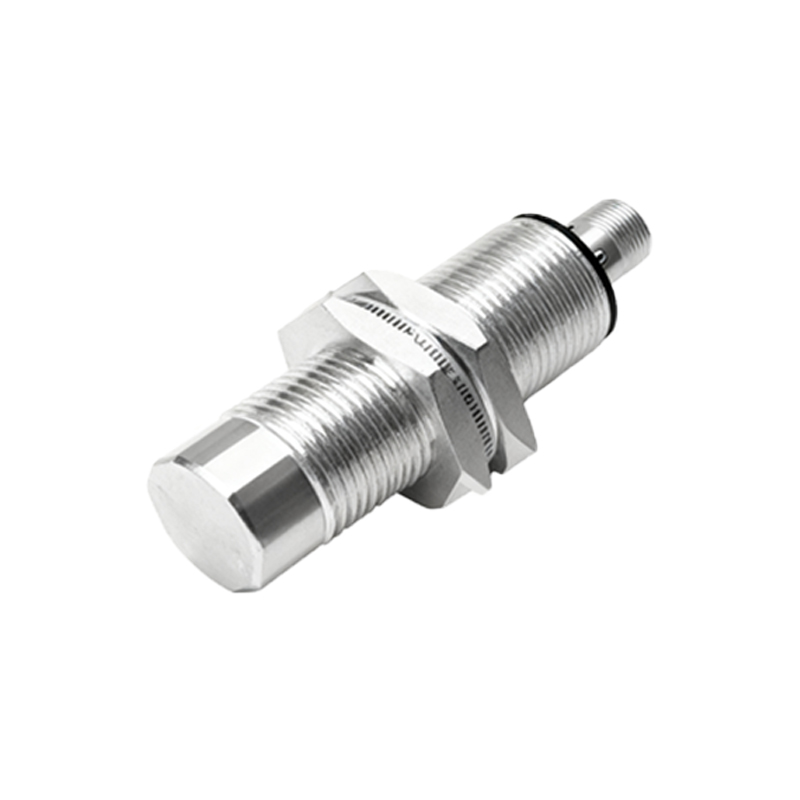
The selection of the correct housing material is also crucial. While stainless steel housings offer excellent mechanical strength and chemical resistance, they provide minimal magnetic shielding. For extreme environments, sensors with specially coated brass or nickel-plated brass housings are preferred, as these non-ferrous materials do not become magnetized and can be combined with internal shielding for optimal performance. Additionally, the use of shielded, twisted-pair cables with proper grounding practices at the controller—not at the sensor end—is essential to complete the noise immunity system.
Applications for high immunity proximity sensors are vast and critical. They are indispensable in robotic arc welding, where intense magnetic fields are generated by hundreds of amps of welding current. In the metalforming industry, they reliably detect parts on presses and stamping machines that generate significant electrical noise. They ensure precise positioning of crane trolleys in steel mills, monitor turbine blades in power generation, and control automated guided vehicles (AGVs) that traverse areas with varying magnetic fields. Their failure in such settings can lead to costly downtime, production of defective parts, or even safety hazards.
When specifying a high-immunity sensor, engineers must consult detailed datasheets, focusing on key immunity ratings. Look for standardized test certifications such as IEC 60947-5-2, which specifies performance requirements including "operational distance" reduction under influence and immunity to electromagnetic fields. Key parameters to evaluate include the rated operating distance (Sn), the ensured operating distance (Sa) under influence, and specific immunity levels against magnetic fields (e.g., 100 A/m or 1000 A/m) and electrical fast transient/burst noise. Choosing a sensor with an immunity rating that exceeds the measured or estimated field strength in the application is a fundamental rule of thumb.
In conclusion, high immunity proximity sensors represent a specialized and vital evolution in sensing technology. They are not merely incremental improvements but are purpose-built solutions that guarantee system integrity where it matters most. By investing in these robust sensors and following proper installation guidelines, engineers and plant managers can achieve unprecedented levels of reliability, reduce maintenance costs, and enhance the overall safety and productivity of harsh industrial operations. Their role is foundational in the advancement towards more resilient and intelligent Industry 4.0 environments.
SEO Keywords:high immunity proximity sensor, EMI resistant sensor, industrial automation sensors, magnetic field immunity, harsh environment sensing
SEO Description:Explore high immunity proximity sensors engineered for extreme industrial conditions. Learn how advanced shielding and DSP technology combat EMI and magnetic interference to ensure reliable operation in welding, stamping, and heavy electrical environments.