In industrial automation and control systems, proximity switch sensors are indispensable components for non-contact detection of objects. However, when these sensors are deployed in low-temperature environments—common in industries such as cold storage, frozen food processing, outdoor machinery in arctic climates, aerospace, and cryogenic research—their performance and reliability face significant challenges. Standard proximity sensors are typically rated for operation down to -25°C, but applications requiring functionality at -40°C, -60°C, or even lower necessitate specialized design and careful selection.
The core challenge in low-temperature operation lies in the material science and electronic component behavior. Firstly, the housing and sealing materials must withstand extreme thermal contraction without cracking or compromising the ingress protection (IP) rating. Standard plastics can become brittle, while certain elastomers used for seals lose elasticity. Manufacturers address this by using specialized compounds like fluoropolymers (e.g., PTFE) or low-temperature-resistant engineering plastics and nitrile rubber blends.
Internally, the electronic components are the primary concern. The capacitance of electrolytic capacitors can drop dramatically, and solid-state components like oscillators and integrated circuits may experience timing drift or complete failure. The sensing element itself, whether inductive, capacitive, or photoelectric, is susceptible. For inductive sensors, the properties of the ferrite core change with temperature, potentially altering the sensing distance. The viscosity of damping fluids in damped-oscillator designs increases, affecting response time. Photoelectric sensors face issues with LED output efficiency and lens fogging or icing.
Therefore, selecting a proximity sensor for low-temperature duty requires meticulous attention to the manufacturer's datasheet specifications. The key parameters are the guaranteed operating temperature range and the storage temperature range. A sensor rated for -40°C to 70°C operation is fundamentally different from one rated for -25°C to 70°C. It is crucial to consider the entire ambient cycle, including potential condensation during warm-up phases, which can lead to internal frosting.
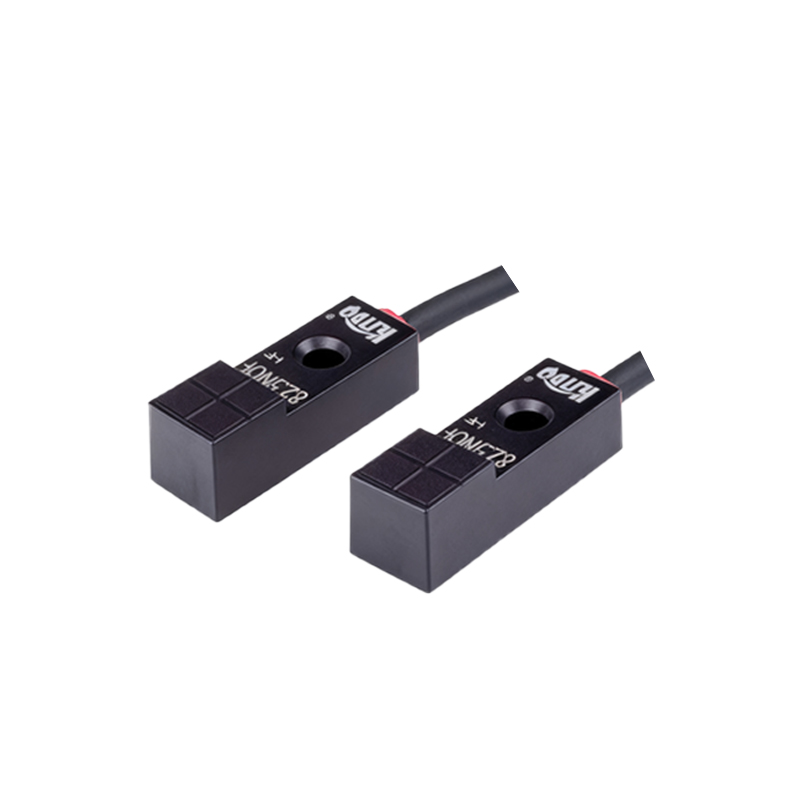
Beyond materials, the sensing technology choice is pivotal. Inductive proximity sensors, detecting metallic objects, are often preferred for their robustness. For very low temperatures, models with all-welded stainless steel housings and potted electronics (encapsulated in a thermally stable resin) offer superior resistance. Capacitive sensors, used for non-metallic materials, can be more sensitive to environmental changes like ice formation on the sensing face. Ultrasonic sensors are an excellent alternative for some low-temperature applications, as sound wave propagation is less affected by cold, though the transducer materials must still be chosen carefully.
Installation and operational practices are as critical as the sensor itself. Thermal shock—rapidly moving a sensor from a warm room to a -50°C chamber—should be avoided. Gradual acclimatization is recommended. Conduit entries and cable glands must be rated for the temperature to prevent cracks. Using cold-flexible cables is essential, as standard PVC insulation can shatter. For extended exposure, considering heaters or thermal shrouds around the sensor assembly can maintain a micro-environment within a permissible range, though this adds complexity and cost.
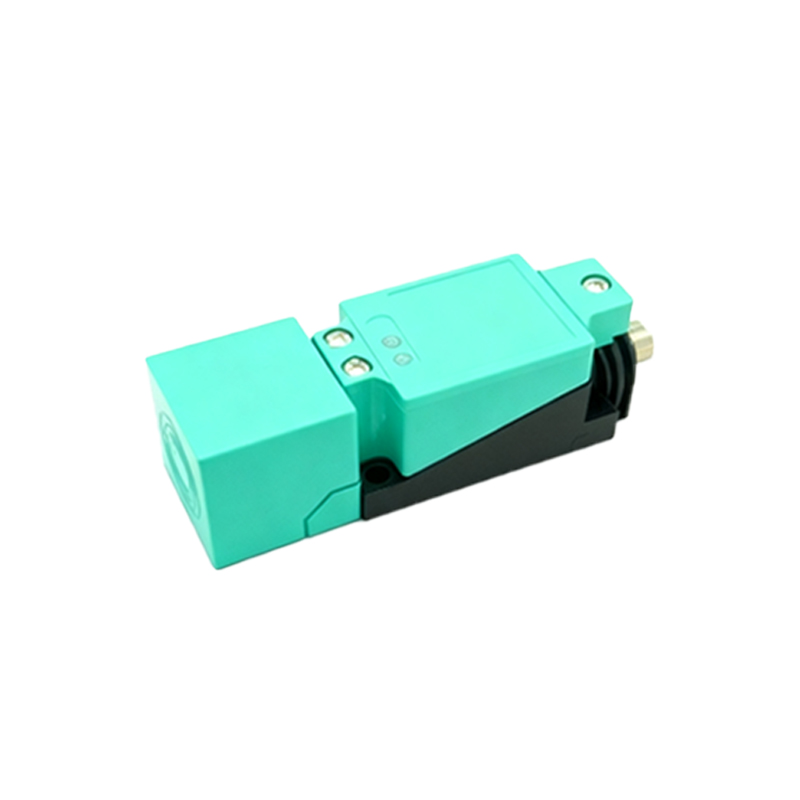
Maintenance in these environments is challenging. Self-diagnostic features, like IO-Link functionality, become highly valuable. They can provide real-time data on sensor health, temperature at the head, and signal strength, enabling predictive maintenance before a failure causes downtime. Regular visual inspections for ice accumulation or physical damage are necessary.
In conclusion, deploying proximity switches in low-temperature environments is not merely about buying a "rugged" sensor. It is a systems engineering task involving the correct specification of sensor technology, housing material, temperature rating, and accompanying components like cables and connectors. Collaboration with sensor manufacturers who explicitly design for cryogenic or arctic conditions is paramount. By understanding the physics of failure at low temperatures and proactively addressing material, electronic, and installation factors, engineers can ensure detection reliability, system uptime, and safety in some of the most demanding industrial settings on the planet.