In the evolving landscape of industrial automation and smart device design, the reliance on traditional proximity sensors is being re-evaluated. While these sensors, which detect the presence or absence of nearby objects without physical contact, have been foundational, several compelling alternatives now offer enhanced capabilities, cost savings, or better suitability for specific environments. This exploration delves into the practical technologies stepping into roles once dominated by inductive, capacitive, and photoelectric proximity sensors.
One prominent alternative is computer vision systems. Powered by cameras and sophisticated image processing algorithms, these systems can perform far more complex detection and analysis than a simple proximity switch. They can determine not just if an object is present, but also identify its type, orientation, size, and even detect specific features or defects. In quality control on an assembly line, a vision system can inspect components for completeness, whereas a traditional sensor might only verify that something is in place. The advent of low-cost, high-resolution cameras and efficient edge-computing hardware has made vision systems increasingly viable for tasks beyond basic proximity detection.
LiDAR (Light Detection and Ranging) technology, once confined to high-end surveying and autonomous vehicles, is finding its way into industrial and consumer applications. LiDAR measures distance by illuminating a target with laser light and analyzing the reflected signal. It creates precise, real-time 3D maps of an environment. This makes it superior for applications requiring spatial awareness and mapping, such as in robotics for navigation and obstacle avoidance, or in logistics for volume measurement of packages. Unlike a standard infrared proximity sensor, LiDAR provides rich contextual data about the surroundings.
Ultrasonic sensors represent a mature and highly effective alternative, particularly in challenging environments. They operate by emitting high-frequency sound waves and interpreting the echo. Their major advantage is insensitivity to color, transparency, or ambient light conditions—factors that can plague optical sensors. They excel in detecting liquid levels, transparent objects like glass bottles, or in dusty, foggy, or vaporous atmospheres where optical methods fail. While some may classify ultrasonic sensors within the broader proximity sensor family, they are often specifically chosen as a replacement when photoelectric or inductive sensors prove unreliable.
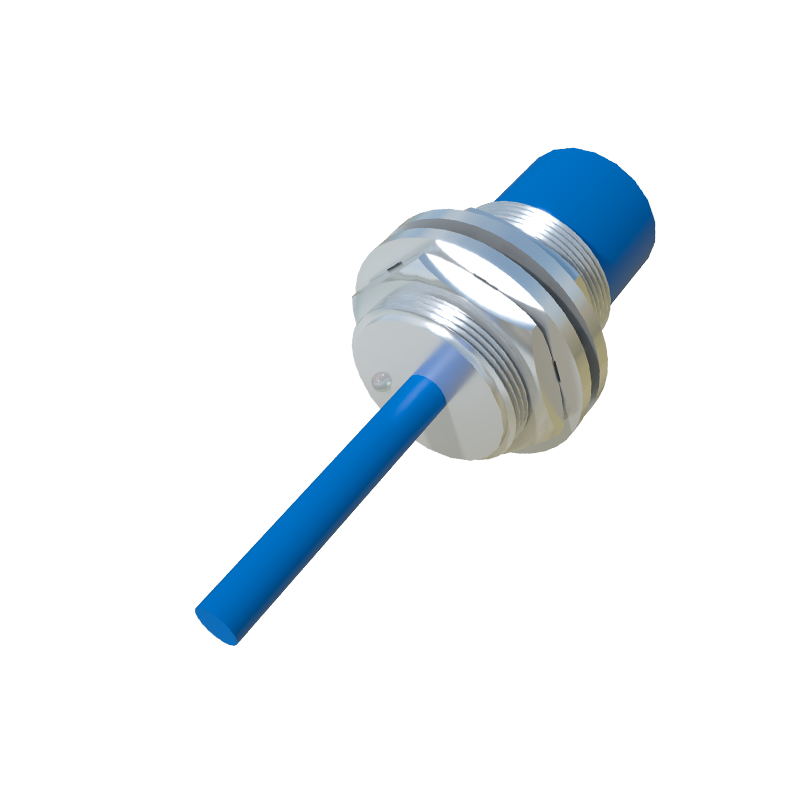
For applications involving precise distance measurement rather than simple presence detection, laser distance sensors are the go-to alternative. These devices use a focused laser beam to provide highly accurate, long-range measurements. They are indispensable in construction, warehousing (for inventory profiling), and manufacturing where exact positioning is critical. A proximity sensor might trigger when a pallet is within 50mm, but a laser distance sensor can tell you it is precisely 423.7mm away, enabling more nuanced process control.
Finally, the integration of Time-of-Flight (ToF) sensors into consumer electronics marks a significant shift. Commonly found in modern smartphones and VR headsets, ToF sensors work by measuring the time it takes for emitted light to bounce back. They enable features like fast autofocus, gesture recognition, and basic 3D modeling. In an industrial context, compact ToF modules are used for object detection, bin picking, and robot guidance, offering a good balance of range, accuracy, and speed in a small package, often at a lower system complexity than full vision systems.
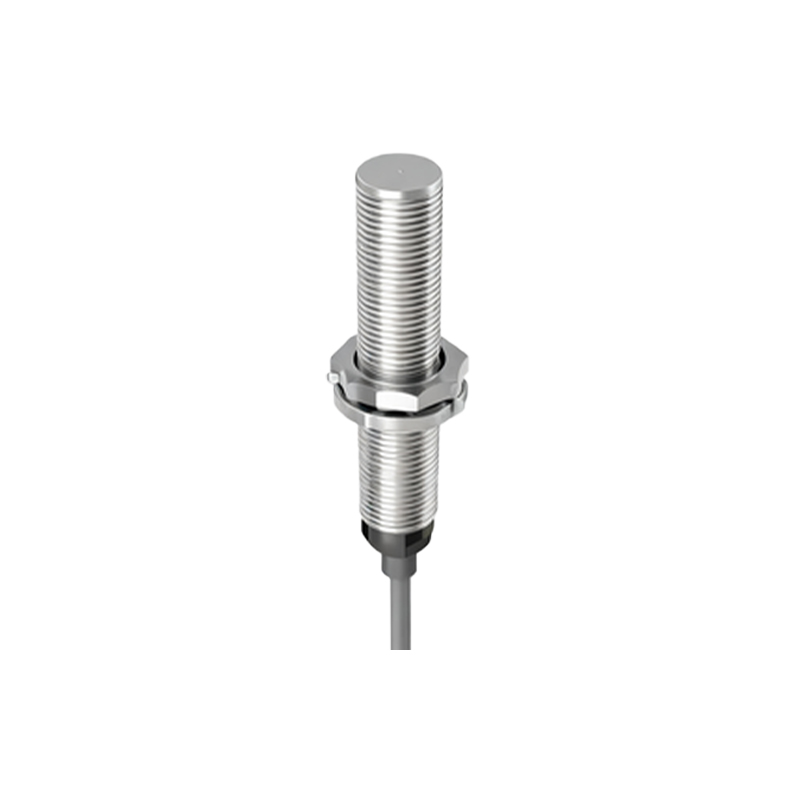
The choice of an alternative depends heavily on the application's specific demands: required precision, environmental conditions, cost constraints, and the nature of the data needed. Factors such as the need for simple binary output versus rich dimensional data, exposure to dirt or moisture, and the material composition of target objects all guide the selection. While the classic proximity sensor remains a perfectly valid and economical solution for countless simple detection tasks, these advanced alternatives are unlocking new levels of intelligence, flexibility, and capability in automated systems, driving innovation across industries from manufacturing to mobile technology.